iBasso is a well-known name in portable audio. The company started out with portable headphone amplifiers and DACs, but became best known for its digital audio players, particularly the DX50 introduced in 2013 and the DX90 that followed in 2014. Since then, the DX series has expanded from compact and affordable models to high-end flagship DAPs.
Alongside its DAPs, iBasso has developed an extensive range of portable DACs, including the DC06 Pro, Nunchaku and DC-Elite.
With the DC-Tonfa, iBasso brings discrete R2R conversion to a dongle DAC. Its DX270 player gave us a taste of what iBasso could achieve with R2R. How close does the Tonfa come in sound quality? Let’s find out.

Design
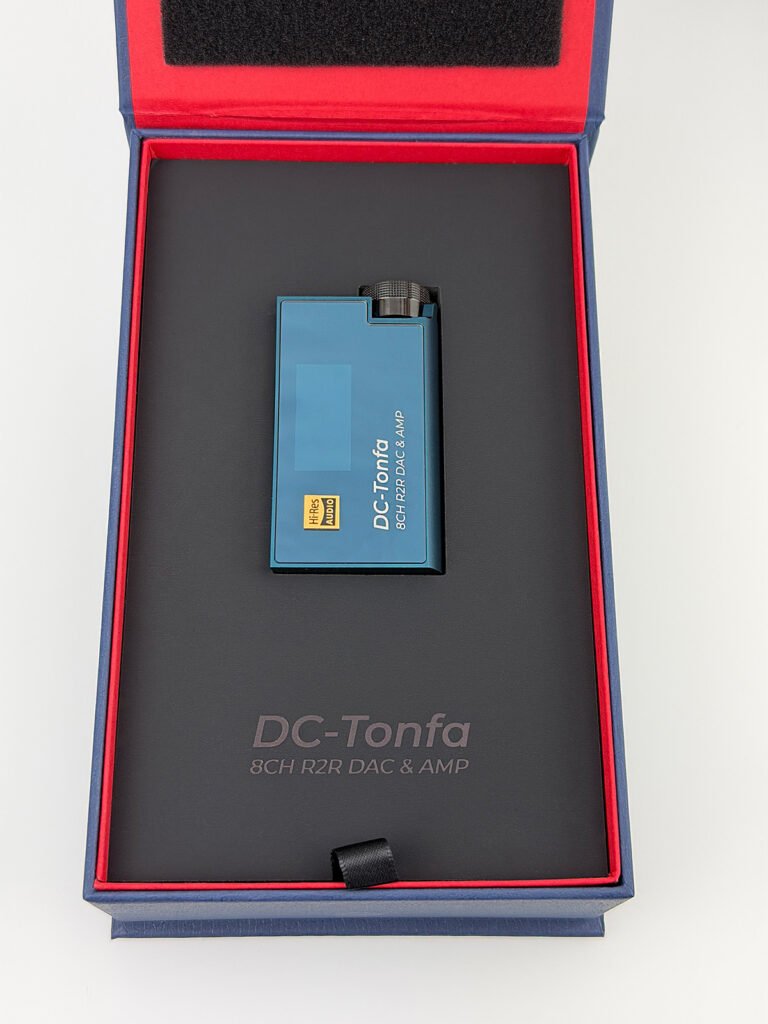
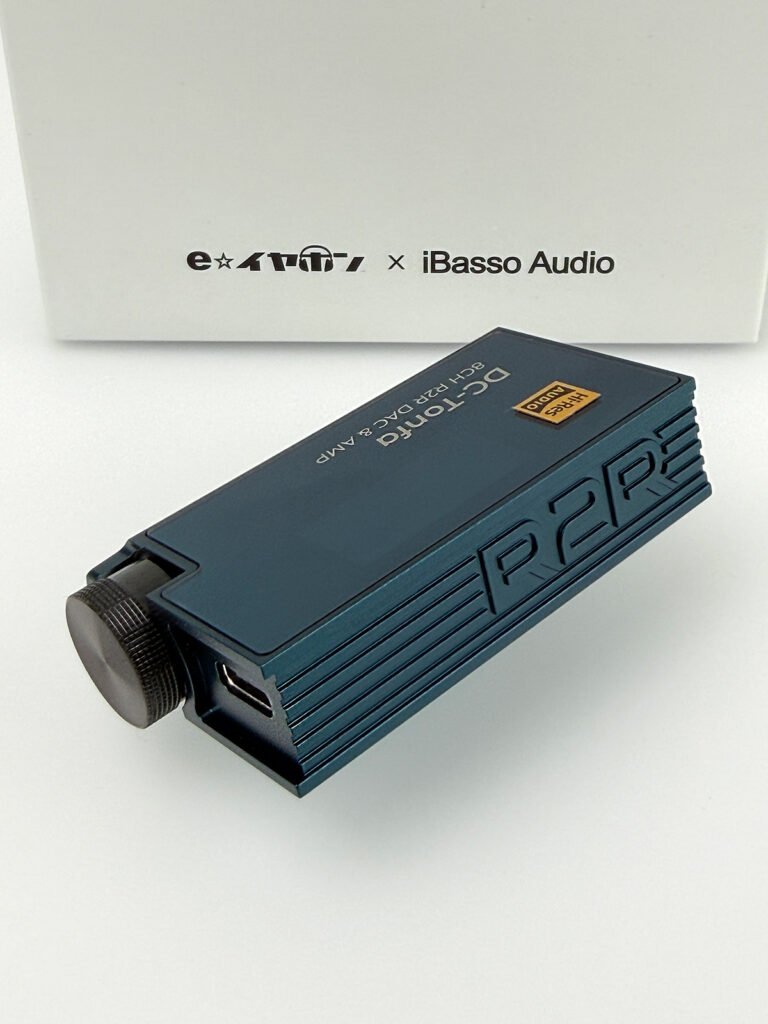
The DC-Tonfa is immediately recognisable as part of the same family as the DC-Elite and Nunchaku. Its aluminium chassis is finished with tempered glass panels on the front and rear, giving it a clean and polished appearance. The finish matches the excellent build quality: the housing feels sturdy and carefully put together. There are three colours to choose from: black for a classic look or blue and red if you prefer something more colourful. Measuring 61 × 34.6 × 15 mm and weighing about 45 grams, the Tonfa is one of the larger portable DACs.
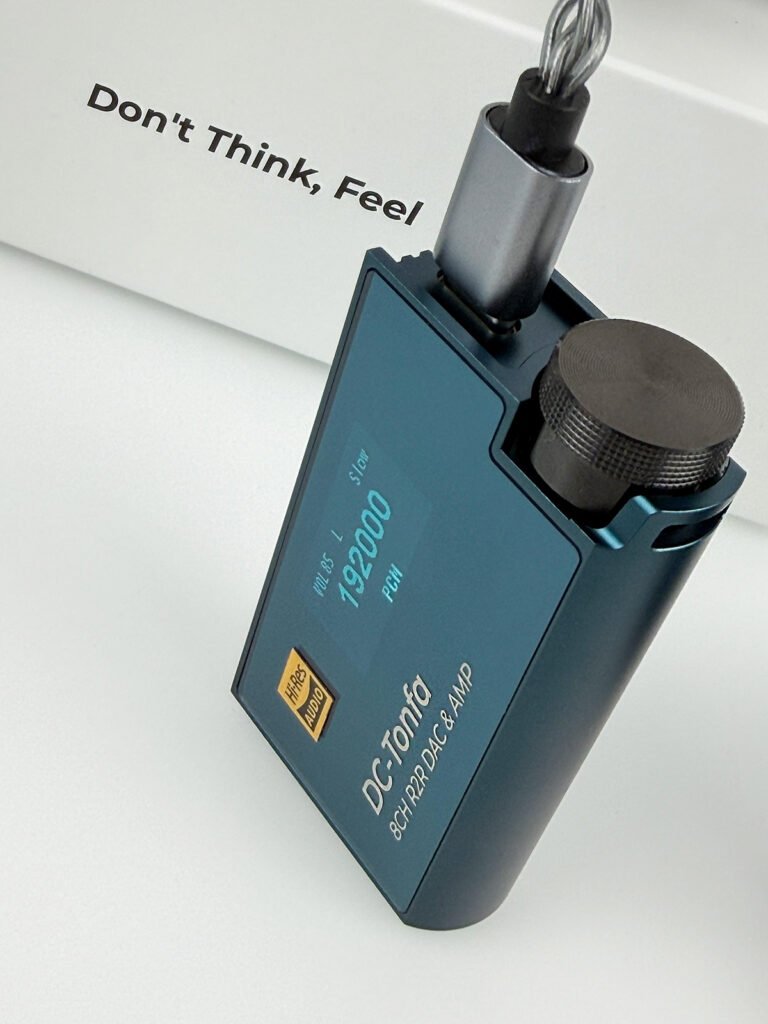
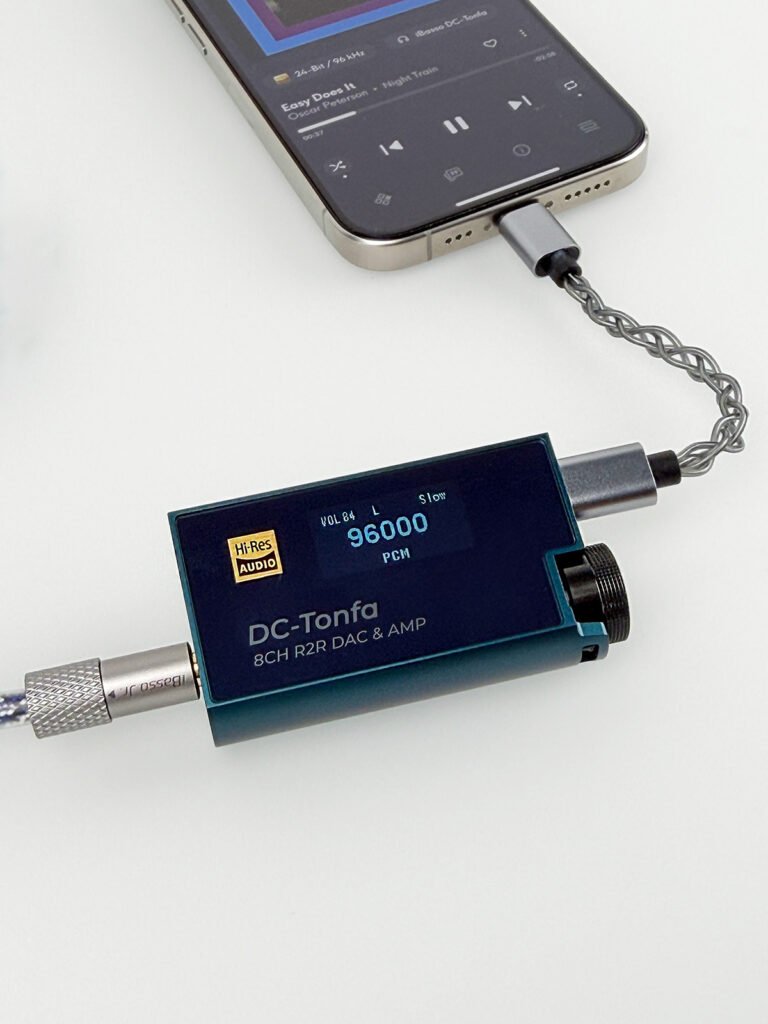
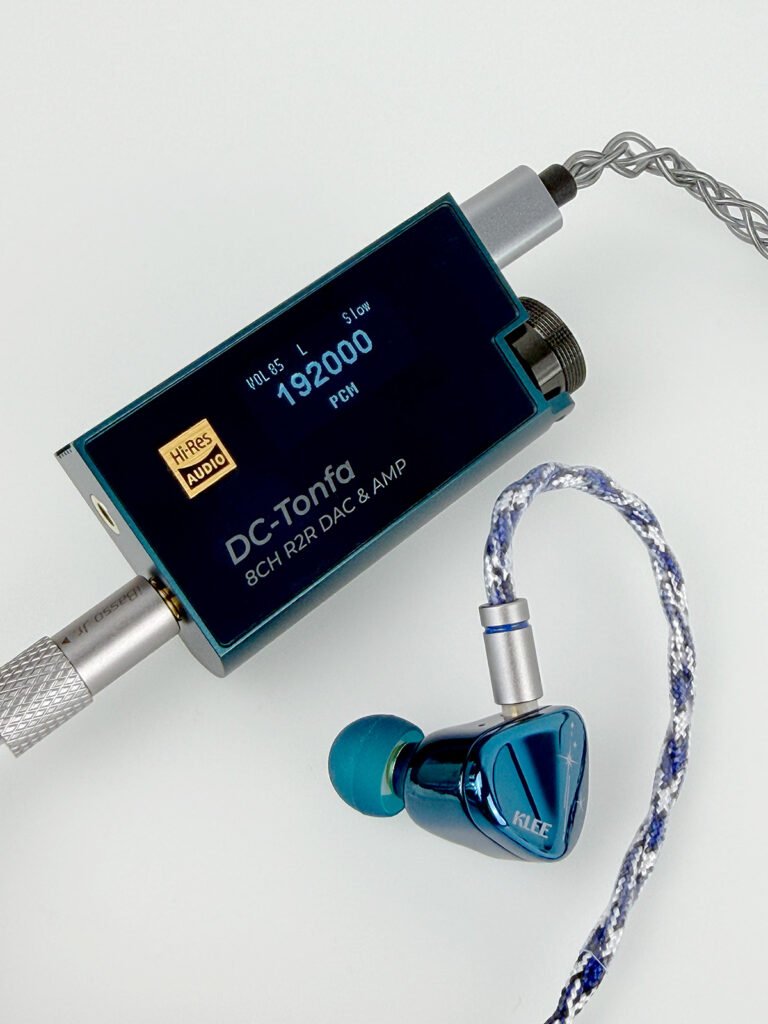
Behind the front glass panel we find a 0.96-inch OLED display that shows the volume level, sample rate, gain and selected operating mode. Having this information on the device is useful when switching between headphones or adjusting playback settings. Settings can be changed directly on the Tonfa without opening the iBasso UAC app, which is only available on Android.
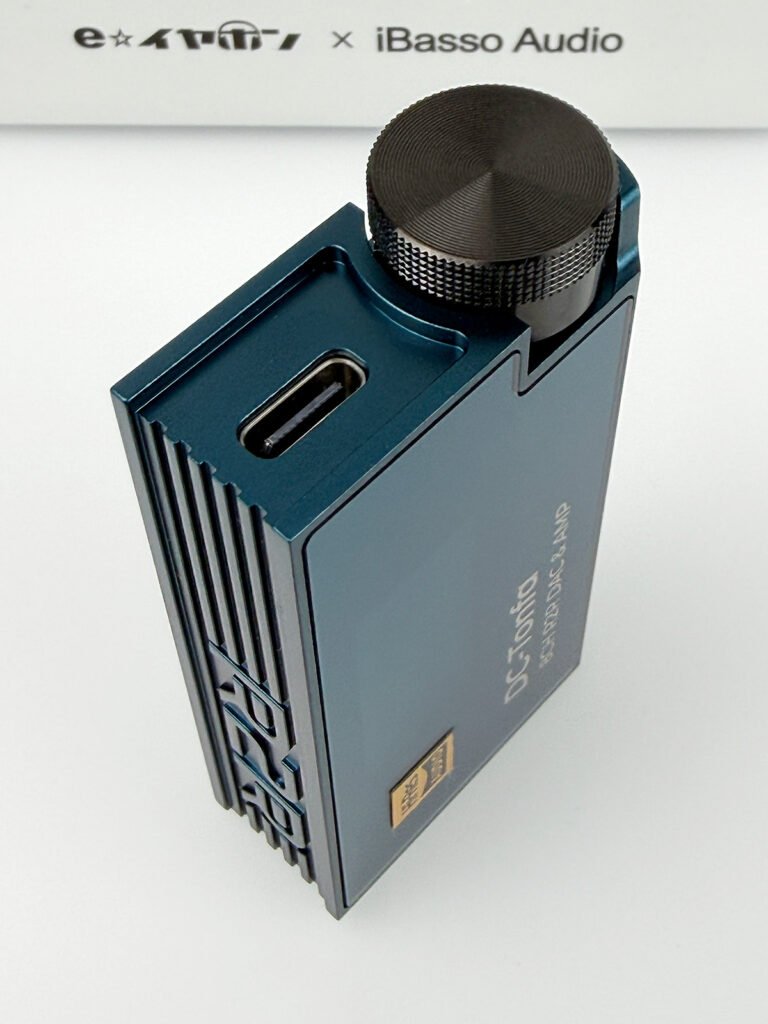
The multifunction wheel handles both volume adjustment and menu navigation. Pressing it opens the menu, where you can change the gain, select a digital filter or adjust the channel balance and USB Audio Class mode. The wheel feels solid and has a satisfying tactile response, making small volume adjustments pleasant.
The headphone connections consist of a 3.5 mm single-ended output and a 4.4 mm balanced output. The 3.5 mm socket also doubles as a coaxial S/PDIF output, a practical addition that we do not see on every portable DAC. This gives the Tonfa another use: connecting a phone or computer to the coaxial input of an external DAC.
What’s in the Box
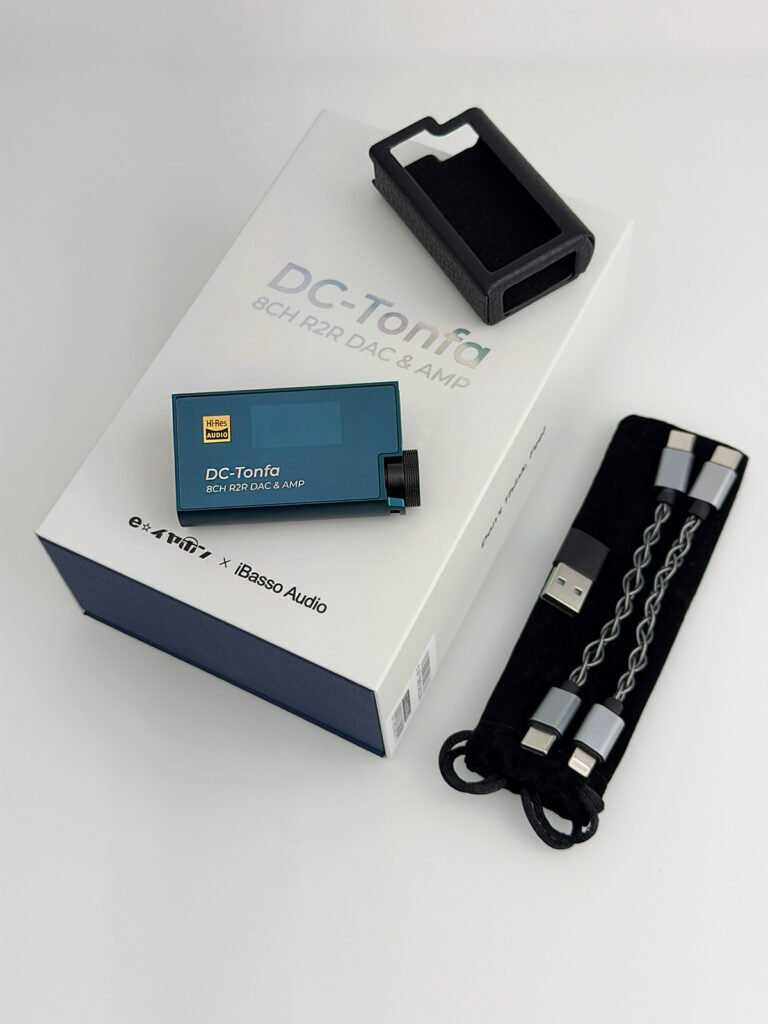
The DC-Tonfa comes with two short cables: USB-C to USB-C and USB-C to Lightning. Credit to iBasso for including the Lightning cable, as many brands no longer supply one. A USB-C to USB-A adapter, user manual and warranty card are also included.
The leather case is a nice addition, protecting the Tonfa and providing built-in MagSafe compatibility for attaching it to your phone. The magnetic attachment could be stronger, though, as the Tonfa can shift when handling the phone.
Technical Specs
At the heart of the DC-Tonfa is an eight-channel fully differential R2R DAC developed by iBasso. It uses 312 high-precision resistors, with a hardware compensation network helping to control resistance tolerances and temperature drift.
Digital processing is handled by iBasso’s proprietary FPGA, supported by two Accusilicon femtosecond oscillators. The DC-Tonfa supports PCM up to 32-bit/768 kHz and native DSD512. NOS mode and four oversampling filters allow you to adjust its presentation.
The amplification stage uses two dual Texas Instruments operational amplifiers and four BUF634A buffers. The 4.4 mm balanced output delivers up to 800 mW per channel into 32 Ω and the 3.5 mm single-ended output provides up to 219 mW per channel into the same load.
Two gain settings help accommodate different headphone sensitivities. In high gain, the maximum output level is 5.2 Vrms balanced and 2.6 Vrms single-ended. Output impedance is rated at 0.5 Ω and 0.2 Ω respectively.
- DAC: 8-channel fully differential discrete R2R
- Digital processing: iBasso FPGA-Master with dual femtosecond oscillators
- Supported formats: PCM up to 32-bit/768 kHz and native DSD512
- Modes: Oversampling and NOS
- Outputs: 3.5 mm single-ended and 4.4 mm balanced
- Output power: 219 mW per channel into 32 Ω single-ended; 800 mW per channel into 32 Ω balanced
- Display: 0.96-inch OLED
- Connectivity: USB-C and coaxial S/PDIF output
- USB Audio: UAC 1.0 and UAC 2.0
- Dimensions: 61 × 34.6 × 15 mm
- Weight: 45 g
- Available colours: Black, blue and red
Test Equipment
Sound Quality
The DC-Tonfa has a natural, full-bodied sound signature with a touch of warmth. Its smooth presentation is accompanied by good clarity and detail. It is less analytical than the DC-Elite, but never sounds soft or lacking in definition.
The treble is smooth with good extension, air and fine detail. The DC-Tonfa takes the edge off brighter recordings. Instruments like cymbals sound crisp and decay naturally. This makes the DC-Tonfa a good match for brighter IEMs and headphones. With warmer or darker-sounding models, the pairing has a smoother, more relaxed character.
The midrange has good body and a natural timbre. Vocals sound full and textured, with male voices benefiting from the weight in the lower midrange. Female vocals sound clear without becoming sharp. Acoustic instruments also sound convincing, with the texture of strings and percussion coming through well.
Bass extends deep and sounds powerful, with good texture and definition. The DC-Tonfa does not push the mid-bass forward, but there is weight behind bass instruments and drums. This gives the sound authority without making it feel slow or heavy.
The soundstage has good width, but its sense of depth is particularly strong. Instruments and voices have a clear position within the recording and reverberation extends naturally into the background. Separation is good, although instruments are slightly less sharply defined than with the DC-Elite.
The DC-Tonfa has the output power to drive many headphones with good control. With sensitive IEMs, the background is quiet. Its fuller character calls for some consideration when pairing it with IEMs or headphones that already have a strong bass response or a particularly warm tuning.
NOS and Digital Filters
The DC-Tonfa offers NOS mode and four oversampling filters. The fast roll-off settings give percussion a crisper attack, while the slow roll-off options sound a little gentler in the treble. These are small adjustments to the presentation rather than a change in the Tonfa’s overall character.
NOS bypasses digital oversampling, but that certainly does not mean a softer sound. Depending on the pairing, vocals can sound fuller and bass more forceful, giving the presentation a more direct character. Of the available settings, NOS sounded best to us.
Comparison: DC-Elite and DX270
The DC-Elite sounds more analytical than the DC-Tonfa, with sharper instrument separation and more emphasis on fine detail. The Tonfa has a warmer tone, fuller vocals and smoother treble. Both offer good clarity, but the Elite draws more attention to individual details, while the Tonfa gives voices and instruments more body.
The DX270 is closer to the Tonfa in tonal character, though it offers greater refinement, with better layering and clearer separation. This is also apparent in the bass, which has finer texture and a smoother delivery. The Tonfa sounds more upfront, particularly in the way bass notes hit. Overall, the Tonfa comes close, with the DX270’s advantage mainly in refinement and layering.
Synergy
iBasso Jr. KLEE KiSEKi
iBasso was kind enough to include the KLEE KiSEKi with our DC-Tonfa review sample. Paired with the DC-Tonfa, this roughly $70 IEM sounds balanced and very musical. The treble is smooth and detailed, while the midrange has a natural warmth that gives vocals body and texture. Bass has just the right amount of weight for a well-balanced presentation. Together, the KiSEKi and DC-Tonfa make an excellent-sounding portable R2R setup at a very attractive price.
ddHiFi Memory AL4.4
The Memory AL4.4 has a lively, open sound that works well with the DC-Tonfa’s fuller presentation. Bass guitar and double bass have convincing body, with the speed and definition we noted in our AL4.4 review. Vocals sound clear and present. Male voices have weight in the lower midrange, while the expressive upper mids give female vocals and brass their energy. The Tonfa’s smooth treble complements that lively character, making this an enjoyable pairing with both acoustic instruments and vocals.
Campfire Audio Andromeda 10
With the Andromeda 10, the DC-Tonfa sounds rich and spacious. The bass is well balanced and controlled, while the open treble gives the sound an airy quality. Vocals have warmth and presence, with good separation from the accompanying instruments. Even in complex jazz arrangements, individual instruments are easy to distinguish. Compared with the Memory AL4.4, this pairing sounds warmer and more laid-back.
THIEAUDIO Hype 4 MKII
The Hype 4 MKII gives the DC-Tonfa pairing a more forceful low end than either the Memory AL4.4 or Andromeda 10. Sub-bass has greater depth, with kick drums hitting harder and bass lines showing good definition. The Hype’s lively treble works well with the Tonfa’s smooth presentation: cymbals sound crisp without becoming harsh. Vocals are clear, though bass plays a larger part in the overall balance. On recordings with an already heavy low end, this pairing sounded a little too bassy for our taste.
Dan Clark Audio AEON CORE
The AEON CORE needed high gain and a higher volume setting than the IEMs, but the DC-Tonfa drove it well at our normal listening levels. Bass sounded firm and controlled, with good body to vocals. Instruments were well separated even in busy jazz passages. There was less headroom for very high listening levels, though this was not a limitation during our listening.
Sendy Audio Aiva 2
The Aiva 2’s lively treble pairs well with the DC-Tonfa’s warmer tone. Cymbals have shimmer and strings sound open, while vocals have a natural fullness. Bass is quick and textured, with good weight. We particularly enjoyed this combination with jazz and blues, where the warmth of the vocals and the bite of brass gave the music an expressive character.
The best match depends on the balance you’re looking for. The Memory AL4.4 sounded lively with the Tonfa’s fuller presentation, while the Hype 4 MKII delivered the strongest bass impact. The Andromeda 10 offered a warmer, more spacious sound. With the AEON CORE and Aiva 2, the Tonfa also proved a capable partner for full-size planar headphones at normal listening levels.
Conclusion
iBasso has done an impressive job bringing its R2R technology to the compact dimensions of a dongle DAC. The DC-Tonfa’s natural tone and touch of warmth make it an appealing alternative to the DC-Elite’s more analytical presentation. The DX270 is still more refined, but the Tonfa comes surprisingly close. If you like the DX270’s R2R sound but prefer a more portable solution, the Tonfa offers excellent value.
Power is impressive for a dongle: the balanced output delivers up to 800 mW per channel into 32 Ω. That is sufficient to drive many full-size headphones alongside IEMs. Driving more demanding headphones has a noticeable effect on your phone’s battery life, but not much.
The controls deserve praise too. The volume wheel has a satisfying tactile response that makes small adjustments easy. The clear display also makes it easy to navigate the settings without needing an app.
If you’re looking for a high-end R2R DAC that you can easily take with you, the DC-Tonfa makes a convincing case for travelling light with very little compromise. It delivers exceptional sound for its size and price.
Pros
-
Natural timbre and textured vocals
-
Smooth, detailed treble
-
Deep, defined bass
-
Excellent stage depth
-
800 mW per channel into 32 Ω, balanced
-
Clear display and precise tactile volume control
Cons
-
Higher power consumption with demanding headphones
-
Slightly softer instrument separation than the DC-Elite
-
Can sound too bass-heavy with some pairings
-
MagSafe attachment could be stronger
Product page iBasso DC-Tonfa