ddHiFi was founded in 2017 by Demond Ding, who already had years of experience in portable audio through his work at FiiO and OPPO. The company initially concentrated mainly on accessories, which still make up a large part of its catalogue today. Cables, connectors and adapters have become a speciality, combining practical solutions with attractive design and excellent finish.
Although ddHiFi is best known for its accessories and less so for its IEMs, they are certainly not new territory either. The company released its first IEM, the Janus, in 2020 and has introduced several models since. For the Memory AL4.4 ddHiFi worked together with Moondrop on the development of its 13mm planar driver.
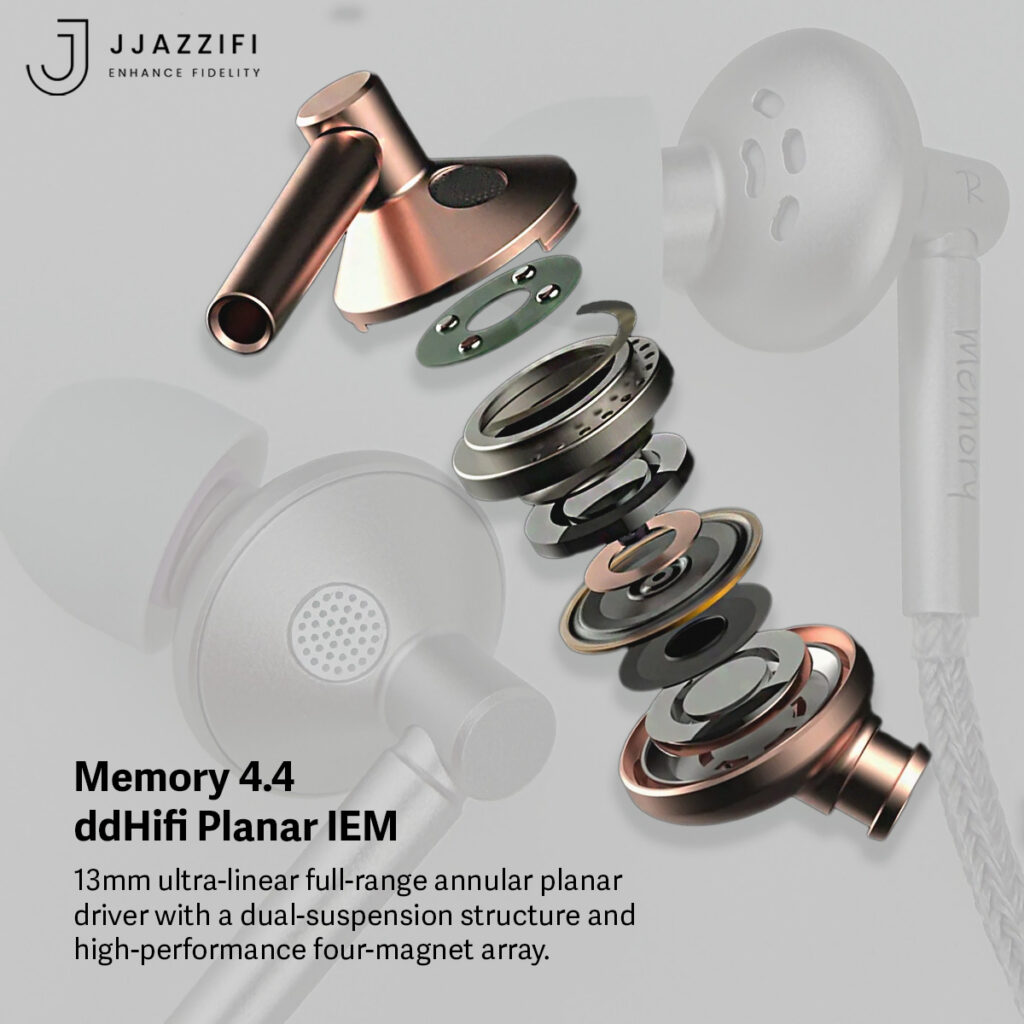
The AL4.4 uses a 13mm full-range annular planar driver. Fitting a driver of this size into such a tiny enclosure is impressive in itself and made us very curious to find out what ddHiFi had achieved.
Packaging
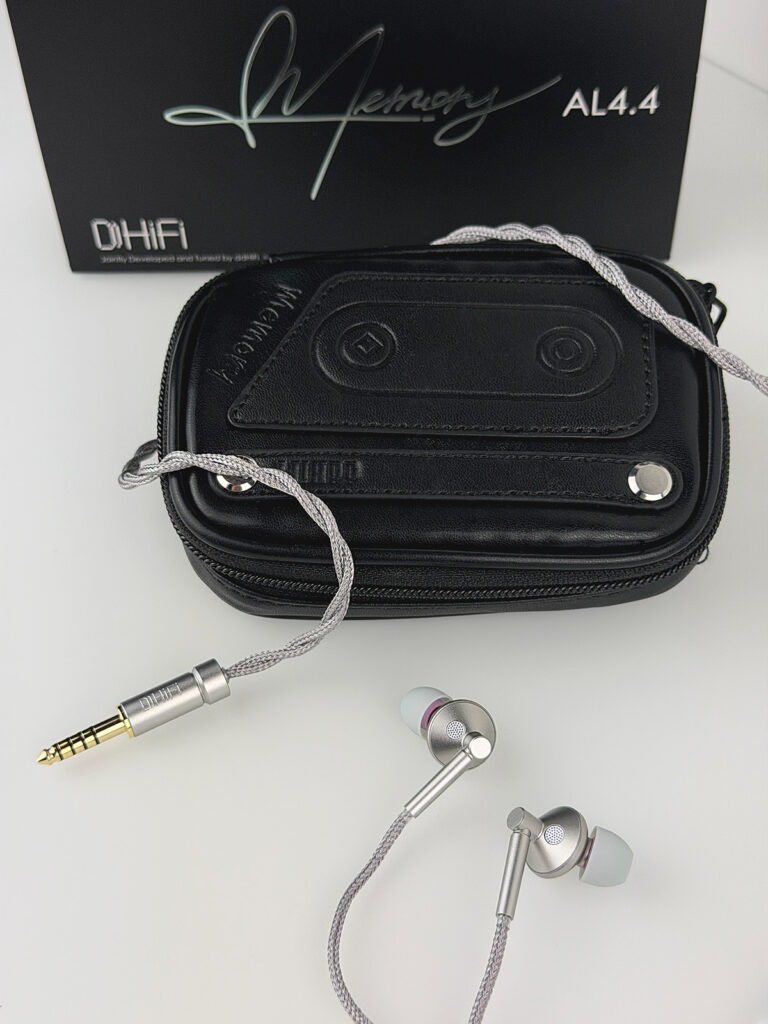
The Memory AL4.4 comes in a compact package. Included are pre-installed ddHiFi ST35 tips, together with three pairs of KIWIEARS KIWIFLEX tips in S, M and L and a leather CZ120B Retro Carrying Case.
The carrying case design is inspired by old cassette players, which fits the retro theme of the Memory series particularly well. It is finished in black microfiber leather. Inside are separate compartments for the left and right earpieces, preventing the IEM’s from hitting each other during transport.
Build quality
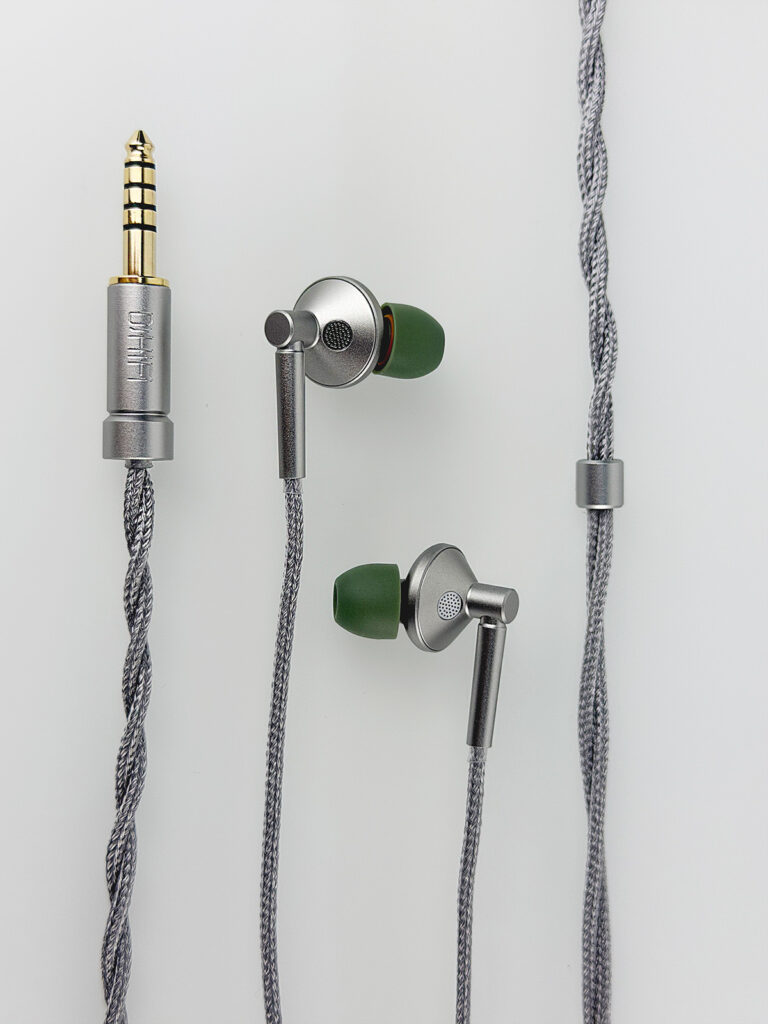
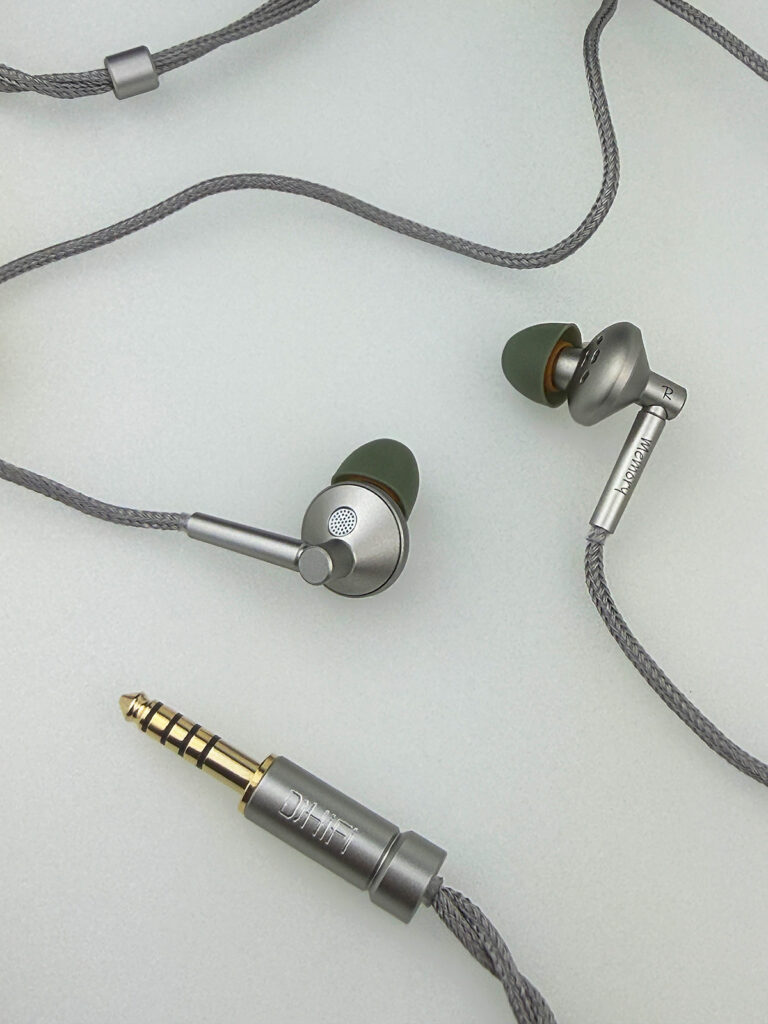
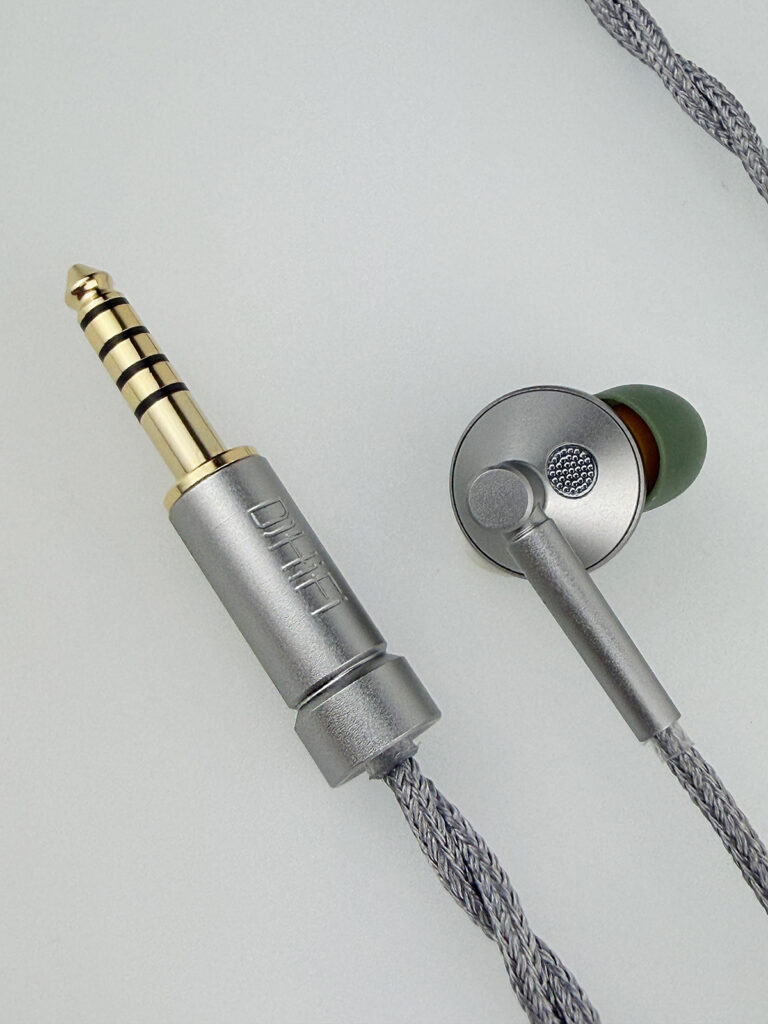
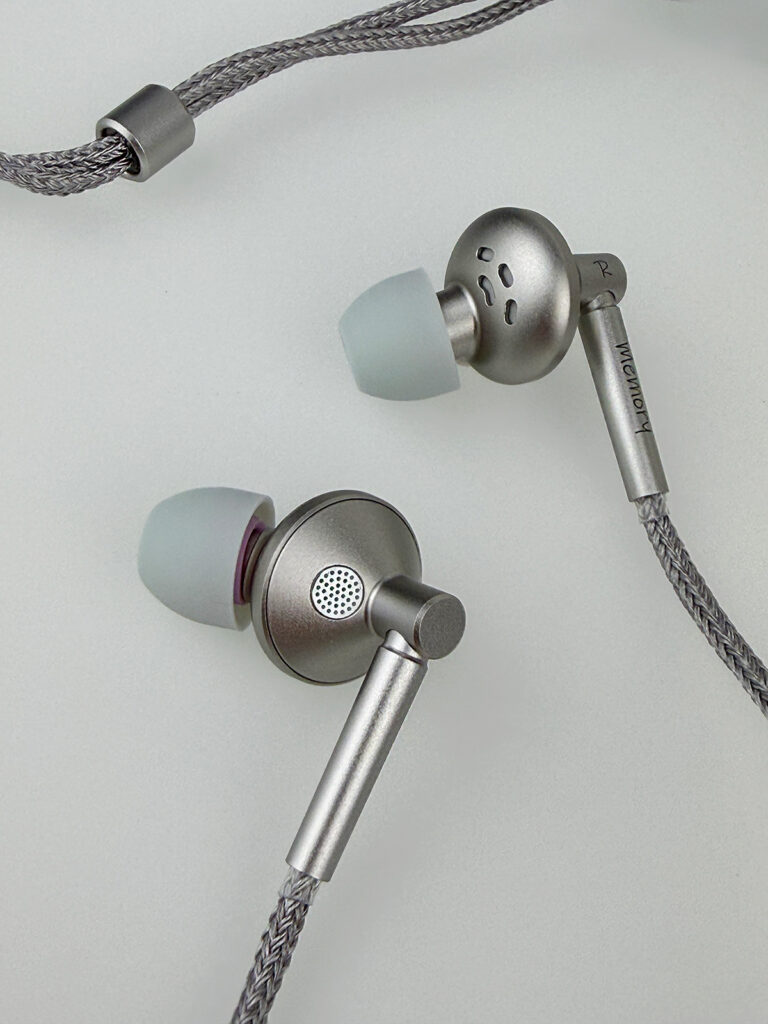
The Memory AL4.4 is exceptionally compact, especially considering that ddHiFi managed to fit a 13mm planar driver inside. The housings are CNC-machined from AL6063 aerospace-grade aluminum, which keeps the weight down. The machining is excellent, with smooth edges and a beautiful finish.
Its small size also makes the AL4.4 very comfortable. The compact shells and angled nozzles provide a secure fit and at approximately 25 grams, you barely notice their weight.
The 13mm planar driver uses a double-suspension structure combined with a four-magnet array. According to ddHiFi, this design significantly improves electro-acoustic efficiency, reaching four times the efficiency of similarly sized dynamic drivers and ten times that of conventional 14.5mm planar drivers. The design is also intended to reduce the non-linear distortion often associated with planar drivers. As a result, the driver requires relatively little power to achieve a wide dynamic range, while keeping distortion low when driven at higher output levels.
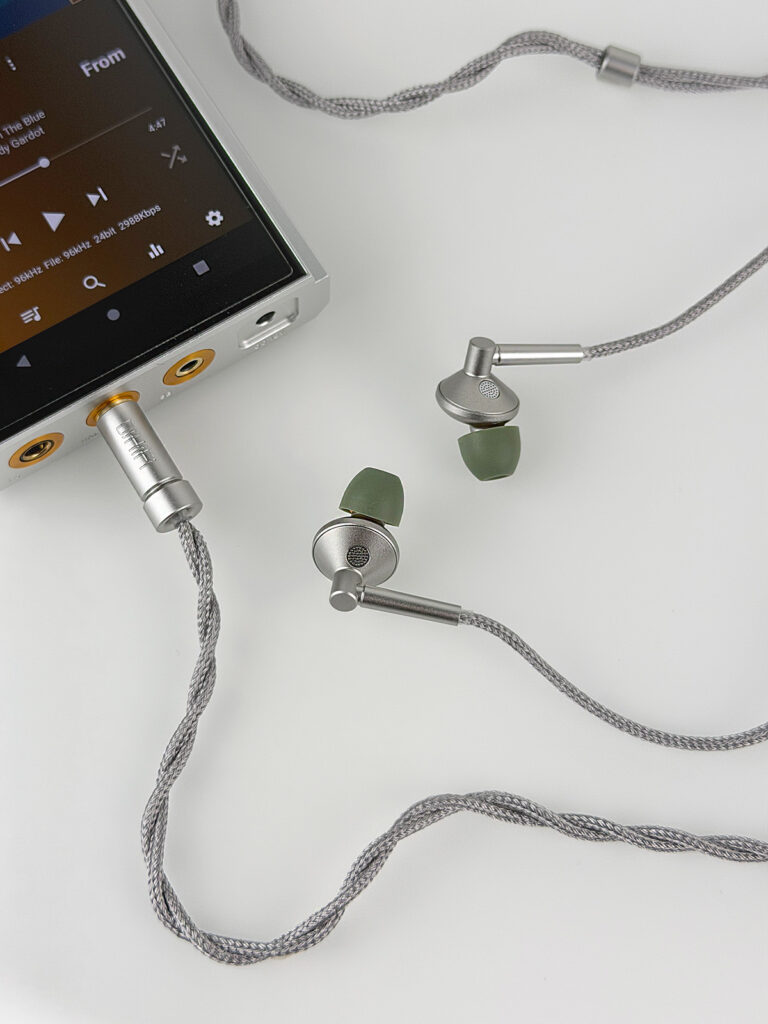
The grey braided 5N OCC cable is permanently attached and terminates in a 4.4mm balanced plug. The cable itself feels well made and suits the compact design, but we would have strongly preferred a detachable cable. Cables can eventually fail. This matters even more with an IEM you will probably want to keep for a long time. As you will read throughout the review, the AL4.4 certainly falls into that category.
The semi-open design provides less isolation than a conventional closed IEM, so outside noise remains audible. This makes the Memory AL4.4 less suitable for public transport or other noisy places, but at home or in quieter surroundings this is hardly an issue.
Overall, the AL4.4 is beautifully made, extremely comfortable and a great example of how much attention ddHiFi puts into both design and build quality.
Specs
- Driver: 13mm Ultra-Linear Full-Range Annular Planar Driver
- Driver Structure: Dual-Suspension, Four-Magnet Planar Design
- Frequency Response: 20Hz – 20kHz
- Impedance: 16Ω ±15% @ 1kHz
- Sensitivity: 121dB/Vrms @ 1kHz
- Total Harmonic Distortion: ≤0.1% @ 1kHz
- Plug: 4.4mm Balanced
- Cable: Gray Braided 5N OCC Cable
- Cable Length: 120cm
- Housing Material: CNC-Machined AL6063 Aviation-Grade Aluminum
- Weight: Approx. 25g
- Included Accessories: CZ120B Retro Carrying Case, Ear Tips, Manual.
Test Equipment
– iBasso DX270
– JDS Labs Element IV
Sound Quality
The Memory AL4.4 has a clear, open and energetic presentation. The character is shaped more by the midrange and upper-midrange than by elevated bass or treble. The planar driver responds very quickly, giving the AL4.4 a fast, tight and controlled character.
The overall tuning is quite neutral through the bass and lower midrange, followed by a gradual rise through the upper mids. This gives vocals and instruments presence and makes the AL4.4 sound quite direct and expressive. The upper mids carry more energy than the treble itself, giving the AL4.4 its direct and expressive character without making it sound overly bright.
Dynamics are one of the stronger qualities of the AL4.4. Drums sound fast and precise, acoustic guitar has a clean attack and brass instruments have real energy. The bass is tight and controlled, with a natural sense of weight and presence that feels just right. Together with the more prominent upper midrange, this gives the AL4.4 a lively and dynamic sound that remains remarkably smooth.
Treble
The treble is clear and well extended, with most of its energy concentrated in the upper mids and lower treble. Cymbals and percussion sound crisp and detailed, without becoming sharp or aggressive. The planar glare that can sometimes give planar IEMs a slightly hard or metallic edge is also notably absent. Detail retrieval is excellent, without relying on an elevated treble to create an artificial sense of detail.
Midrange
The midrange is where much of the AL4.4’s personality is found. Lower mids are relatively neutral and free from excessive warmth. The result is a clean and highly present midrange, with excellent definition between instruments.
Male vocals sound clear and well defined, female vocals are more prominent and can sit quite close in the presentation. Acoustic guitar also benefits from this tuning, with string articulation and the initial attack of each note reproduced clearly.
The Memory AL4.4 retains the natural tone and intensity of these instruments, especially during stronger passages. This works particularly well with jazz, bringing out small variations in phrasing and the intensity of a performance, although recordings that already contain a lot of upper-midrange energy can occasionally sound quite forward.
Bass
Bass is tight, fast and very well controlled. Sub-bass reaches deep and has enough weight to give music a solid foundation, but the AL4.4 never exaggerates it. There is a nice balance here: bass has real presence when the recording calls for it, without changing the overall character of the IEM.
Mid-bass follows the same line. Kick drums sound firm and precise, while bass guitar and double bass have good definition and texture. There is no excess warmth spilling into the lower mids, which helps instruments retain their individual character.
The AL4.4 is not aimed at listeners who want bass to dominate the presentation. The bass feels natural and perfectly in proportion with the rest of the frequency range, which is a large part of why the AL4.4 sounds so balanced overall.
Soundstage
The Memory AL4.4 has a spacious presentation with good width and excellent separation between instruments. Vocals and lead instruments sit slightly closer to the listener, giving them a strong presence without making the stage feel crowded.
There is also a convincing sense of depth. Guitar, saxophone and trumpet can appear quite close, while other instruments are placed further back in the recording. This creates distinct layers within the stage, even with busier arrangements, without giving the AL4.4 an analytical character.
Overall
Overall, the Memory AL4.4 is an exceptionally well-balanced IEM, with tight and fast bass, a clear midrange and controlled treble. Nothing feels exaggerated, giving the AL4.4 a natural balance while still sounding lively and dynamic. What impressed us most is how such a tiny IEM can produce such a big and convincing sound, with excellent control and a strong sense of scale.
Listening impressions
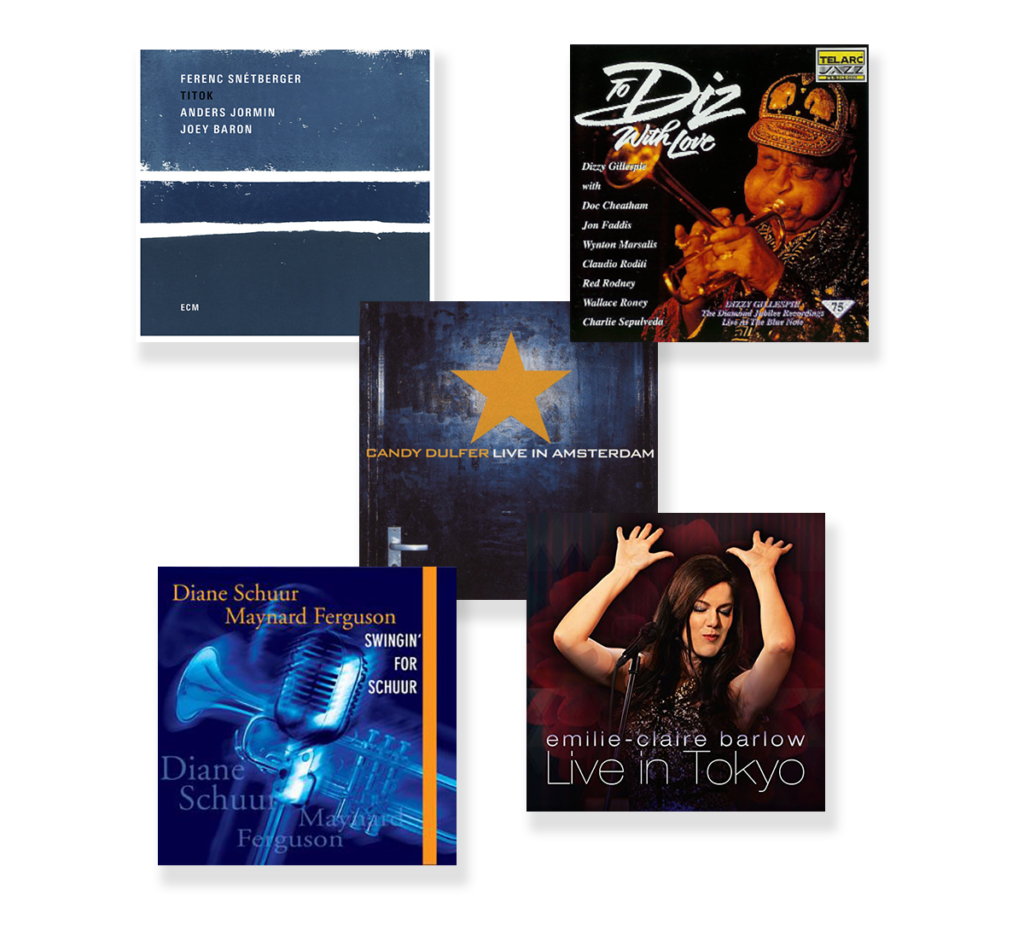
I selected the following set of tracks to evaluate micro-detail, imaging, rhythm and texture.
Ferenc Snétberger – Kék Kerék
Snétberger’s guitar sounds clean and precise, with a fast attack and beautiful texture in the strings. The resonance of the guitar body is clearly audible and gives each note a natural sense of weight. The double bass sounds firm and well defined, while percussion is crisp and reacts instantly to changes in pace. There is a nice amount of space between the musicians, with Snétberger’s guitar slightly more forward in the presentation.
Candy Dulfer – Lily Was Here – Live in Amsterdam
Dulfer’s saxophone has a strong presence and sounds wonderfully expressive. Changes in breath, pressure and intensity are clearly audible, especially when she pushes the instrument harder. There is a nice bite to the saxophone, but it never becomes harsh. The drum work is impressive, sounding tight, fast and precise. The guitar has its own position beside Dulfer, while the bass provides a firm foundation underneath. The live recording had real energy.
Straight No Chaser – feat. Wynton Marsalis
Dizzy Gillespie and Wynton Marsalis play off each other throughout the track, with their different tone and phrasing clearly coming through. The quick exchanges between the two trumpets sound sharp and precise, while the stronger notes have the power you expect from brass without becoming harsh. Marsalis sounds particularly impressive during the faster passages, where the AL4.4 follows every change in pace without smearing the notes together. The drums are tight and snappy, with the bass sitting firmly underneath. Even when both trumpets and the rhythm section are playing at full pace, there is enough separation to hear exactly what each musician is doing.
Diane Schuur & Maynard Ferguson – Just One of Those Things
Diane Schuur’s voice comes forward with excellent clarity and considerable energy in her upper register. When the band picks up speed, her voice stays firmly in front, while Ferguson’s trumpet cuts through with tremendous presence and a wonderfully vivid brass character. With Schuur, Ferguson and the band all going at full force, the recording becomes intense, but the AL4.4 handles the complexity surprisingly well. Drums are fast and energetic, with the bass providing a solid foundation underneath.
Emilie-Claire Barlow – (I’ve Got) Just About Everything I Need – Live in Tokyo
Barlow’s voice sounds close and clear, with excellent articulation and little added warmth. Small shifts in her phrasing and dynamics are reproduced with impressive precision. The double bass has good body and definition, while the percussion is light and quick. Piano is positioned further back. There is a surprising amount of depth between her voice and the musicians behind her, giving the live recording a real sense of space.