Over the past years, Sendy Audio has steadily expanded its headphone lineup, developing a recognisable identity built around distinctive designs, high-quality materials and proprietary planar magnetic technology. By developing its planar magnetic drivers in-house rather than relying on off-the-shelf solutions, the company continues to refine each new generation while maintaining the build quality and finish that have become synonymous with the brand.
Following the success of the original Apollo, Sendy Audio returns with the Apollo Pro. It introduces a newly developed 78 mm planar driver, an ultra-thin nano-composite diaphragm and a lighter overall construction.
Having already reviewed several headphones from both Sendy Audio and Sivga Audio, we were naturally looking forward to spending time with the Apollo Pro. Let’s see how it fits into Sendy Audio’s lineup.

Introduction
The Sendy Audio Apollo Pro is the company’s latest open-back planar. It is aimed at those looking for high-end performance without entering flagship price territory. After our first listen, what impresses most is not a specific standout characteristic, but how naturally every aspect of its presentation comes together. Resolution, imaging and tonal balance are all present.
The Apollo Pro has plenty of resolution and excellent imaging, but never sounds analytical. Everything stays in proportion, giving the music room to breathe without drawing unnecessary attention to individual details. That great balance is something we’ve come to recognise from Sendy Audio and the Apollo Pro continues that tradition.
The company opted for a large 78 mm planar magnetic driver housed inside an open-back construction. Planar headphones often excel in speed, resolution and openness, yet they can sometimes sacrifice musical warmth in favour of precision. Fortunately, that isn’t the route Sendy Audio has taken. Instead, the Apollo Pro delivers a smooth and natural presentation without giving up the qualities that make planar magnetic headphones so appealing.
Build Quality
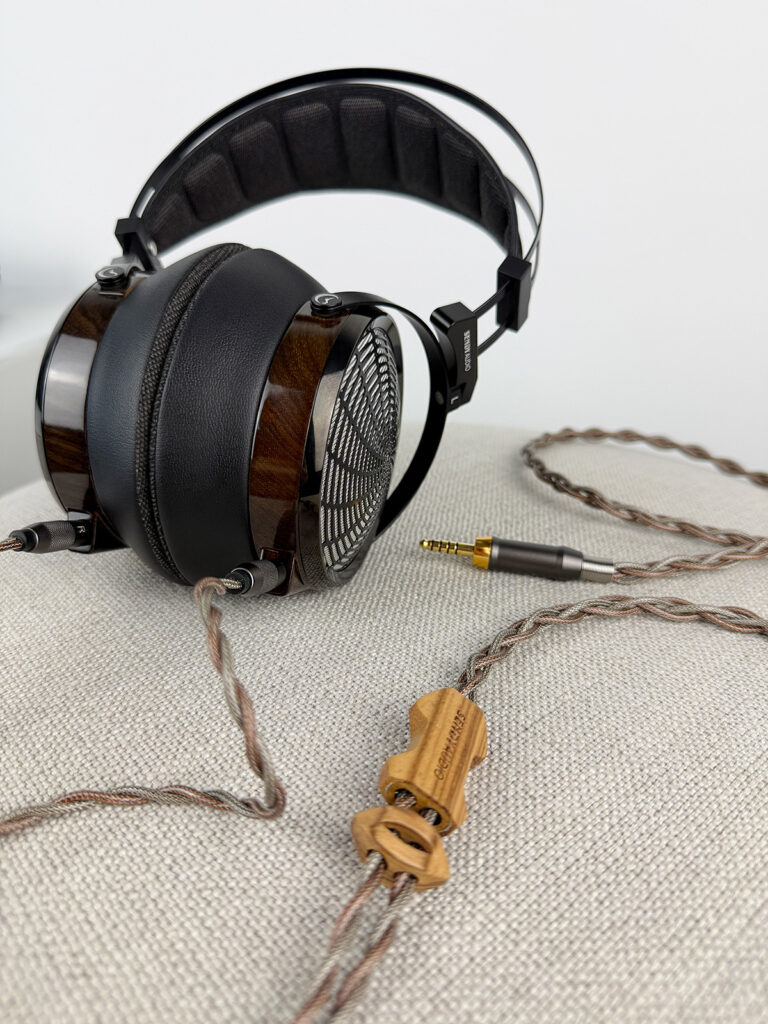
Sendy Audio has developed a recognisable design style. Natural materials, flowing lines and wood have become recurring elements throughout their headphone lineup. The result is a collection of headphones that are not only instantly recognisable, but also genuinely attractive to look at. The Apollo Pro continues that tradition.
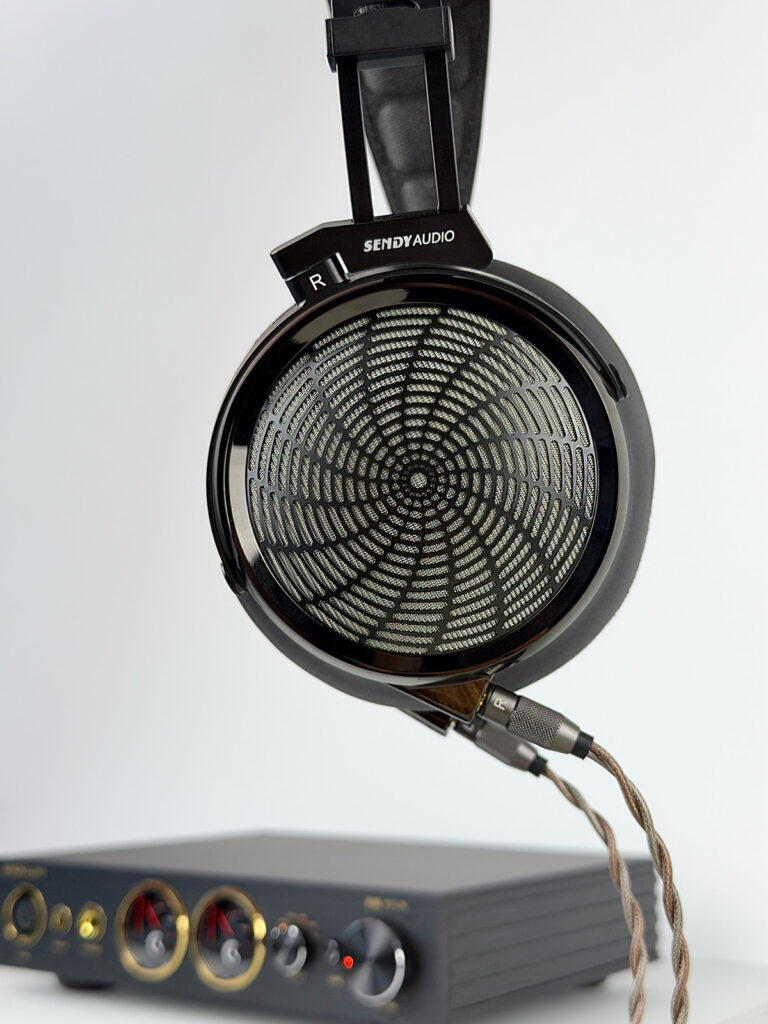
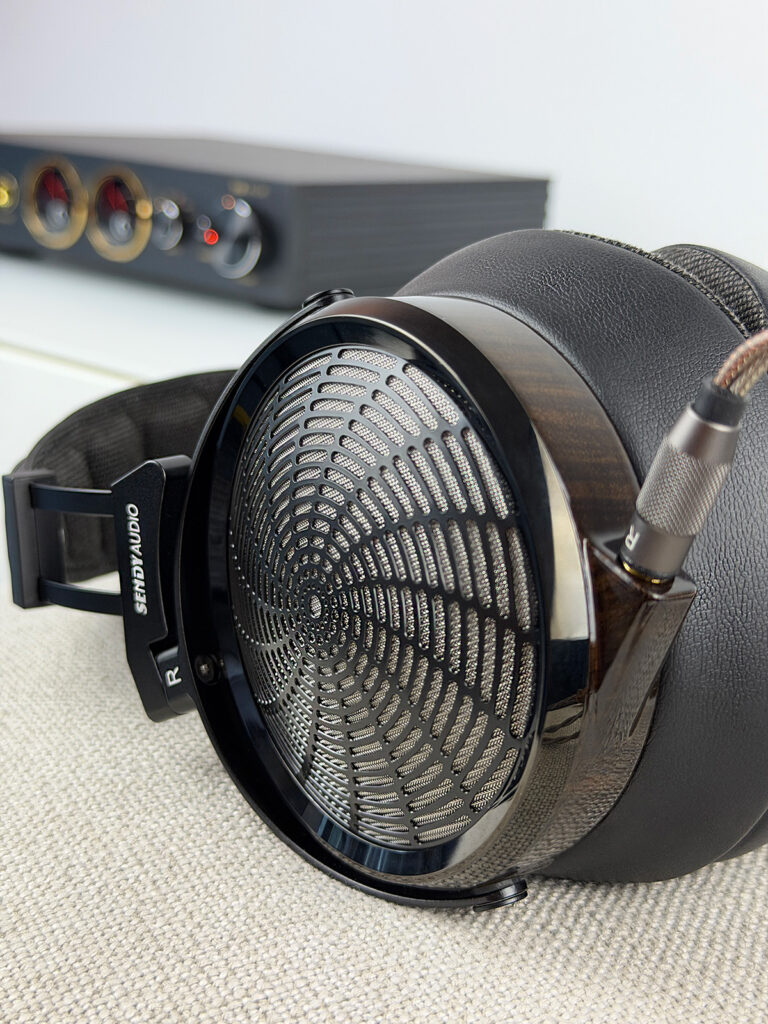
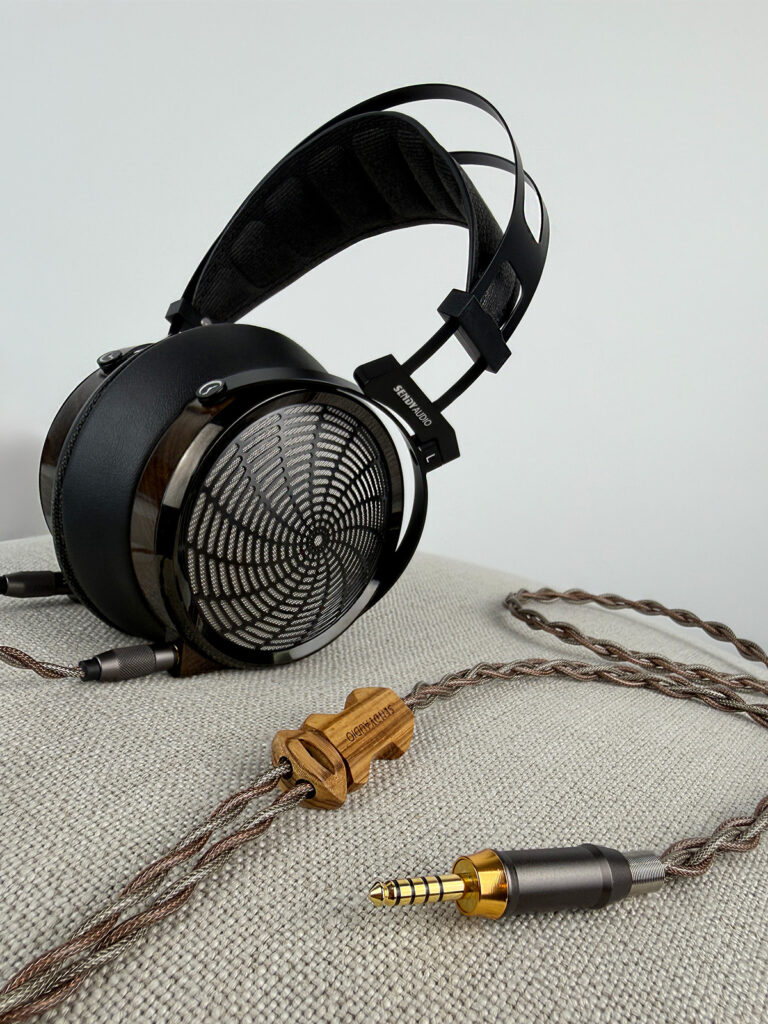
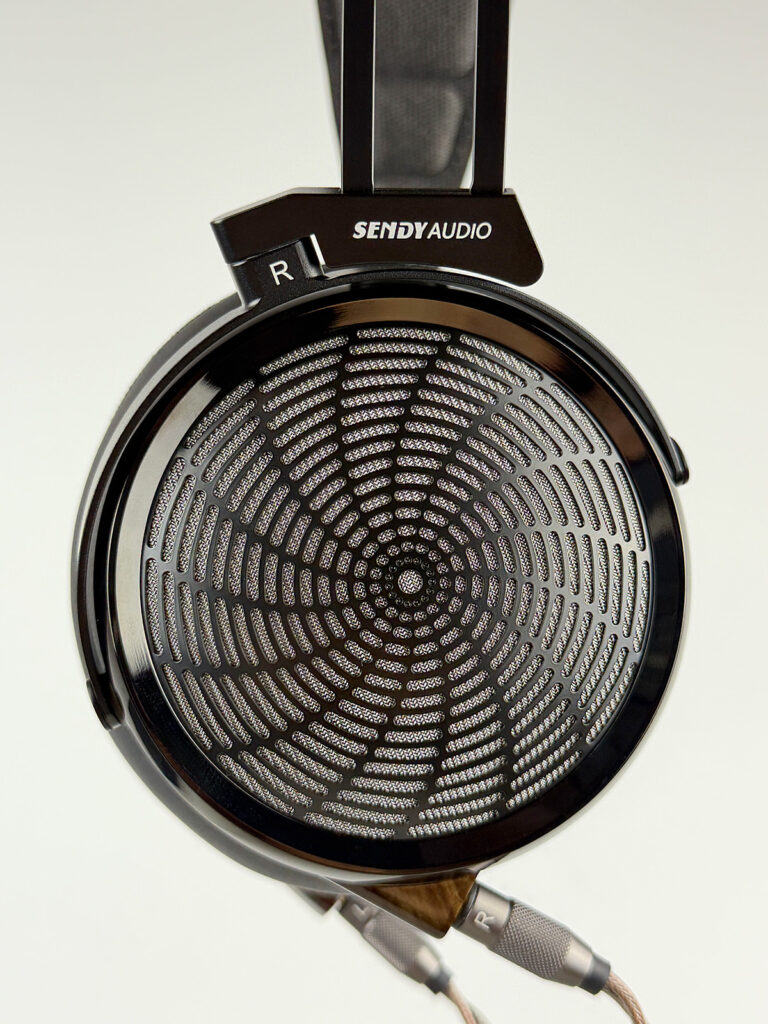
The zebrawood earcups are beautifully finished, displaying a rich natural grain beneath a deep gloss coating. Surrounding the wood is a precisely machined CNC aluminium frame, making the Apollo Pro feel every bit as well made as it looks.
Another detail that immediately catches the eye is the large open grille. The radiating pattern gives the Apollo Pro a distinctive appearance and complements the overall design beautifully.
Every moving component feels reassuringly solid. The yokes rotate smoothly, the adjustment mechanism holds its position confidently and nothing creaks. It is immediately apparent that considerable attention has been paid to both material selection and manufacturing tolerances.
Comfort
Comfort has consistently been one of the qualities that both Sivga and Sendy Audio get right and the Apollo Pro is no exception. Despite weighing approximately 354 grams, the headphone never feels heavy. Weight distribution has received a great deal of attention, resulting in a headphone that feels lighter than weight might suggest.
The suspension-style leather headband spreads the weight evenly, while the adjustment range makes finding a comfortable fit effortless. Once positioned, the Apollo Pro simply disappears, allowing you to focus on the music.
The earpads deserve particular praise. Covered in a soft, breathable velvet material with good internal depth, they provide excellent comfort. Unlike many planar headphones that rely on firmer pads to achieve a proper seal, these remain remarkably soft without sacrificing stability.
Wearing glasses often creates small gaps between the earpads, which can reduce low-frequency performance. The Apollo Pro proved unaffected by this, maintaining a consistent bass response throughout testing. The clamping force provides a secure fit without applying excessive pressure. Comfort is among the best we’ve experienced from a planar magnetic headphone in this price category.
What is in the box
The Apollo Pro arrives in a elegant box featuring a subtle illustration of the headphone’s distinctive grille pattern. Opening the box reveals a great leather carrying case, with the headphone securely stored inside. The supplied accessories are neatly organised in a separate linen pouch.
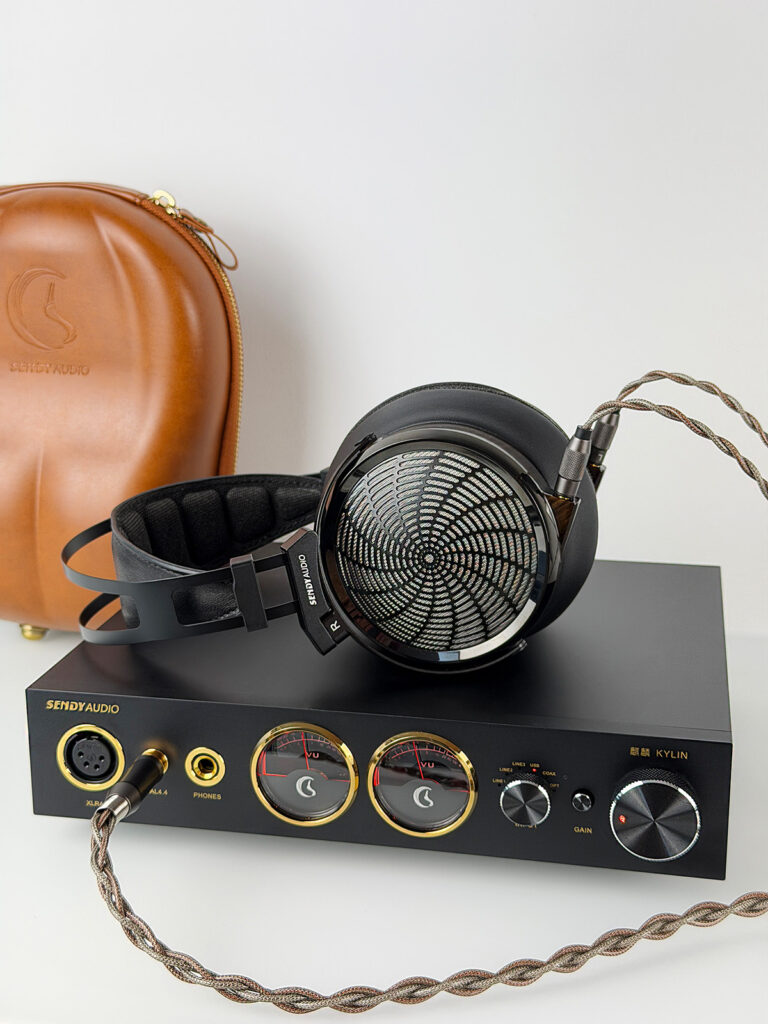
Leather carrying case
The Apollo Pro ships with Sendy Audio’s familiar leather carrying case. Although each case introduces small refinements, the overall design has remained consistent throughout their lineup. It has become a recognisable part of the Sendy Audio experience, offering excellent protection during transport while reflecting the company’s attention to detail. The leather feels durable, the construction is solid. It is among the better carrying cases included with headphones in this price range.
Included cable
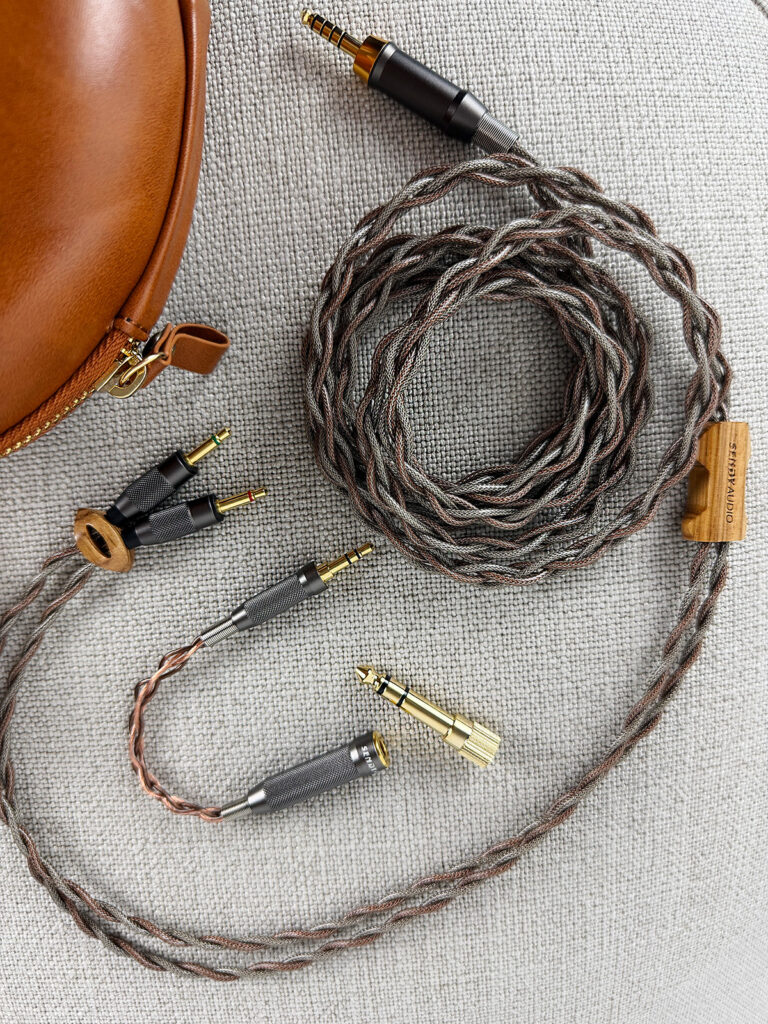
Inside the leather case, the Apollo Pro is accompanied by a small accessory pouch containing the supplied cable, along with both a 4.4 mm to 3.5 mm adapter and a 3.5 mm to 6.35 mm adapter.
Readers who have seen my review of the Sendy Audio Egret will immediately recognise the included cable. The same excellent cable introduced with the Egret is included with the Apollo Pro, which is a genuine plus. It remains one of the better stock cables available, especially in this price category! It is refreshing to see a manufacturer include a cable of this quality as standard, rather than treating it as something to cut costs on.
The cable features a multi-strand construction:
- 30 strands of 0.05mm Furukawa oxygen-free copper
- 10 strands of 0.05mm silver-plated OFC
- 10 strands of 0.05mm gold-enameled OFC
- The inner layer uses a graphene-reinforced PVC structure
- The conductors are wrapped in copper and silver-plated mesh, finished with a PVC outer sleeve
Specs:
- Type: Open-back planar magnetic headphone
- Driver: 78 mm planar magnetic driver
- Diaphragm: Nano-scale composite diaphragm (<800 nm)
- Conductor Layer: Electron-beam evaporation aluminium coating
- Frequency Response: 20 Hz – 40 kHz
- Impedance: 27 Ω ±15%
- Sensitivity: 93 dB ±3 dB
- Weight: 354 g
- Cable: Detachable tri-composite cable
- Cable Conductors: Furukawa OFC, silver-plated OFC and gold-enameled OFC
- Headphone Connectors: Dual 3.5 mm
- Source Connector: 4.4 mm balanced
- Headband: Lambskin leather
- Earpads: Breathable velvet
- Earcups: Zebrawood
- Frame: CNC-machined aviation-grade aluminium
- Accessories: Leather carrying case, linnen pouch, 4.4 mm balanced cable, 4.4 mm to 3.5 mm adapter and 3.5 mm to 6.35 mm adapter
Test equipment:
Sound Quality
Build quality and comfort may shape the first impression, but it is ultimately the sound that defines a headphone. The Apollo Pro delivers the speed, precision and openness expected from a planar magnetic driver, while maintaining a natural sense of balance throughout the frequency range. After listening to a wide variety of music over multiple sessions, one thing became increasingly clear: the Apollo Pro feels equally at home with virtually any genre, making it a versatile all-round performer.
The treble extends well without becoming sharp or introducing unwanted sibilance. Small details remain easy to hear, while the upper frequencies stay in proportion with the rest of the frequency range. Even at higher listening levels, the treble retains its composure rather than becoming aggressive or fatiguing, allowing the overall tonal balance to remain intact.
The soundstage extends beyond the headphone while preserving the original scale of the recording. Even during complex passages, vocals and instruments remain precisely positioned.
Dynamics are handled with ease. Subtle changes in volume remain easy to perceive, while larger dynamic swings retain their impact without overshadowing finer details.
Treble
The Apollo Pro avoids obvious treble emphasis, yet extends well into the highest frequencies. Small details remain easy to hear without making the upper frequencies feel overemphasised.
High-frequency instruments like cymbals retain their definition without sounding overly sharp. There is enough energy to preserve the attack of percussion, while decay remains easy to follow without becoming exaggerated. Even when recordings become busy, individual details remain distinct instead of merging together.
Volume has surprisingly little influence on the character of the treble. Raising the listening level does not suddenly make vocals or percussion more aggressive. Brighter recordings are presented as they are, but the Apollo Pro rarely adds extra sharpness of its own.
Midrange
Vocals are neither pushed forward nor recessed, occupying a natural position within the soundstage. Instruments are given sufficient space around them, allowing individual lines to remain easy to follow even as arrangements become more complex.
A subtle touch of warmth adds natural body to voices without shifting the Apollo Pro towards a warm overall signature. Instruments retain their own character and timbre, resulting in a midrange that feels balanced, realistic and free from artificial coloration.
Rather than relying on elevated upper mids to create the impression of extra detail, the Apollo Pro remains faithful to the recording. Nuances emerge naturally, allowing vocals and instruments to sound clean and articulate without drawing unnecessary attention to themselves. Midrange remains composed, coherent and consistently engaging across a wide variety of recordings.
Bass
Bass is delivered with excellent control while avoiding one of the characteristics sometimes associated with planar magnetic headphones: an emphasis on precision at the expense of weight and body.
Sub-bass extends deep without becoming dominant. When present in the recording, it adds weight without overshadowing the rest of the frequency range. The speed of the planar driver keeps individual bass notes separate, making differences in texture and pitch easy to distinguish. At the same time, the low end never masks vocals or other instruments. Low-frequency instruments retain their own character instead of blending together, making it easy to distinguish individual lines even in more complex arrangements.
Soundstage & Imaging
The Apollo Pro creates a great soundstage that extends beyond the headphone itself while preserving the original scale of the recording. As recordings become more complex, the soundstage doesn’t collapse, allowing width and depth to remain intact.
The position of vocals and instruments doesn’t change as the recording becomes busier. Additional instruments retain their own space instead of overlapping with those already present, preserving clarity even in densely layered recordings.
Depth is another area where the Apollo Pro performs particularly well. instruments or voices positioned closer to the listener remain clearly separated from those further back, creating a convincing front-to-back perspective that is often difficult to find in this price category.
Pairing
With an impedance of 27 ohms and a sensitivity of 93 dB, the Apollo Pro is relatively easy to drive. It performs well from a wide range of sources, although a higher-quality amplifier can further improve bass control, dynamic expression and instrument separation.
The new Sendy Audio Kylin proved to be an excellent match. Its slightly fuller and more organic character complements the Apollo Pro well, adding a little more body to the lower frequencies and extra richness through the midrange. The Apollo Pro’s sense of openness and resolution remains fully intact, making this one of the most natural and enjoyable combinations of the four.
Paired with the Burson Audio Conductor Stellar, the Apollo Pro sounds authoritative. Bass has control and impact, while maintaining its speed and definition. The midrange sounds open and evenly balanced, with vocals and instruments keeping their own place in the mix. Treble stays clean and extended, allowing the Stellar’s Class A character to bring a greater sense of ease to the overall presentation. Compared to the Sendy Audio Kylin, the Burson Conductor Stellar introduces a subtle increase in upper-frequency openness, resulting in a slightly more vivid presentation.
Connected to the Luxsin X8 (in bypass mode), the Apollo Pro leans towards a clean and neutral presentation. The low noise floor of this amp makes subtle details easy to distinguish, while complex recordings remain easy to follow without instruments blending together. The overall balance stays unchanged. The X8 brings great clarity and separation, while a subtle touch of warmth keeps the Apollo smooth and natural.
The iBasso DX270 shows that the Apollo Pro is equally at home with a portable source. Control remains impressive throughout the frequency range, with well-defined bass, an open midrange and a clean extended treble. The R2R architecture complements the Apollo Pro particularly well, adding a little more density through the midrange while preserving its openness and separation. Although it doesn’t quite match the authority of the desktop amplifiers, the Apollo Pro never feels limited by the DX270.
Across all four sources, the Apollo Pro retains its own identity. Higher-end amplification improved control, separation and dynamic expression, but the headphone’s overall character remains remarkably consistent regardless of the source.
Listening impressions
Please allow me to walk you through a few music tracks to highlight Apollo Pro’s strenghts and capabilities.

Jane Monheit – So Many Stars
Jane Monheit’s voice is reproduced with a natural sense of body and texture, capturing the subtle nuances in her phrasing without adding unnecessary warmth or emphasis. The accompanying instruments, double bass and percussion remain clearly separated, each occupying its own space while supporting the vocal effortlessly. The presentation preserves the intimacy of the recording.
Janine Jansen – Violin Concerto in E Major, BWV 1042 – I. Allegro
The relationship between the solo violin and the orchestra is handled particularly well. The violin remains clearly identifiable throughout the performance, while the different sections of the orchestra are easy to distinguish as the piece develops. The smoother upper register of the Apollo Pro also suits this recording, allowing the violin to retain its character without becoming overly bright.
Wynton Marsalis – The Cat in the Hat Is Back (Live)
The atmosphere of the live performance is conveyed effortlessly. Audience reactions are reproduced with convincing realism, adding to the sense of being present without distracting from the music. As the arrangement grows in complexity, each musician remains firmly positioned, preserving the structure of the performance and allowing every layer to emerge with clarity.
Chantal Chamberland – Thinking Out Loud
The lower register of Chantal Chamberland’s voice is reproduced with convincing weight and texture, preserving its natural warmth without becoming overly full. Subtle variations in tone and expression remain clearly audible, while the accompanying instruments provide a solid foundation without masking the vocal. The emotional intent of the performance comes through effortlessly.
Chris Jones – Would Not Have It Any Other Way
This recording benefits from the Apollo Pro’s controlled low end. Chris Jones’ voice sounds full and natural, while the acoustic guitar retains its attack without becoming sharp. The strong bass in this track adds convincing weight on the Apollo Pro’s without overshadowing the rest of the recording.
Joe Bonamassa – Sloe Gin
Few recordings build as gradually as Sloe Gin. As the arrangement evolves, the Apollo Pro preserves the separation between Bonamassa’s guitar and the rhythm section, allowing the increasing complexity to unfold naturally. The guitar has enough bite to command attention when the music demands it, while the vocals retain their natural presence and expression throughout the recording’s most powerful moments.
Conclusion
With each new release, Sendy Audio has continued to refine its planar magnetic technology and overall product development, something that became evident with the recently launched Egret and is equally apparent in the Apollo Pro.
Rather than excelling in one particular area, the Apollo Pro impresses through its consistency. Bass, midrange and treble remain in natural balance, while its overall character changes very little from one recording or musical genre to another. The Apollo Pro makes it remarkably easy to lose yourself in the music. Ultimately, that is what makes it such an easy recommendation.
The attention to detail extends well beyond the sound itself. Every aspect feels carefully executed, from the construction of the headphone to the accessories included in the box. The inclusion of the same premium cable supplied with the Egret reflects the same attention to detail found throughout the rest of the package.
Apollo Pro’s strikes an excellent balance between refinement and extension, delivering plenty of sparkle and air without becoming overly pronounced. Sendy Audio has opted for a smoother, more relaxed tuning that remains composed, natural and free from fatigue, instead of pursuing an overtly energetic or forward presentation.
If you’re looking for an open-back planar that prioritises balance over spectacle, the Sendy Audio Apollo Pro deserves your attention. It is an easy recommendation from JJAZZIFI.
Pros
- Excellent build quality
- Outstanding comfort
- Natural and balanced tuning
- Controlled, well-extended bass
- Excellent instrument separation
- Smooth, fatigue-free treble
- Great soundstage
- High-quality stock cable
- Easy to drive
Cons
- Slightly relaxed upper treble
- Less airy than some planar competitors
- Stock cable is relatively thick for portable use