Burson Audio is a well-established name in high-end audio, known for its focus on discrete op-amp technology and fully Class A designs. Rather than relying on standard integrated circuits, the company follows a clear design philosophy where simplicity is key to performance. Today, in 2026, Burson Audio has a strong global presence, with its products available in more than 60 countries through a network of specialized dealers and online platforms.
The company’s roots trace back to 1996, when Mark Burson and John Delmo founded it in Melbourne, Australia. Although the name officially appeared in 2001, the team had already built a solid foundation in high-end audio well before that. In 2005, the focus shifted more directly toward the consumer market, marking the beginning of its international expansion.
Burson Audio places a strong emphasis on modularity and long-term usability. Many of their products support upgrades over time, while high-quality components and solid aluminum housings ensure lasting durability.
In this review, we explore the Burson Conductor Stellar Deluxe, built to effortlessly handle demanding headphones while also, for the first time, featuring a dedicated IEM stage. Integrating both into a single design presents a real engineering challenge, with precise control over noise, gain and power delivery.

Class A amplification
The Burson Audio Conductor Stellar is a full Class A amplifier. Class A designs are known for running hot and the Stellar is no exception. It gets quite warm, but is designed to handle this without issue.
The sound signature of a decently build Class A amp is best described as tube-like. While fully solid-state, Burson amps lean gently toward the warmer side, thanks to their true Class A operation. Tube amps and Class A designs share more than just their sound. Both keep their components continuously active, even without a signal. This avoids crossover distortion and results in highly linear amplification. The result is a smooth and harmonically richer presentation that feels more natural than class AB designs.
By comparison, Class AB amplifiers inherently introduce crossover distortion by design. This occurs when the signal transitions between positive and negative halves, handled by separate output stages. Modern Class AB designs have improved significantly, using advanced biasing and feedback to reduce this effect to very low levels. Even so, it still cannot be fully eliminated and well-designed Class A amplifiers still tend to deliver a more natural and continuous presentation.
The Conductor Stellar
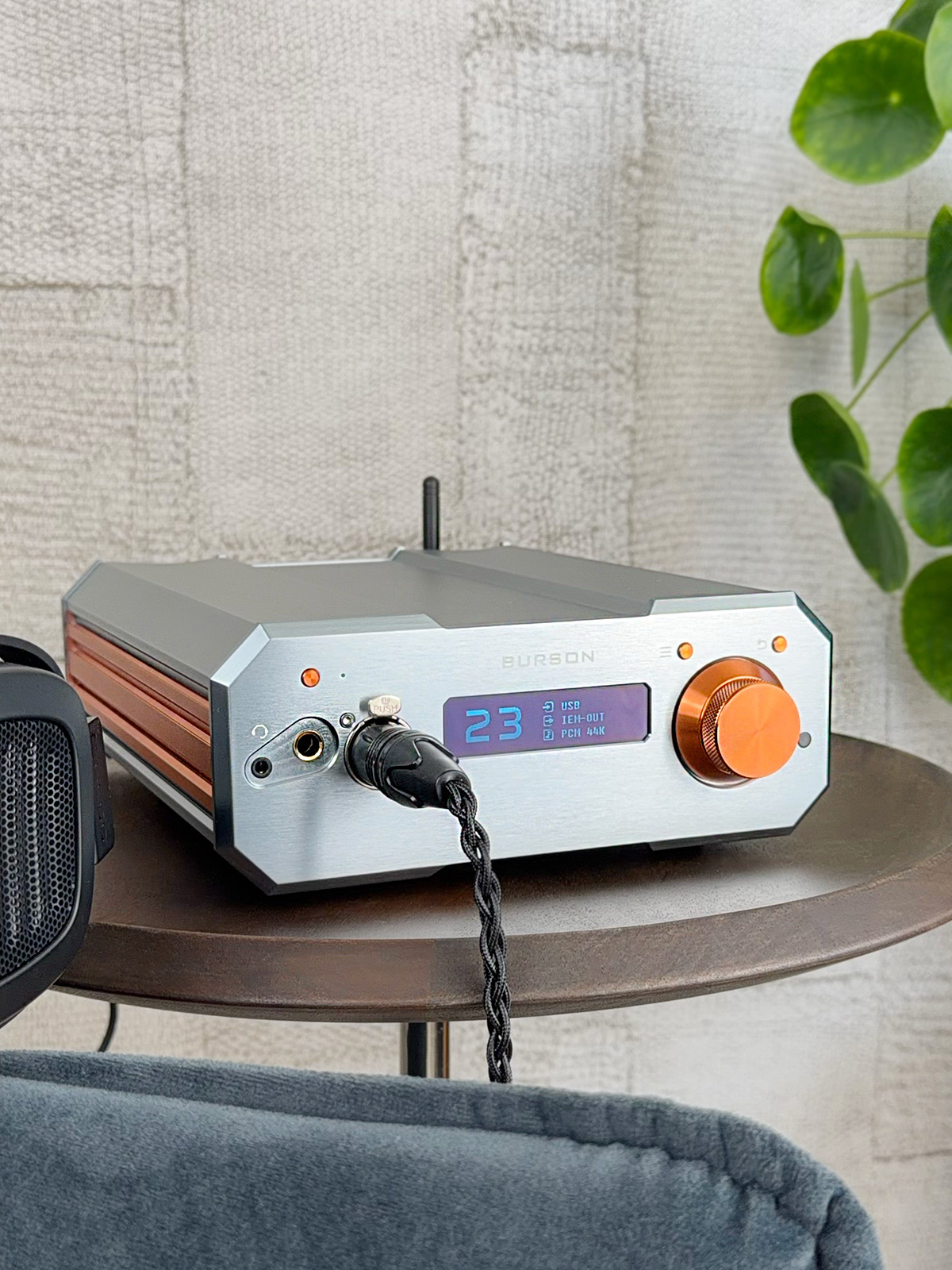
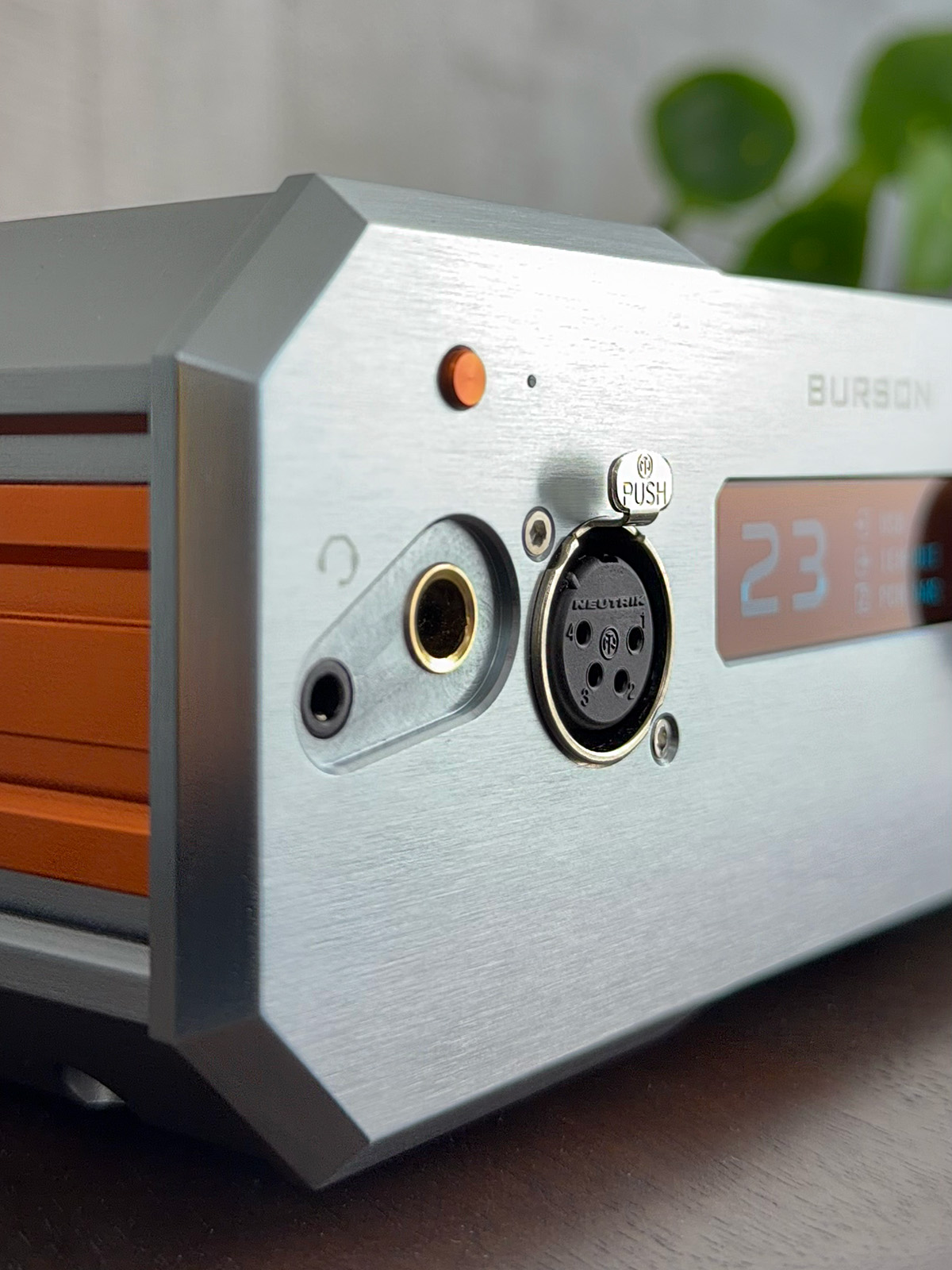
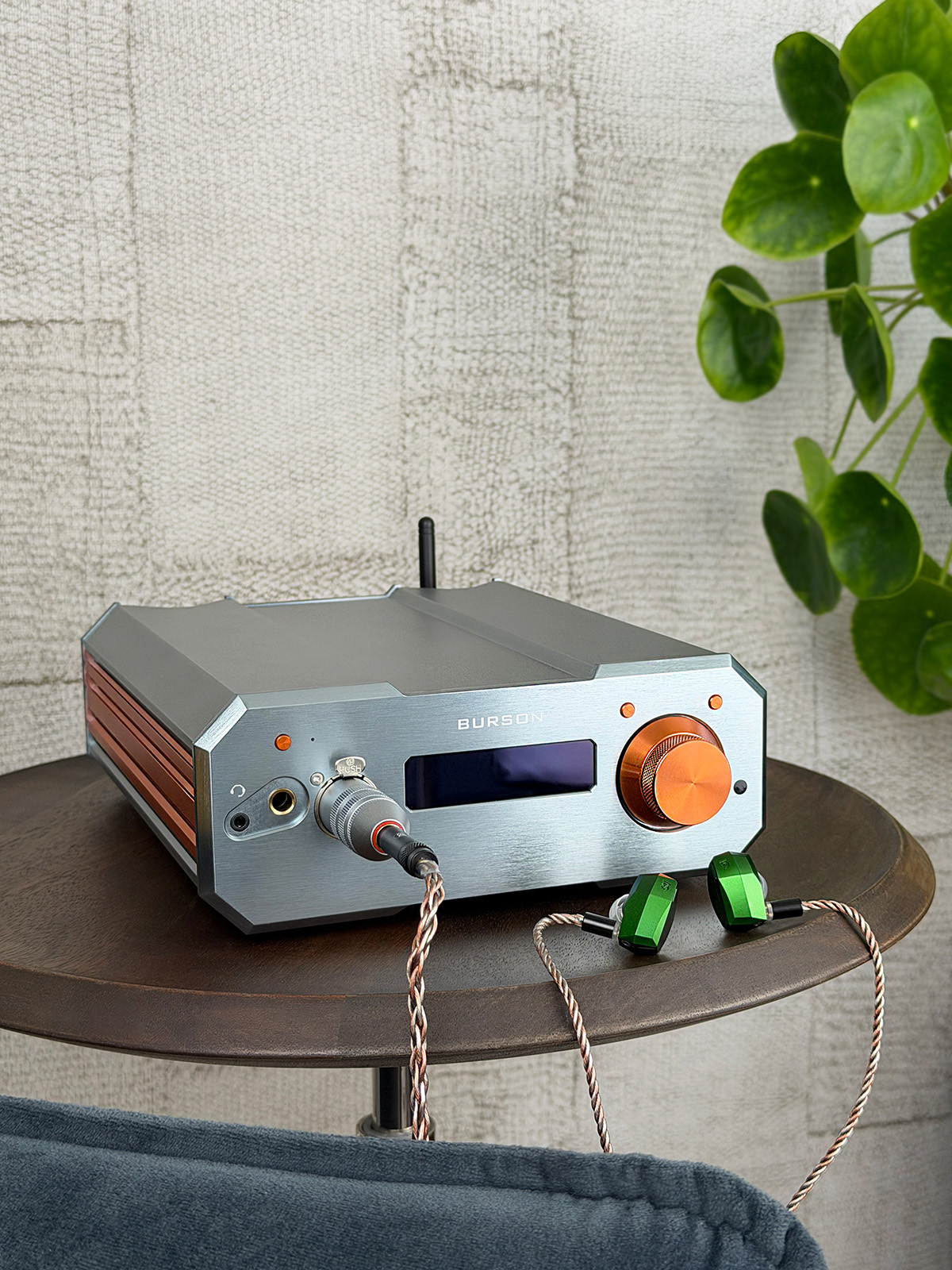
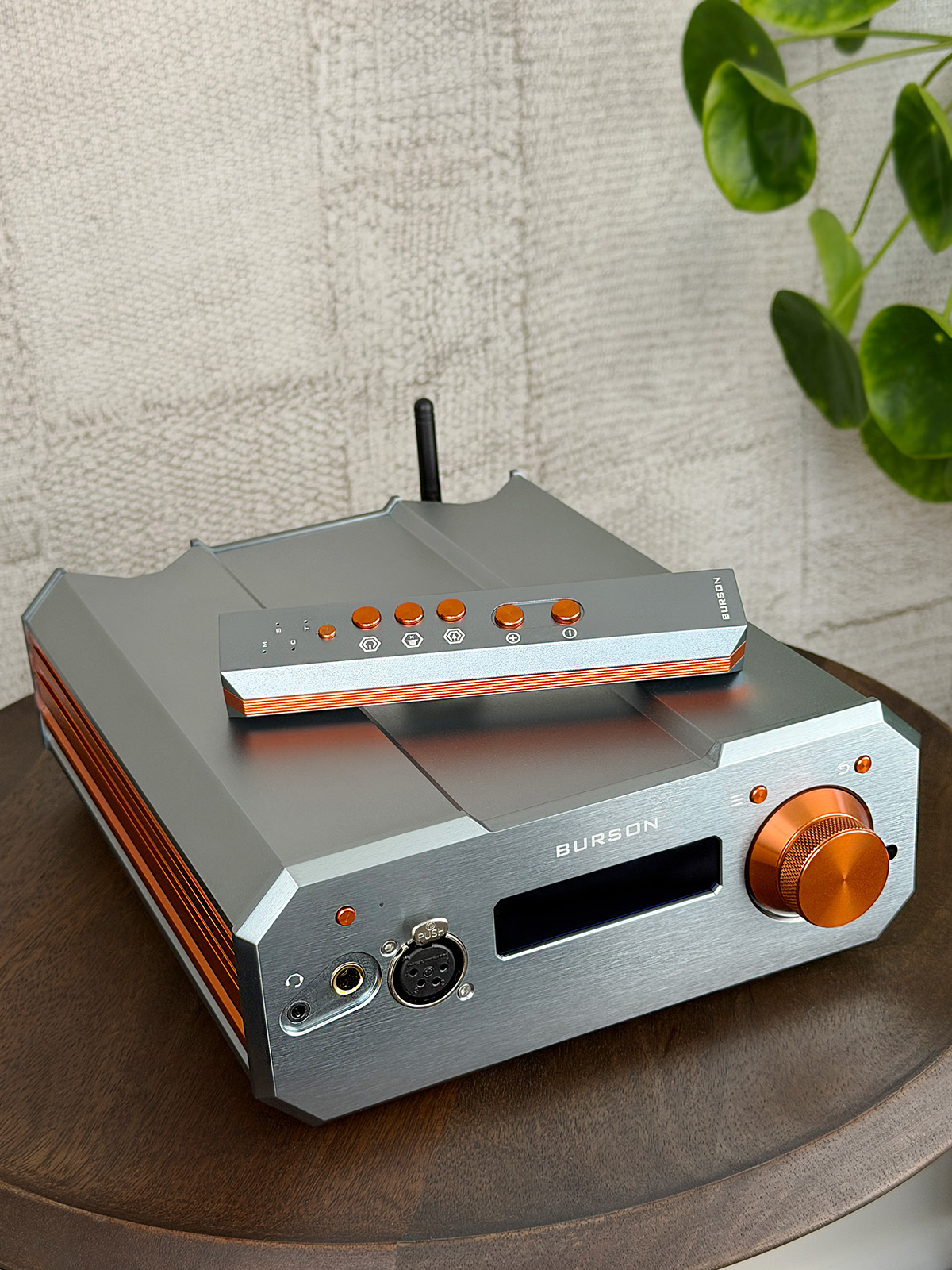
The Burson Audio Conductor Stellar makes a strong impression. It’s compact, but feels like a device built without compromise. Not a stripped-down flagship, more like a flagship in a smaller body.
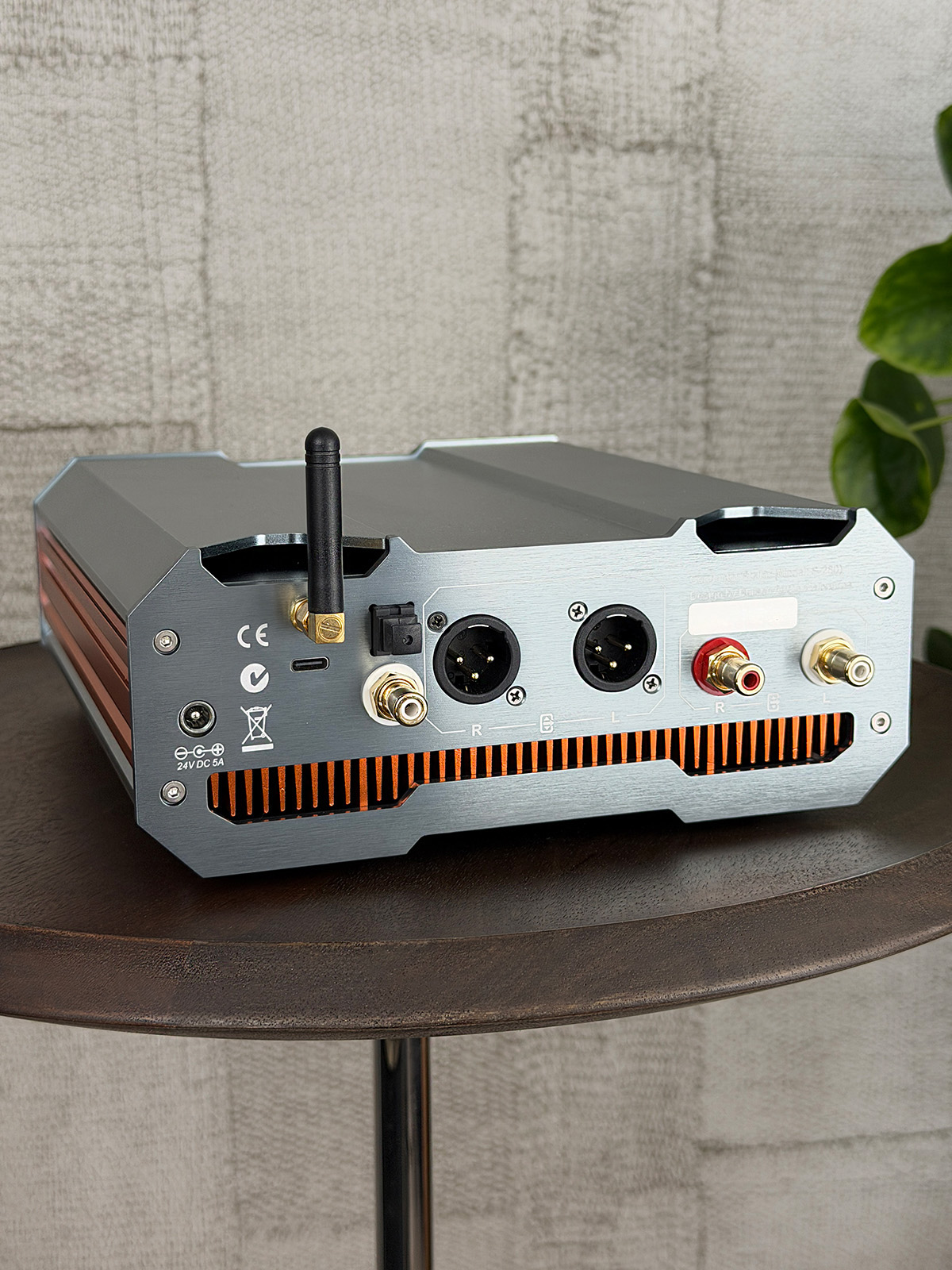
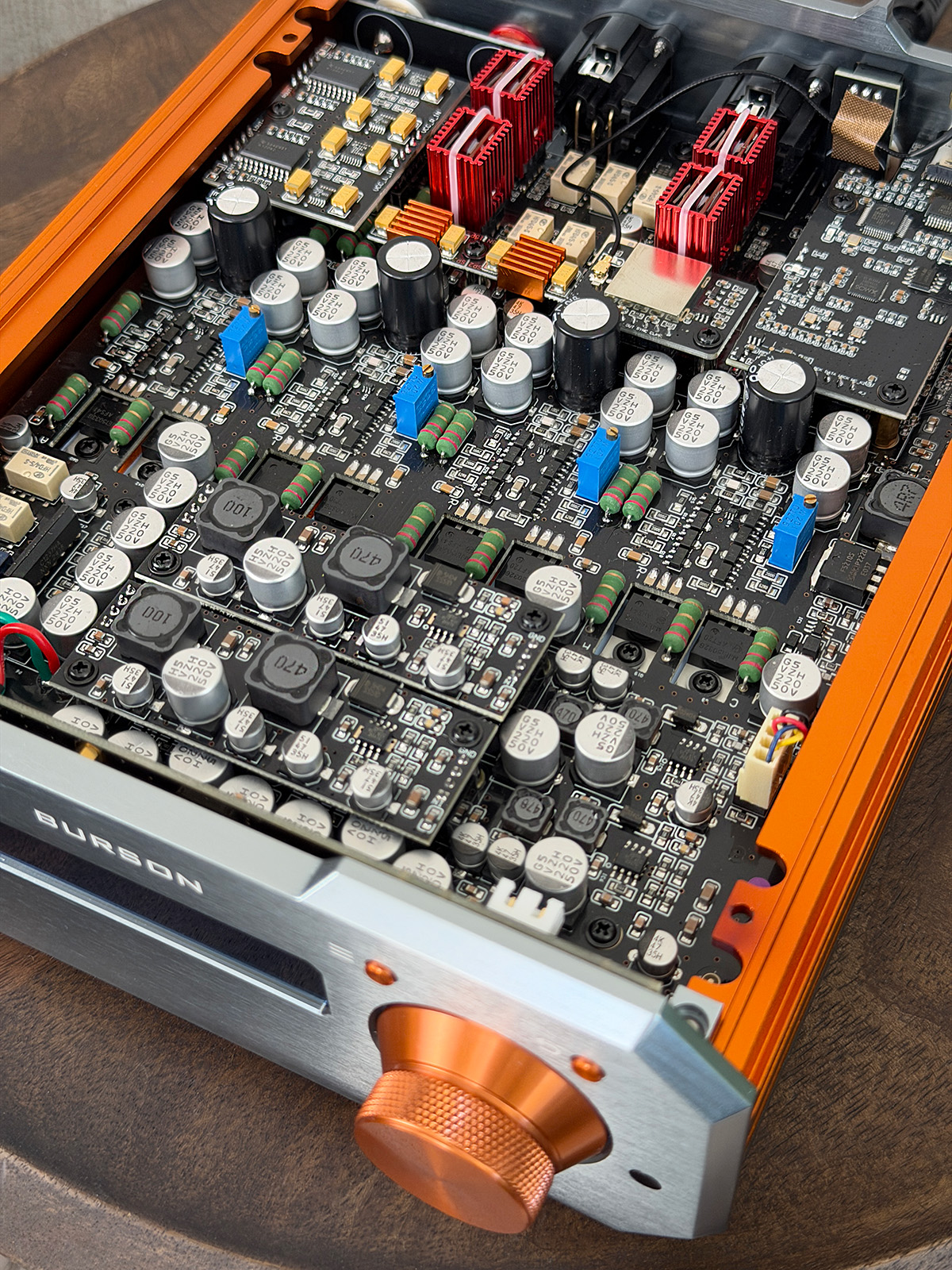
Like its bigger brother, the Voyager, the chassis is milled from thick, rigid aluminium. The vents and fins are not there for show. They are integral to a cooling system that enables Class A operation. Heat is managed, not avoided. The amplifier does get warm in use, but this is entirely within specification and has no impact on performance or reliability.
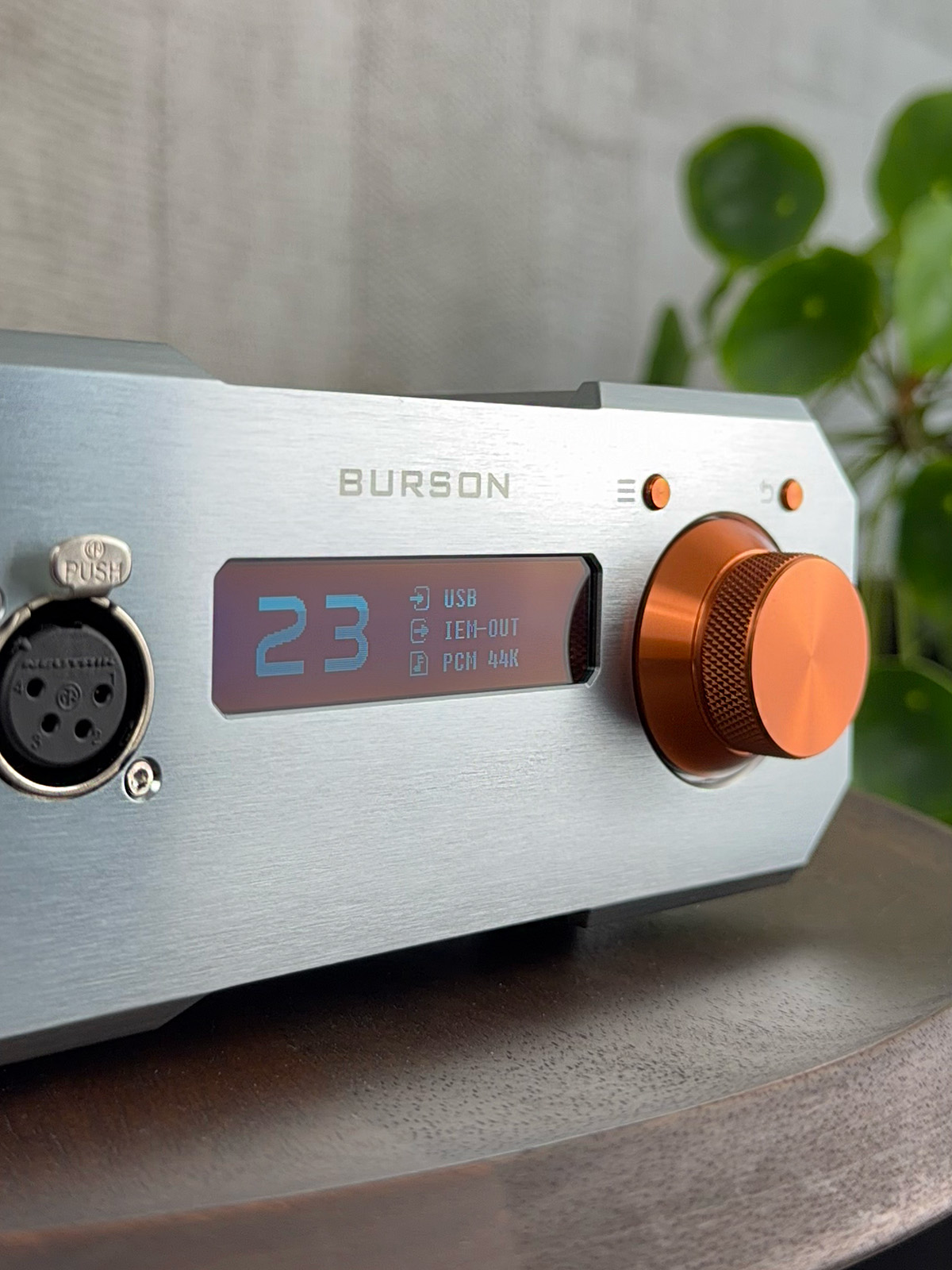
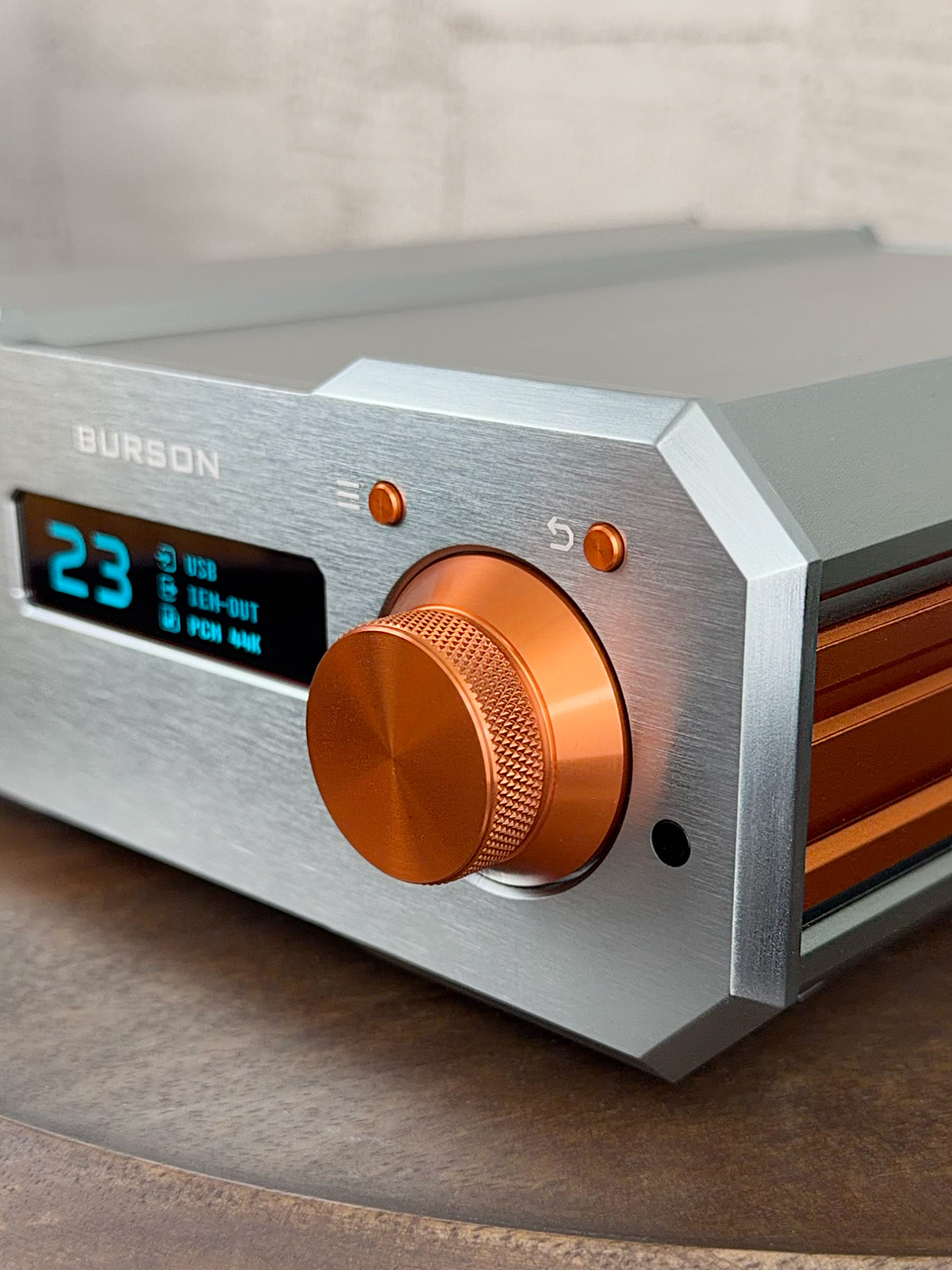
The volume knob feels excellent. Compared to the Voyager, it offers slightly more resistance, allowing for more precise adjustments and a greater sense of control.
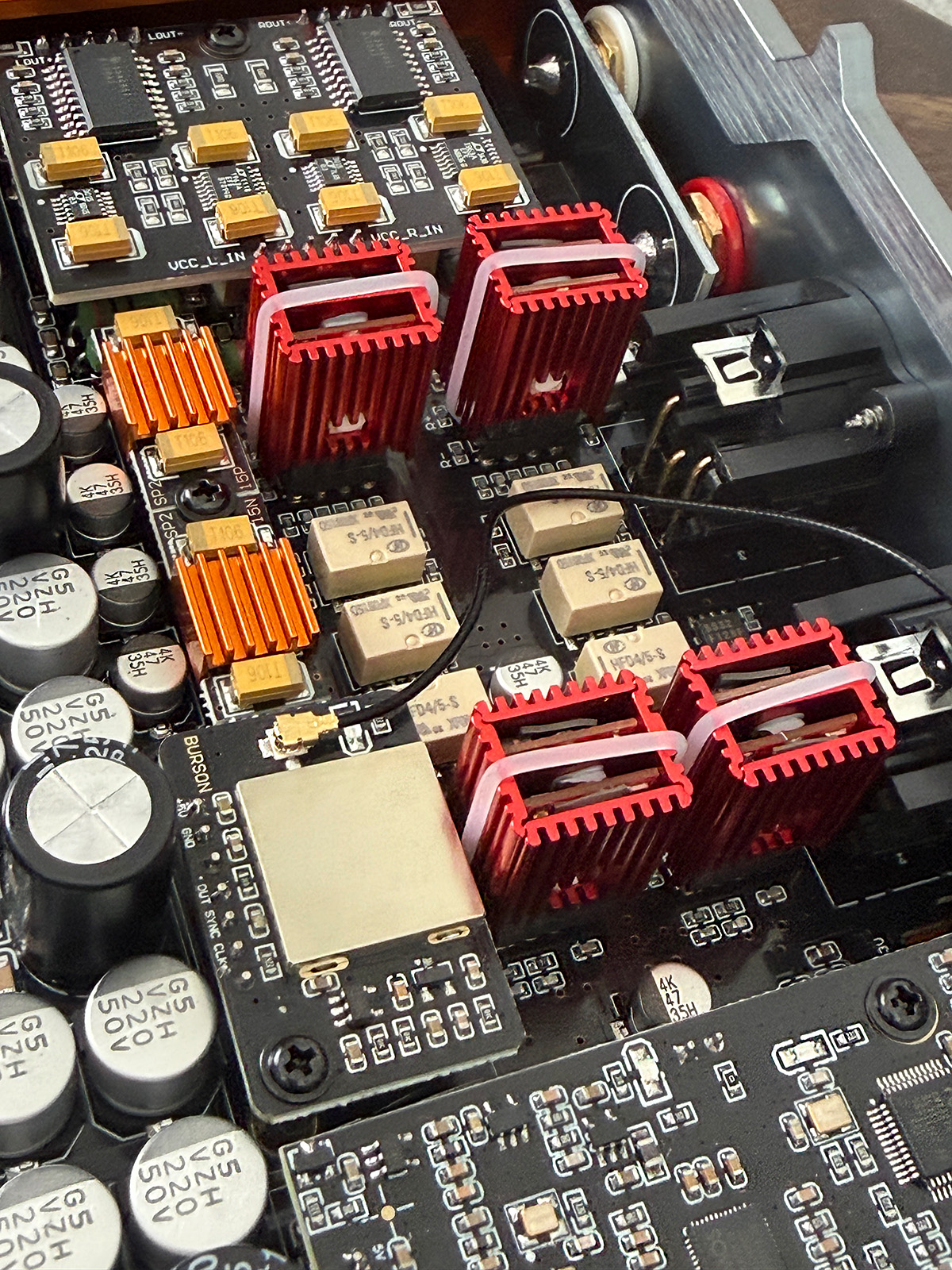
What sets the Burson Audio Conductor Stellar apart from earlier Burson designs is its dedicated support for IEMs. The Stellar isn’t just one amplifier, it is actually two in one. A high-power Class A stage for headphones, combined with a separate ultra-low noise stage for IEMs.
While IEMs could be used on the more powerfull units before, the high output power often made them less than ideal. The high output often brought a touch of hiss, which is not unusual with so much power. Many high-end headphone amplifiers struggle to balance both. You either get the best out of headphones or IEMs, but rarely both. With the Burson Audio Conductor Stellar, that compromise is no longer an issue. IEMs are now well supported, even the most sensitive one’s.
This is a real game changer. Where you would normally rely on a separate amplifier for IEMs and another for demanding headphones, the Stellar lets you use both in a single device without compromise, while still benefiting from the fully discrete V7 op-amps.
Build in DAC
The DAC section of the Burson Audio Conductor Stellar is more than a convenience. Built around the ESS9039PRO chip, typically seen in higher-end standalone DACs, it delivers excellent resolution, wide dynamic range and precise control.
Burson Audio has done an excellent job with its ESS9039PRO implementation. Rather than leaning into the typical ESS character, the DAC is paired with a fully discrete output stage and V7 op-amps. This combination takes the edge off, resulting in a more natural and slightly fuller presentation. You still get the detail and speed, but without sounding clinical or fatiguing.
The DAC section supports PCM up to 32-bit / 768 kHz and native DSD512. It is paired with a fully discrete I/V and output stage, supported by Burson’s V7 op-amps and silent power modules. The result is a very low noise floor, even more noticeable with sensitive IEMs.
Connectivity is well covered, with USB-C via an XMOS interface (768 kHz), Toslink (192 kHz), coaxial (192 kHz) and Bluetooth (96 kHz)
The well-executed DAC section makes the Stellar feel like a true all-in-one, not just a powerful amp with a convenience DAC.
Menu
From the menu you can configure several options:
- Input selection (USB, Toslink, Coaxial, Bluetooth)
- Output mode: headphone, IEM, pre-out – XLR/RCA
- Gain level: low or high
- DPLL bandwidth: high or low (signal stability)
- FIR filter: several sound tuning options
- THD compensation: on or off
- IRR bandwidth: different levels of noise filtering
- OLED level: low or high
- USB mic: on/off
- Remote control: on/off
- Auto off: on/off (after 20 minutes of inactivity)
- Reset: restore factory settings
Pressing the volume knob mutes the music.
General specifications
Amplifier section
- Topology: Fully discrete Class A
- Output stage: 4x MJE15032 transistors per channel
- Output power:
- 8W @ 16Ω (balanced)
- ~5W @ 32Ω (balanced)
- ~500mW @ 300Ω
- Dedicated IEM amplification stage (ultra-low noise)
DAC section
- DAC chip: ESS9039PRO (flagship)
- PCM support: Up to 32-bit / 768 kHz
- DSD support: Native DSD512 (USB-C)
Connectivity
- Inputs:
- USB-C (XMOS, 768khz)
- Optical (Toslink)
- Coaxial
- Bluetooth 5.0 (LDAC, aptX HD, AAC)
- Outputs:
- XLR pre-out
- RCA pre-out
- RCA subwoofer output
- Headphone outputs:
- Balanced XLR
- 6.35 mm
- 3.5 mm
Power supply
- Power supply: Supercharger(deluxe version), Fusion Core (max version)
- Regulation: Silent Power modules 1 or 2 depending on version
- Cooling: Passive with assisting fan cooling
Size and weight
- Dimensions: 210 × 200 × 75 mm
- Weight: Approx. 5 kg
- Aluminum chassis with fan assisted cooling (Silent)
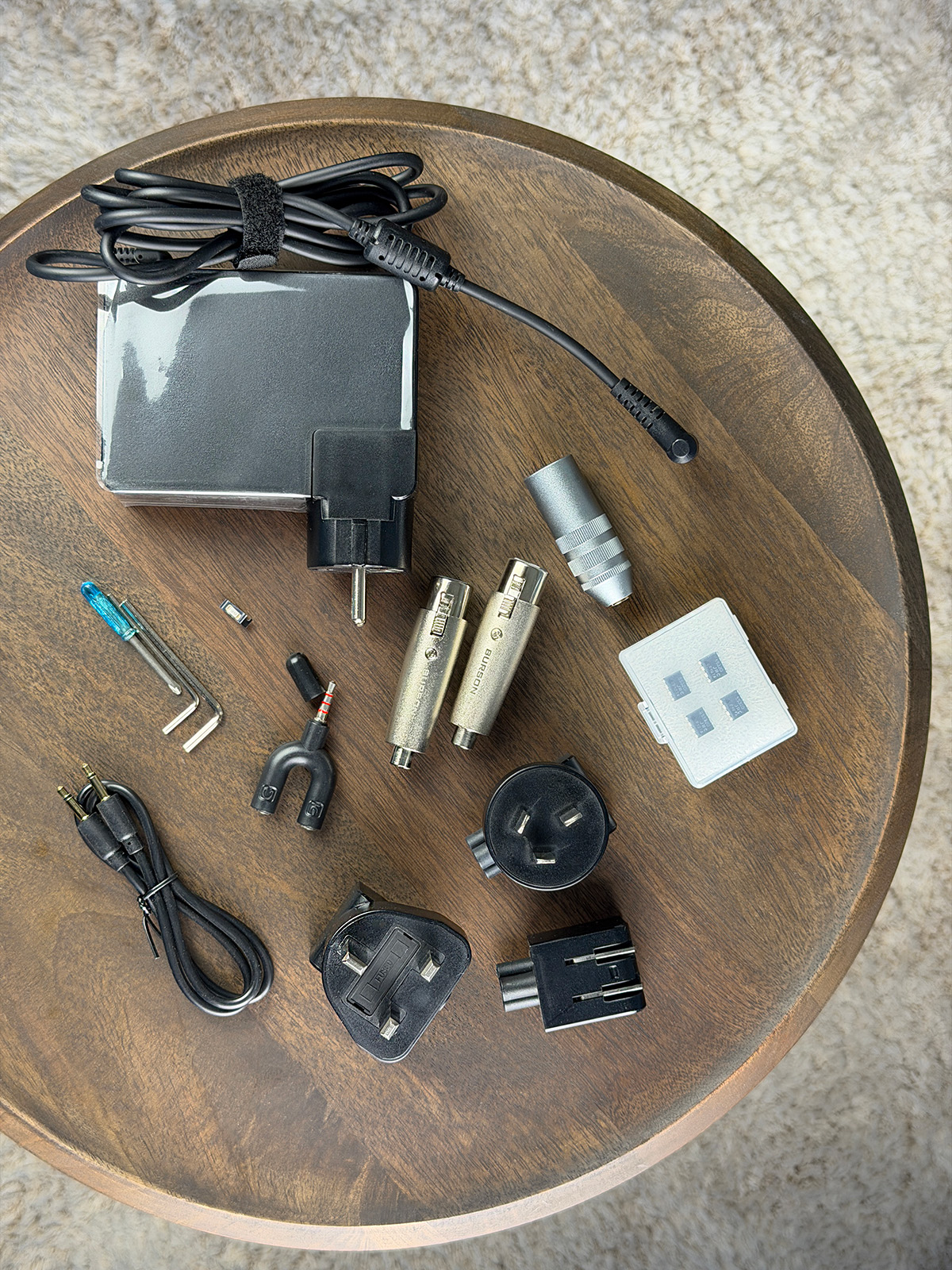
In the Box
- Conductor Stellar
- Remote control (included with deluxe and higher versions)
- Powersupply (options):
- 24V / 5A power supply (standard package)
- 24V / 5A Super Charger with (deluxe package)
- 24V / 15A Fusion Core (max package)
- Opamps:
- Burson NE5532 installed (standard package)
- Burson V7 Pro Vivid (deluxe & max package)
- Hex key / spare fuse / spare IC 5532 opamps for testing / XLR to RCA adaptors
- 12v trigger cable
- usb cable
Test Equipment:
– Main testing was done with the supercharger and build in DAC, connected to the Eversolo T8
Sound quality
The first thing that is noticable when listening to the Conductor Stellar is its sense of control. The presentation is smooth and detailed, without sounding exaggerated. It gives music a clear sense of authority and precision. Transients are well balanced and complex passages are clearly structured, adding a satisfying sense of weight to the presentation.
With up to 8 watts of Class A power on tap, the Stellar offers more than just volume, it delivers grip. The sound remains controlled and consistant, even when the music becomes demanding. That sense of effortlessness is more noticeable the more you listen. The overall character is energetic and slightly forward, pulling you into the music with a strong sense of engagement. It remains lively without sounding forced.
The low noise floor is a clear strength of the Conductor Stellar. No audible hiss or background noise is present, even on sensitive headphones, leaving nothing to distract from the music. This clean background created space, allowing micro details to emerge naturally. The ESS9039PRO DAC contributes to the resolution, while the analogue stage, operating in full Class A, keeps everything natural and musical.
Treble
Treble on the Conductor Stellar is clean, extended and controlled. It has enough presence to keep things engaging, but never becomes harsh. There is a level of smoothness here that many ESS9039-based DAC implementations in all-in-one designs struggle to achieve. Instruments have bite without glare and there is a sense of air that adds openness without exaggeration. Even at higher volumes, the top end remains controlled and smooth, without sounding harsh or tiring.
Midrange
Midrange is clear and neutral with a slight push forward. Vocals sit nicely in the mix. Not overly intimate, but definately not recessed either. There is good separation between instruments and everything feels well-defined. The presentation favors precision and clarity over an ultra-organic, tube-like warmth. Instruments sound clean and well layered, making it a strong match for those who prefer transparency over coloration.
Bass
Bass on the Stellar is controlled and well balanced, with good weight and punch when needed. It extends deep with a solid grip and definition, while offering clear layering and fine micro details in the low end. Compared to larger Burson units, it is slightly less powerful, but this is never missed in practice. It adds impact and energy without overpowering the rest of the spectrum.
Soundstage
The Conductor Stellar presents a natural and well-organized soundstage. Imaging is precise, with instruments placed exactly where you expect them, supported by a clear sense of depth and separation. Layering is well defined, not only left to right but also front to back. Vocals come through clearly, slightly forward, with instruments positioned naturally around them.
Overal, the stage is well structured, with good depth and clear layering. The presentation feels cohesive and convincing throughout.
Pairing:
After spending time with the Conductor Stellar, the dedicated IEM stage proves to be far more than just a checkbox feature. It provided a low noise floor and precise control, allowing each IEM to perform without the usual compromises you sometimes hear with high-power desktop amplifiers.
With the Campfire Alien Brain, the first thing that stood out was control. The low end came through with clear definition and layering, making it easy to follow subtle textures in bass lines. The midrange remained clean and well separated, while the treble had good extension without becoming sharp. It sounded resolving, but never forced.
Switching to the Campfire Andromeda 10, the presentation felt more fluid. The Stellar kept everything controlled, but allowed the natural warmth of the IEM to come through. Vocals had more body and presence and the overall sound felt a bit more relaxed. The stage had a natural sense of space, with good separation between instruments.
The Letshuoer Cadenza 12 showed how well the Stellar handled more complex passages. Even with dense recordings, the sound remained structured. Bass was tight and controlled, with clear separation between different layers. Micro detail was easy to pick up, but never pushed forward unnaturally. It felt balanced and composed throughout.
Across all three IEMs, the background remained completely clean, with no audible noise or hiss. This is a notable achievement from Burson Audio.
With the HEDD Audio Two GT, the presentation became more revealing. The Stellar maintained control and the midrange came through with strong clarity. Treble remained smooth and extended, without drawing too much attention to itself. There was a sense of ease in how it handled complex material, with nothing sounding strained.
Moving to the Hifiman Arya Unveiled on the main Class A output gave a different perspective. The stage opened up more, with better depth and more precise imaging. Bass remained controlled and textured, while the midrange stayed open and clean. Treble had good extension, but remained comfortable over longer listening sessions.
Across all pairings, what stood out most was consistency. Rather than imposing a strong character, the Stellar provided a stable and quiet foundation, allowing each IEM and headphone to show its strengths without added coloration. The Conductor Stellar really is an all-rounder.
Supercharger vs Fusion Core
We spent time comparing the Supercharger and the Fusion Core on the Conductor Stellar.
Supercharger
With the Supercharger, the Stellar sounds lively and engaging. The stage is open, with good space between instruments and a natural sense of flow. Bass has solid impact, with a touch of warmth and weight. The treble remains clear without becoming sharp or harsh and the overall presentation is well-balanced. Vocals are clearly defined and sit slightly forward in the mix.
This already provides a strong and coherent foundation, with clean power delivery improving overall smoothness and musicality.
Using the Fusion Core
Switching to the Fusion Core does not change the overall character of the Stellar, but it refines it further. There is a subtle improvement in control and definition. Bass gains more control and layering, while the mids open up with more clarity and detail, making subtle textures easier to pick up.
The treble remains natural and relaxed, with a touch more extension and air. Imaging also improves slightly. The stage does not become wider, but it feels more defined and stable, with better separation and more precise positioning.
This aligns with what we expected moving from the Supercharger to the Fusion Core. The overall noise floor drops further and resolution improves. The presentation becomes more transparent and refined, with better layering and a stronger sense of depth.
The Fusion Core does not introduce a major tonal shift. It builds on what the Supercharger already delivers, adding more focus, clarity and control.
While the Fusion Core might not be an inexpensive addition, it proves to be a worthwhile upgrade, delivering meaningful improvements and offering solid long-term value.
Listening impressions
Please allow me to walk you through a few music tracks to highlight the Conductor Stellar’s strenghts and capabilities.

With ‘That Is Love’ by Sophie Milman, her voice came through clean and slightly forward, with a natural sense of body and control. You could hear the small shifts in phrasing and breath, especially in quieter moments. The piano sat just behind her, with a nice sense of space, while the bass remained tight and supportive without drawing attention. It felt intimate, but never overly soft.
On ‘For Her Love’ by Sting, the layering stood out more. The track has quite a few subtle elements and the Stellar kept everything separated without it sounding analytical. Sting’s voice had good presence, slightly forward but not pushed. The low end stayed controlled, giving the track a steady foundation, while the upper range remained smooth and easy to listen to over longer sessions.
‘Really Don’t Know’ from Van Morrison had a more relaxed and organic feel. His voice sounded full and natural, with a bit of warmth and the backing instruments filled the space around him in a very natural way. Nothing stood out too much, but everything felt in place. It all came together in a very natural way.
With ‘Ban Ban Quere’, performed by Wynton Marsalis and featuring Rubén Blades, the Stellar had to deal with a much more complex mix. The brass section came through with energy and bite, but never turned aggressive. You could follow different sections of the orchestra without effort and the rhythm section stayed tight underneath. Rubén Blades’ vocals cut through clearly, without losing connection to the rest of the performance.
On ‘The Music’s Takin’ Over’ by The Jacksons, the groove really came alive. The bass line had weight and definition and the rhythm felt tight and controlled. There was a good sense of drive here, but it never became loose or overblown. Vocals sat nicely in the mix and the whole track kept its structure even as things became more energetic.
Finally, ‘Backstroke’ from Ronnie Earl, showed how the Stellar handled dynamics and texture. The guitar tone had a nice bite, but stayed smooth and controlled. You could hear the subtle variations in playing, especially in the attack of notes. The band behind stayed well controlled, giving the track a solid foundation without getting in the way.
Conclusion
The Conductor Stellar is a true all-rounder that delivers where it matters: power, control, dynamics and clarity. It comes remarkably close to its larger sibling in overall performance, while offering excellent IEM support through its dedicated stage.
The noise floor is very low, resolution is strong and the presentation feels lively without ever becoming forced. It has the grip and authority to easily drive demanding headphones, while the newly introduced amp stage keeps things controlled and refined for IEM’s. That kind of versatility is rare in a high-powered amplifiers. Even with very sensitive IEMs the Stellar performs effortlessly, with no audible hiss or noise present.
The Conductor Stellar is available in three versions: Standard, Deluxe and Max. The Deluxe and Max versions are arguably the more compelling options, with V7 op-amps, the Silent Power Module 2, remote control and upgraded power solutions such as the Supercharger or Fusion Core. At the same time, one of the strengths of Burson amplifiers is their modular approach, allowing you to upgrade step by step, gradually moving towards the higher-tier configurations.
The Conductor Stellar carries much of Voyager’s identity, bringing a large part of its flagship performance into a more compact design. While the Voyager still leads in ultimate refinement and scale, the difference is smaller than you might expect. That said, with its refined IEM support, the Conductor Stellar becomes the more versatile of the two.
For those who regularly switch between headphones and IEMs, The Conductor Stellar is a very compelling option. At roughly half the price, it comes remarkably close to its bigger brother ‘The Voyager’, with the added benefit of excellent IEM support.
If you are looking for a high-end all-in-one that delivers flagship performance with both power and finesse, without compromising on IEM performance, the Burson Audio Conductor Stellar should be high on your shortlist. It comes highly recommended.
Pros
- Strong Class A power with excellent control
- Excellent build quality and design
- Effortlessly drives demanding headphones
- Excellent IEM performance
- Can be used as a preamplifier
- Noise free cooling system
- Clean, resolving DAC performance
- Modular design with upgrade options
- Great remote control
Cons
- Runs warm due to Class A design
- No 4.4mm balanced output
- Base (normal) edition lacks key upgrades
- Upgrades increase cost quickly
- No line-in RCA/XLR