Review Eversolo T10
Since Eversolo was established in 2023, the company has developed an extensive product range offering excellent value for money, while continuing to refine its software platform through regular firmware updates, new functionality and user-requested features.
What particularly stands out is Eversolo’s willingness to bring many of these new features to earlier models rather than reserving them exclusively for its latest products. Eversolo deserves recognition for this commitment. This is something many premium brands could learn from, as long-term software support has become an increasingly important part of a product’s value.
At this year’s High End Vienna, it became clear just how rapidly Eversolo’s portfolio continues to grow. The company showcased a remarkably broad range of new products, ranging from integrated amplifiers to products like the C10 Master Clock, steadily transforming Eversolo into a brand with a complete high-end portfolio.
Among these new products was the Eversolo T10, the successor to the highly regarded T8. The T8 has proven to be an exceptionally capable streamer and is certainly not easy to surpass, making the T10 all the more interesting. The T8 set a high benchmark; now it is time to see where the T10 takes it.
Design and build quality
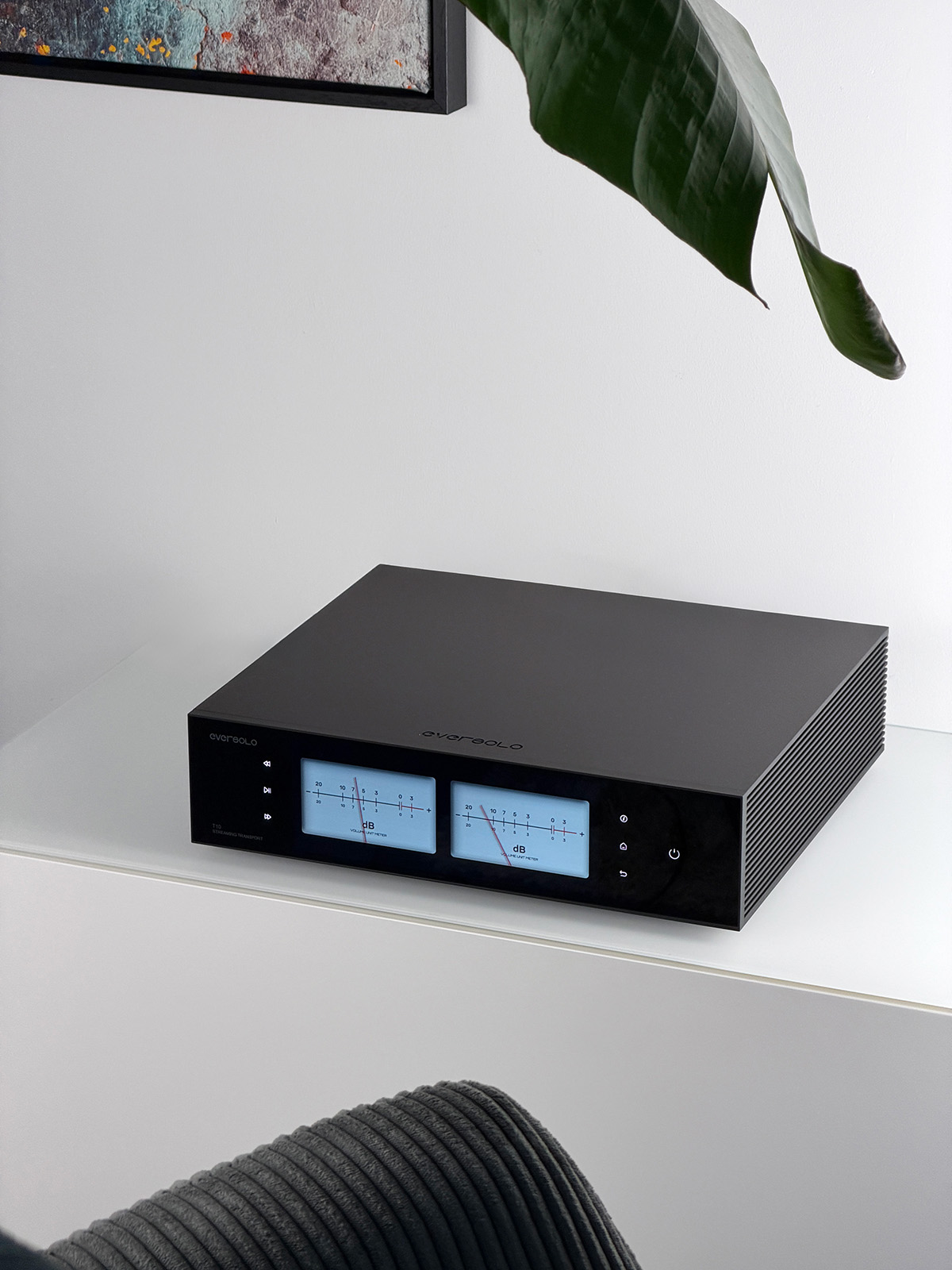
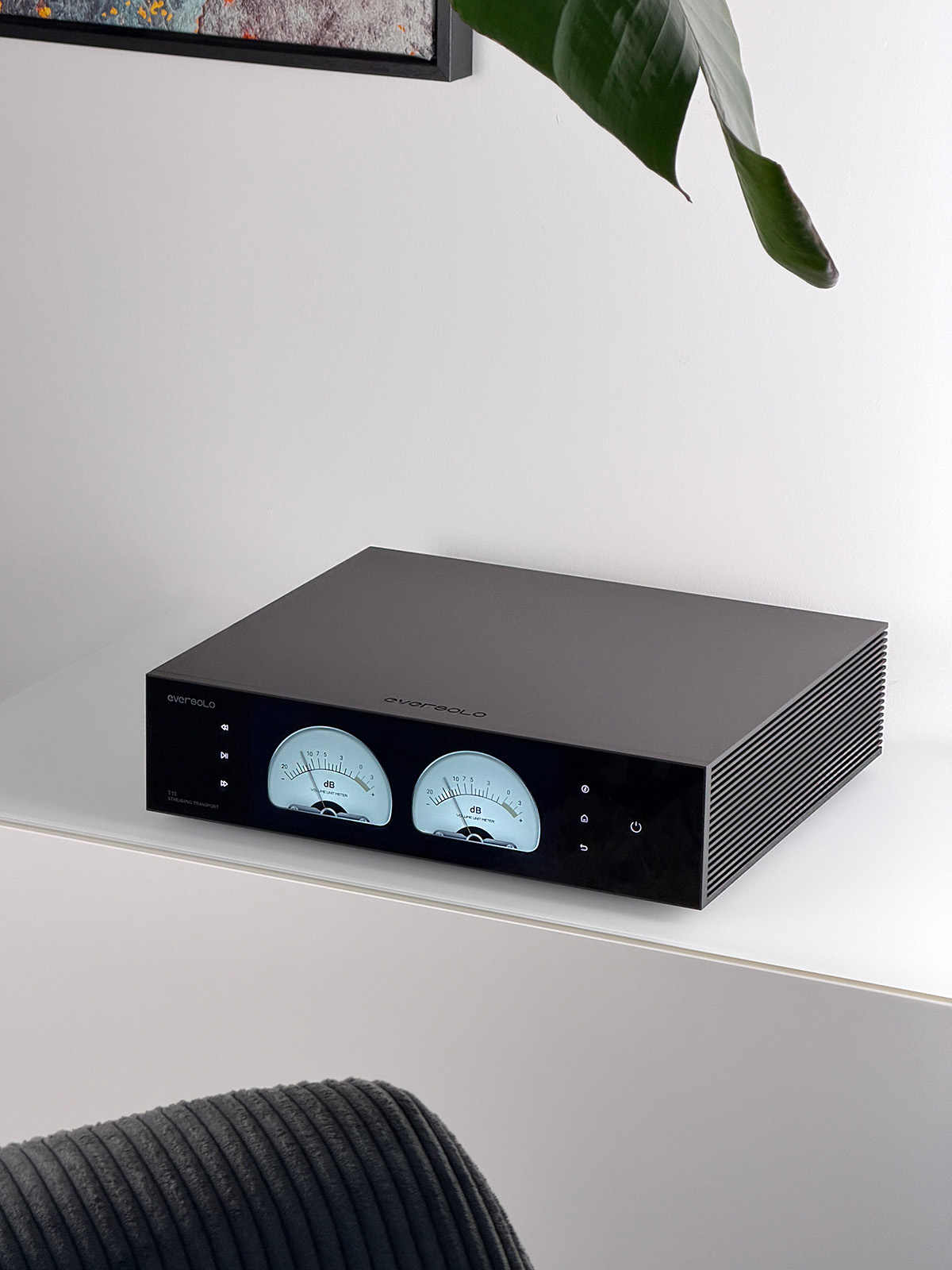
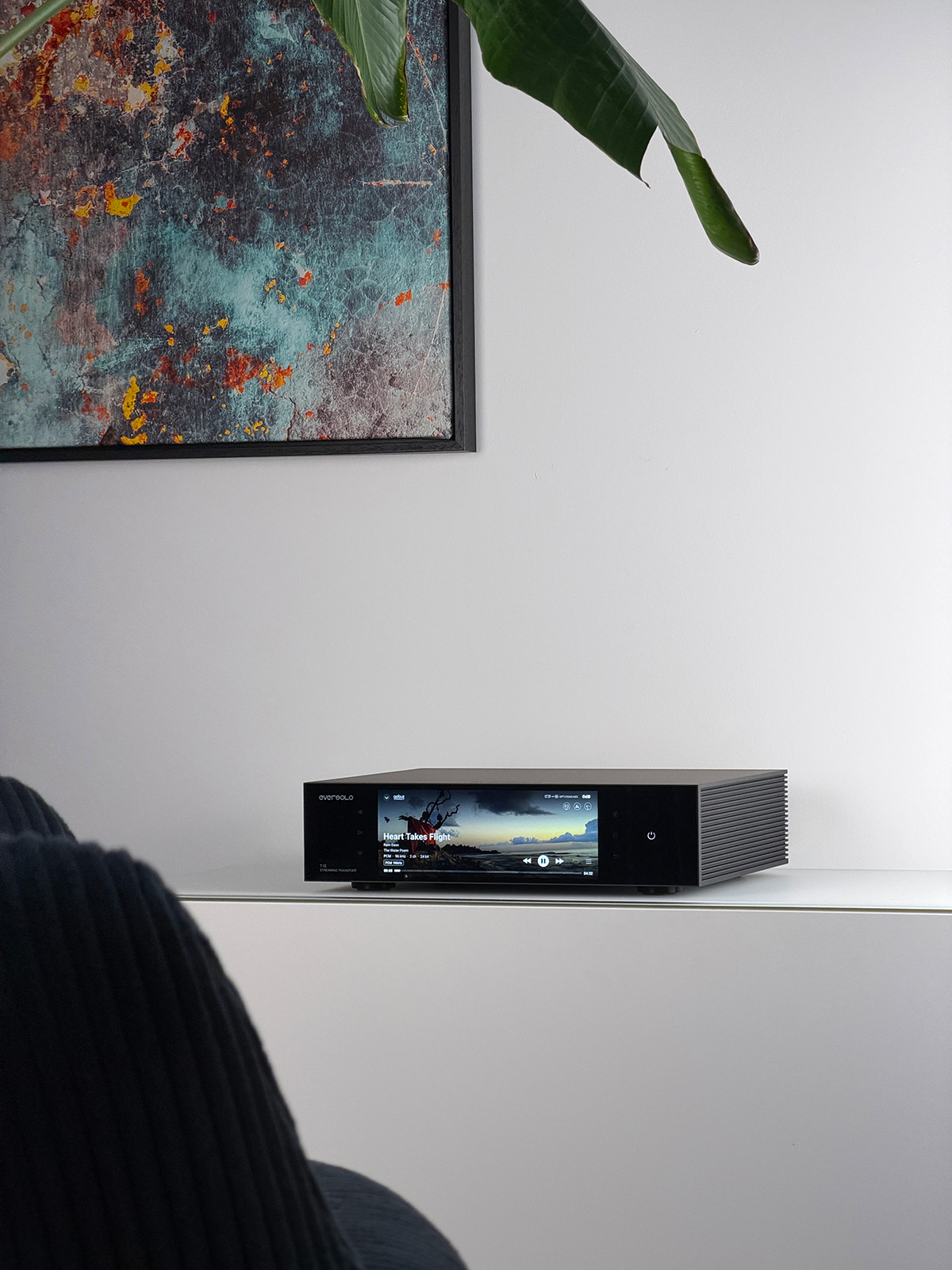
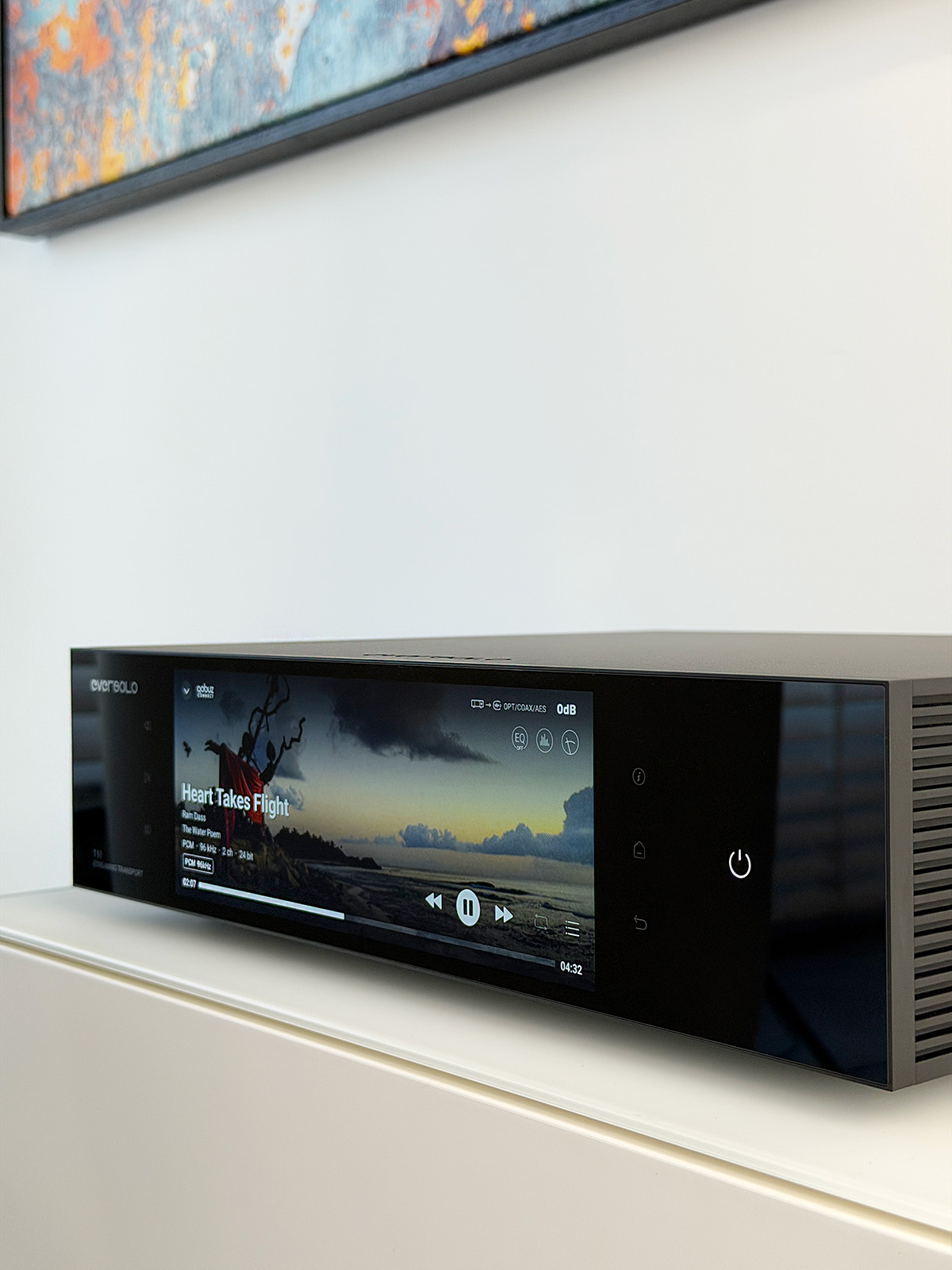
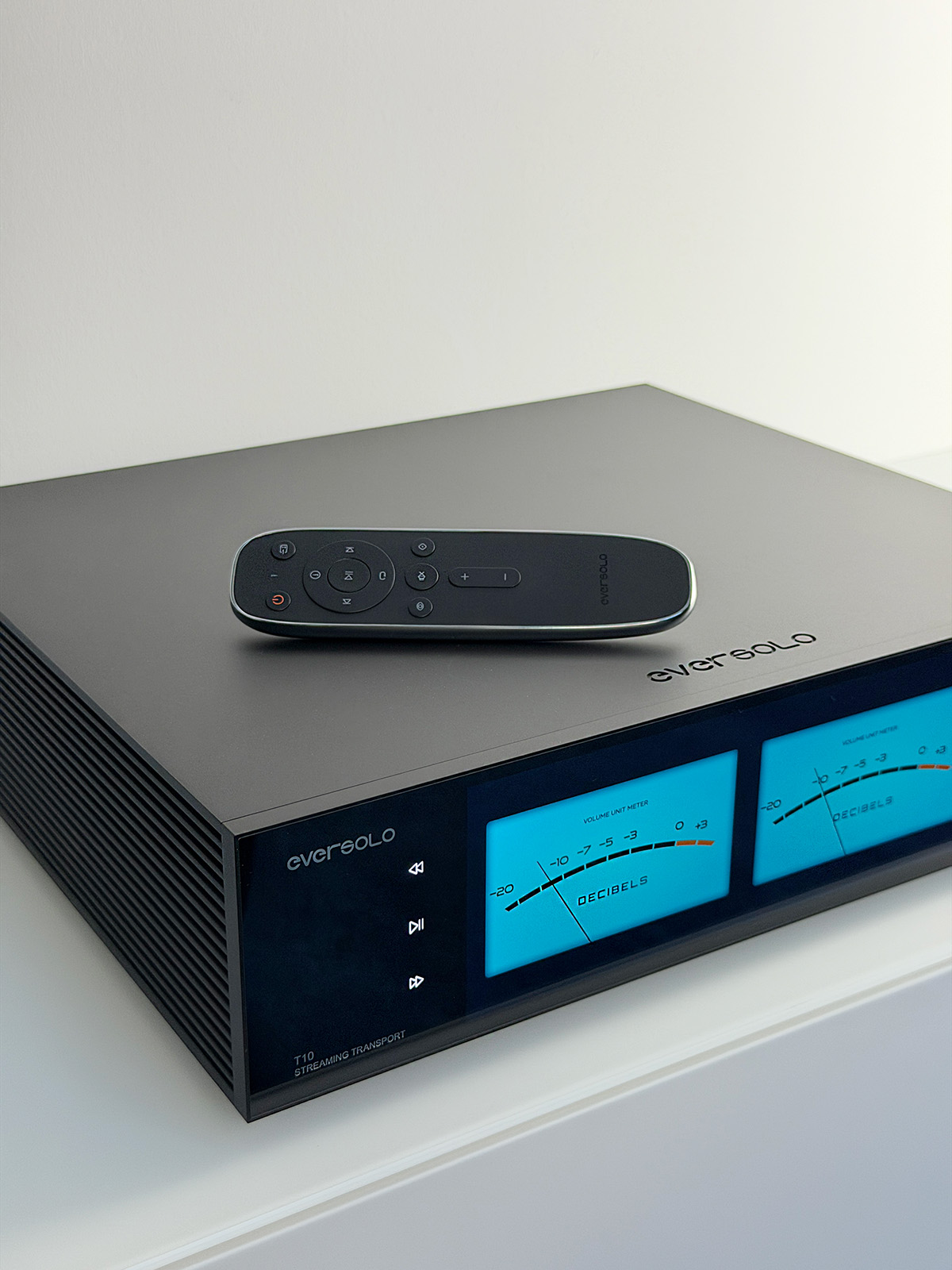
The Eversolo T10 is noticeably larger than its predecessor, with a wider and deeper chassis. What strikes you immediately is the larger 8.6-inch touchscreen. Compared to the T8, it’s not just bigger, it changes the whole feel of the unit. Album art, VU meters and spectrum analysers have far more room to breathe and the screen itself is sharp, responsive and beautifully integrated into the front panel.
Eversolo has resisted the temptation to make the T10 unnecessarily extravagant. There is no excessive use of buttons or controls on the front panel. The combination of aluminium and glass keeps the appearance modern and clean. The only practical downside is that the glossy display is quite reflective, something that becomes particularly noticeable in a brightly lit room. Perhaps for future models, Eversolo could consider using high-clarity, low-reflection glass.
Technology and architecture
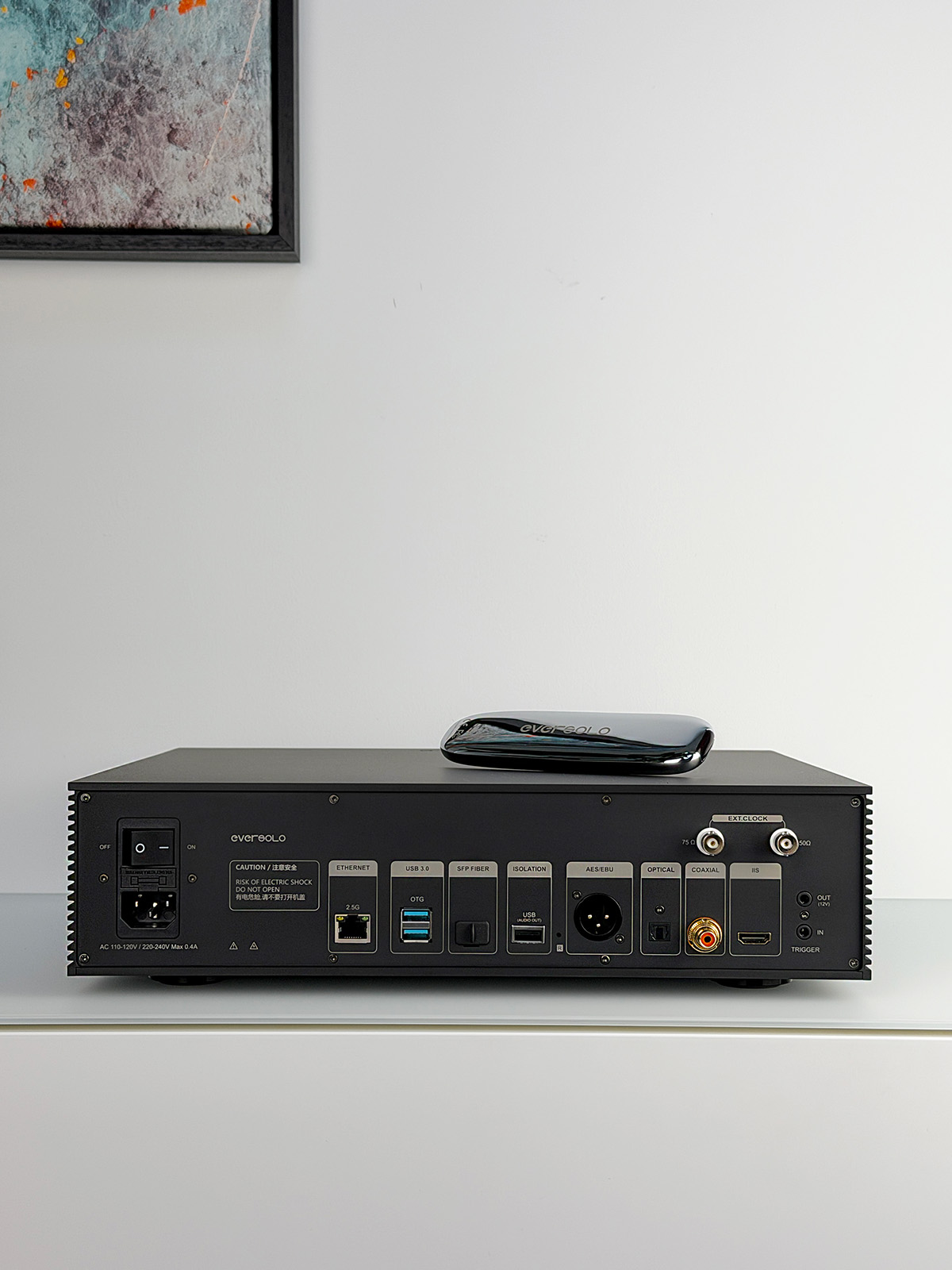
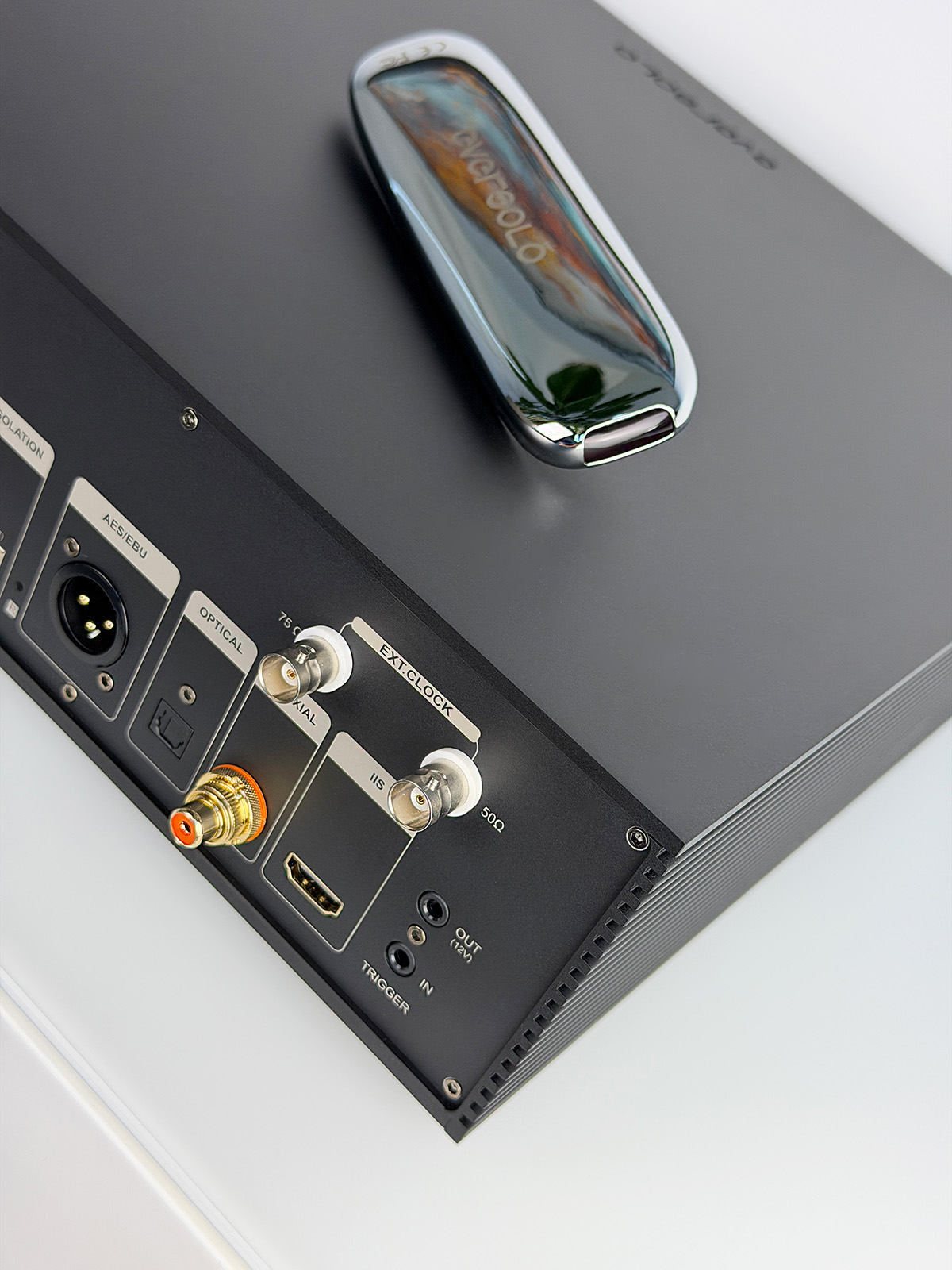
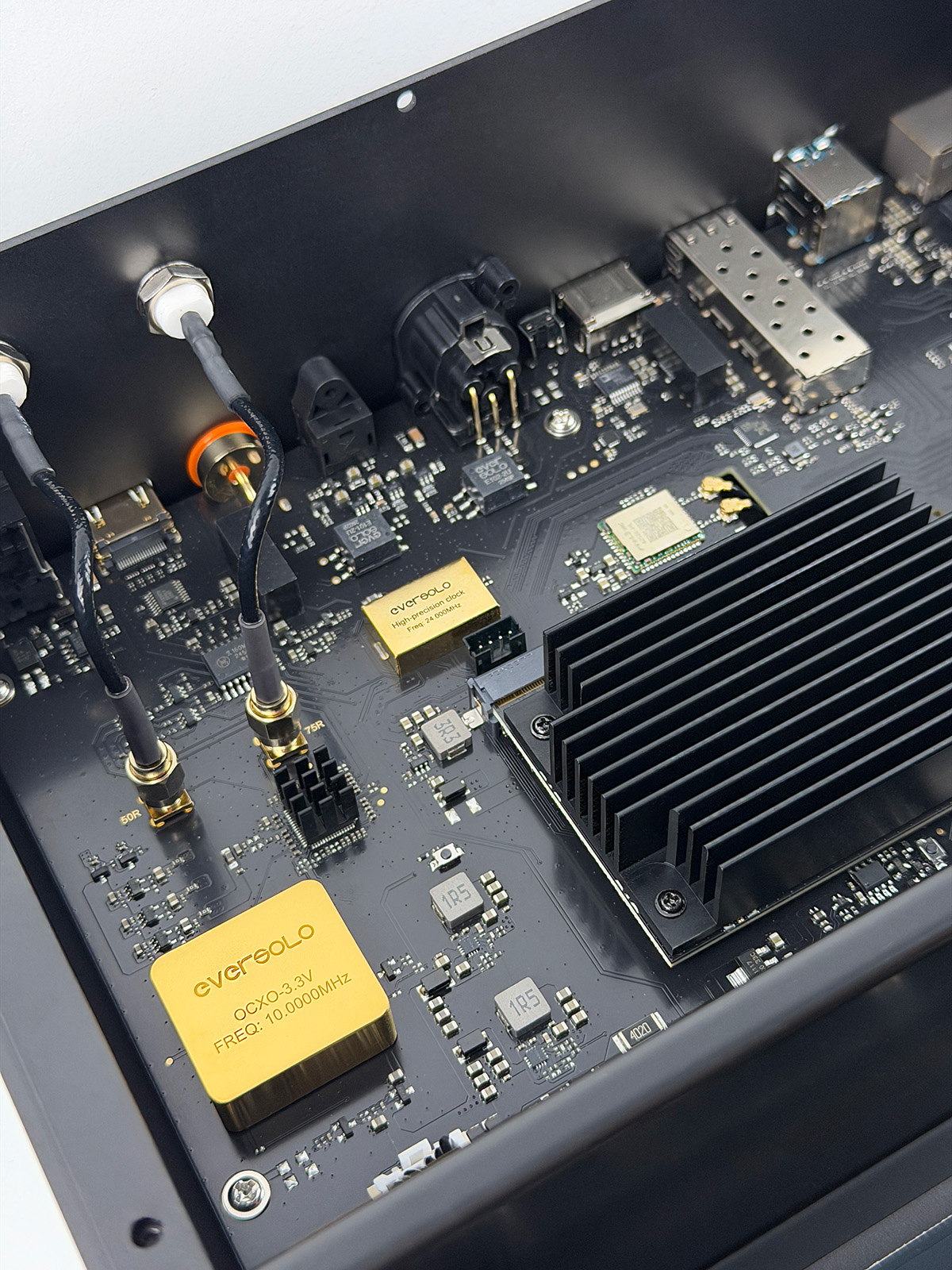
The T10 offers extensive connectivity, with digital outputs including USB, I²S, coaxial, optical and AES/EBU. Network connectivity is available via Ethernet, Wi-Fi and SFP. New on the T10 compared to the T8 are dual external clock inputs, allowing it to be paired with an external master clock.
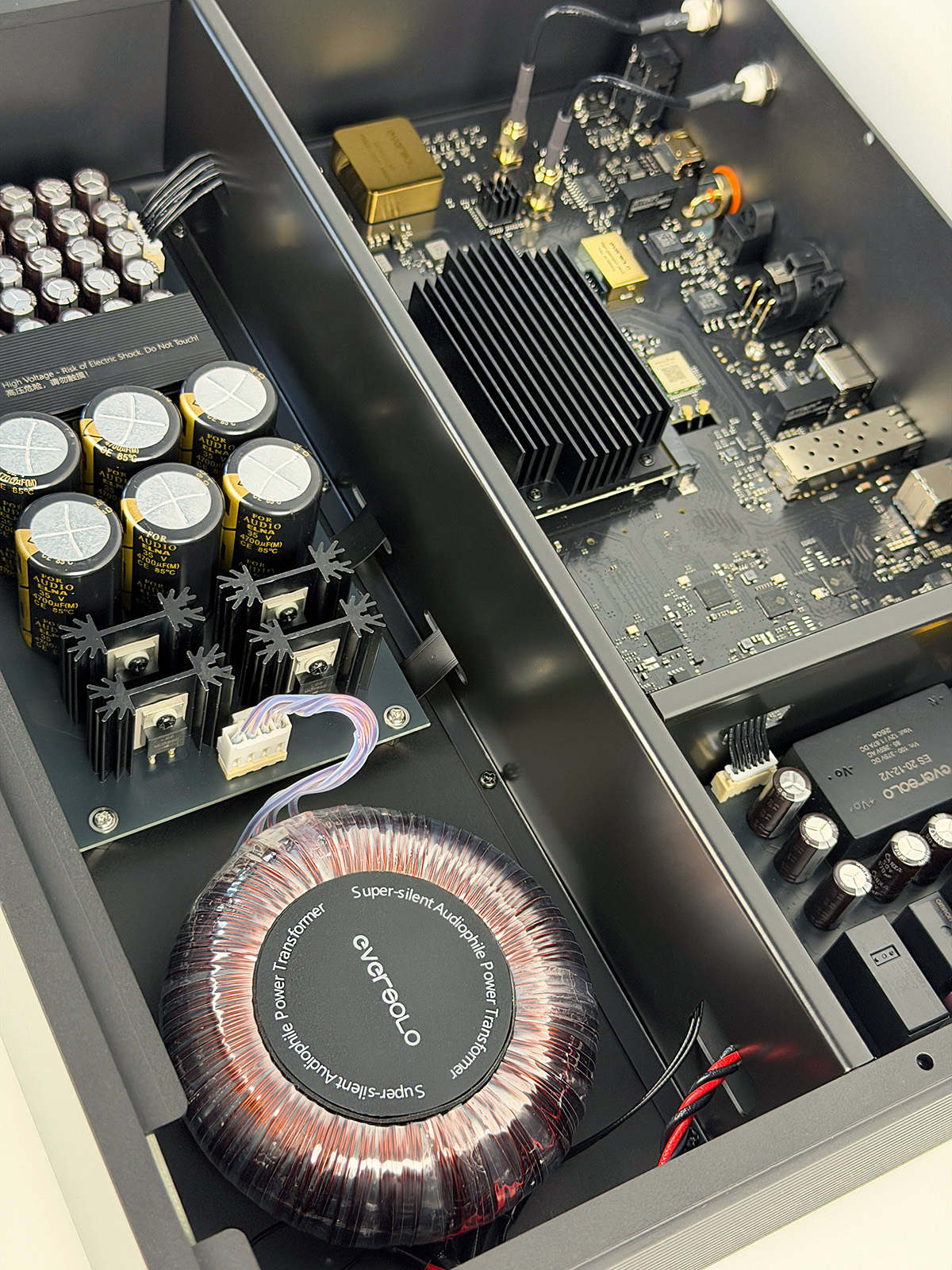
Instead of limiting isolation to a single output, Eversolo has redesigned the entire digital signal path. The power supply, system processing and audio circuitry are physically and electrically isolated from one another to minimise interference. USB and I²S outputs are galvanically isolated, while the optional SFP fibre connection provides complete electrical isolation from the network.
One of the less visible, yet significant changes, lies in the T10’s internal architecture. The T10 now features an OCXO (Oven-Controlled Crystal Oscillator), a higher-precision clock designed to reduce timing errors.
Whether you stream from online services, access music from network storage or prefer to keep your library local, the T10 is well equipped. For users with large personal collections, two easily accessible M.2 SSD slots underneath the chassis support up to 16 TB of internal storage.
The T10 also includes built-in PEQ-based room correction, compatible with a dedicated measurement microphone, while a smartphone microphone offers a convenient alternative. Eversolo has also added native NAA support, a welcome feature for HQPlayer users looking to take advantage of its advanced upsampling and DSP capabilities. A guide on how to configure NAA can be found here: NAA
The T10 also introduces a significant upgrade to the processing platform compared to the T8. The quad-core ARM processor and 4GB of DDR4 memory have been replaced by a more powerful 64-bit octa-core ARM processor and 8GB of faster DDR5 memory.
The additional processing power and doubled system memory provide considerably more headroom for demanding tasks and improved responsiveness. This extra processing capacity is likely also one of the reasons Eversolo is now able to support real-time 16x upsampling on the T10.
Interface and software
Eversolo continues to set a high standard with its user interface. With the new hardware platform, navigation feels even faster and more responsive. Although the supplied remote control is well designed and pleasant to use, the touchscreen and Eversolo control app remain the quickest and most intuitive way to operate the T10.
Eversolo is continuously developing and refining its software platform, not only by adding new features, but also by improving existing functionality and the interface itself. Regular firmware updates are rolled out across its streamer range, often bringing new functionality to existing models as well. It is an area where Eversolo genuinely sets itself apart. Many manufacturers, including brands operating in far higher price brackets, could learn a great deal from Eversolo’s long-term commitment to software development.
Eversolo Control on TV
Another useful addition to the Eversolo ecosystem is the availability of the Eversolo Control app for both Android TV and Apple tvOS. The T10 can therefore be integrated with a larger screen, displaying album art, track information and playback controls directly on your TV.
Specs
- Audio Resolution: PCM up to 32-bit / 768kHz, Native DSD up to DSD512
- Digital Outputs: USB Audio, I²S (8 selectable modes), AES/EBU, Coaxial, Optical
- USB Audio Output: PCM up to 32-bit / 768kHz, Native DSD up to DSD512
- I²S Output: PCM up to 32-bit / 768kHz, Native DSD up to DSD512
- AES/EBU / Coaxial / Optical: PCM up to 24-bit / 192kHz, DSD64 via DoP
- Digital Isolation: Isolated USB Audio, I²S, Coaxial, Optical and AES/EBU outputs
- System Clock: Femtosecond clock
- Audio Clock: OCXO (Oven-Controlled Crystal Oscillator) with PLL
- External Clock Input: 10MHz / 25MHz, selectable 50Ω / 75Ω impedance
- Power Supply: Custom O-type toroidal linear power supply
- Processor: 64-bit octa-core processor
- Memory: 8GB DDR5 RAM + 64GB eMMC storage
- Music Services: TIDAL, Qobuz, HIGHRESAUDIO, Amazon Music, Apple Music, Deezer, IDAGIO, Presto Music, SoundCloud, TuneIn, Radio Paradise
- Streaming: Roon Ready, Spotify Connect Lossless, TIDAL Connect, Qobuz Connect, DLNA, SMB
- Supported Audio Formats: DSD (DSF, DFF, SACD ISO with DST up to DSD512), MP3, APE, WAV, FLAC, AIF, AIFF, AAC, NRG, CUE
- Network: 2.5Gb Ethernet, Wi-Fi 6 (2.4 / 5GHz), SFP fiber network interface
- Network Storage / Protocols: WebDAV, UPnP and network storage support
- Internal Storage: 2 × M.2 NVMe PCIe 3.0 2280 SSD slots, up to 16TB total
- USB: 2 × USB 3.0 Type-A & 1x Type-A Galvanic Isolated
- Display: 8.6-inch LCD touchscreen
- Control: Touchscreen, Eversolo Control App (Android / iPhone / iPad), remote control
- Power: AC 110–240V, 50/60Hz, 20W rated power
- Dimensions (W × D × H): 36.5 × 31.0 × 8.8 cm / 14.37 × 12.20 × 3.46 inches
- Package Contents: T10, remote control, power cable, user manual
Reference equipment for this review
- Speakers: Sonus Faber Olympica Nova III G3
- Class A Amplifier: Accuphase E-800S
- DAC & Headphone Amp: DAC Chord TT2 + M Scaler
- Headphone amplifier: Luxsin X8
- Headphones: Hifiman Arya Unveiled
- Streamer : Eversolo T10 & Eversolo T8
- Networking
- iFi Audio Omnilan
- Media converter: TP-Link MC220L
- SFP: TP-Link TL-SM311LSA-2KM
- SFP: 10Gtek ASF13-24-10
Sound quality
The Eversolo T10 was evaluated in our reference system consisting of the Accuphase E-800S, Chord TT2, Chord M Scaler and the recently released Sonus Faber Olympica Nova III G3 loudspeakers. For headphone listening, we alternated between the TT2 and Luxsin X8, using Hifiman Arya Unveiled as our primary reference headphone.
While the T8 is already an excellent streamer, the T10 impressed us from the very start. It delivered a highly resolving and transparent presentation, combined with a deep, expansive soundstage and excellent instrument separation. One of the first things we noticed was how quiet the background was. That says a lot, considering how well the T8 already performs.
It was not that the T10 revealed hidden details the T8 somehow missed. Instead, it presented the same information with greater authority and realism. The most noticeable change was the added sense of weight and physical presence. Bass and sub-bass had more authority, giving instruments and voices greater body and a more convincing presence within the soundstage. Rather than simply sounding bigger, instruments were more clearly defined within the soundstage, giving the music a stronger sense of depth and scale.
What stood out most was the combination of greater detail and a more composed presentation. More of the recording became apparent, yet the sound never felt busy or analytical. Instead, everything was presented with greater control, especially when compared directly with the T8. This is not a criticism of the T8, which remains an excellent streamer in its own right.
Compared to the T8, the soundstage extended further in depth, while layering and three-dimensional imaging were more convincing. With the Chord TT2 and M Scaler in the chain, that additional front-to-back depth was immediately noticeable. Instruments were more clearly separated and easier to place, which made the performance feel more lifelike.
After spending considerable time with the T10, returning to the T8 highlighted these differences even more clearly. While the T8 remains an outstanding performer, it sounded slightly more restrained dynamically, with a touch less physical presence and depth by comparison. The T10 does not necessarily reveal information the T8 misses; it presents that information with greater authority and control.
Reference tracks
For our listening sessions with the Eversolo T10, we used a selection of familiar reference tracks.
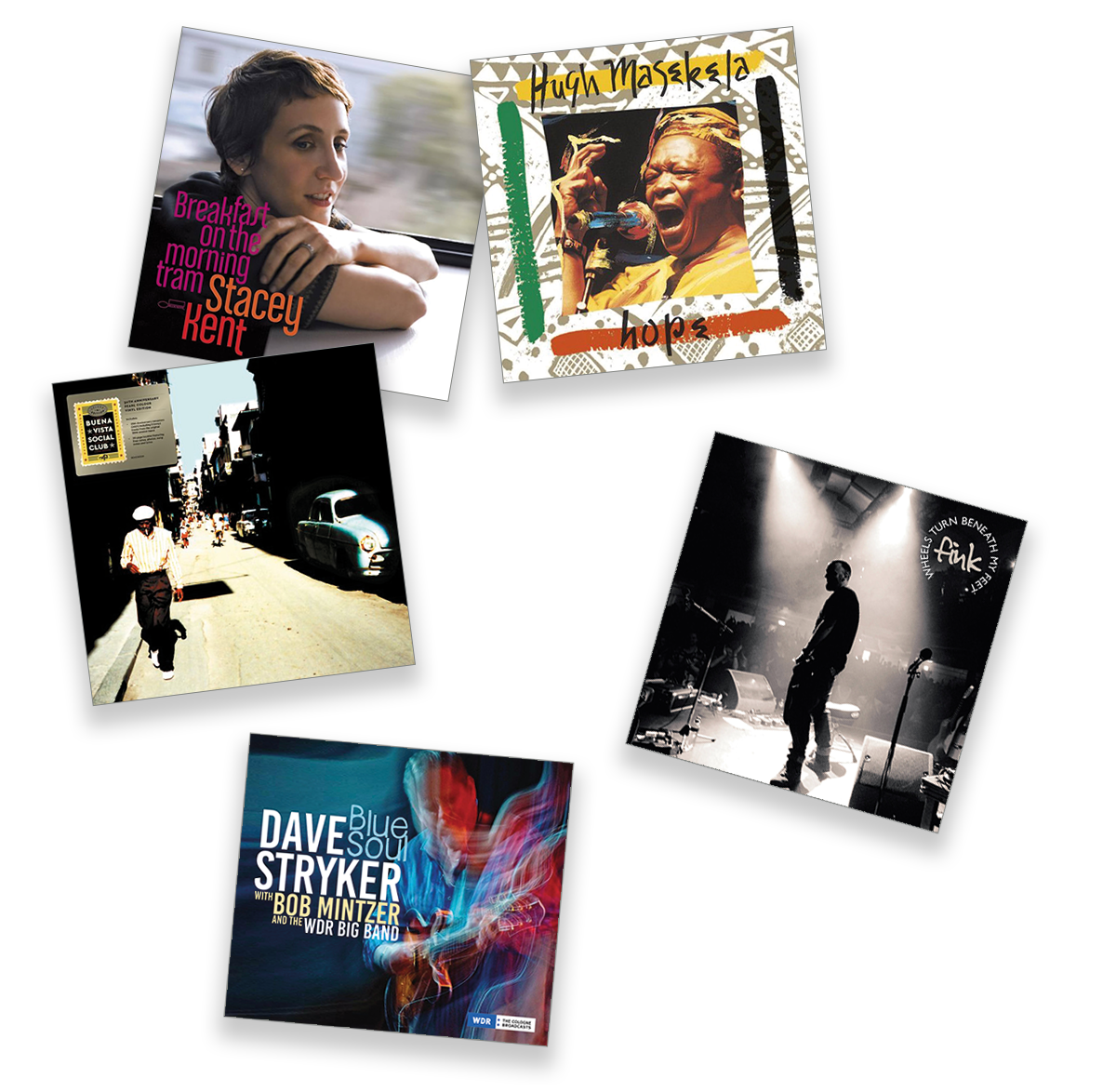
With Stacey Kent’s “What a Wonderful World”, her voice had a soft and natural tone, with fine detail and air. Small changes in her voice were easy to hear against the remarkably quiet background.
That sense of space became even more apparent with live recordings. On Fink’s “Trouble’s What You’re In” from Union Chapel, his voice and guitar were clearly positioned, with the acoustics extending well behind them. On Buena Vista Social Club’s “Quizás, Quizás” at Carnegie Hall, voices and instruments remained clearly separated, while the ambience of the hall added considerable depth to the recording.
The T10 also maintained this separation when the music became more complex. Dave Stryker’s “Trouble Man”, featuring Bob Mintzer and the WDR Big Band, had energy and scale, yet individual instruments remained clearly defined as the arrangement became denser. The arrangement never felt crowded and the brass retained its energy without becoming sharp.
Hugh Masekela’s “Stimela (The Coal Train)” showed the T10 at its best with dynamics and scale. Masekela’s voice had a strong presence, while the percussion was clearly defined and precisely placed. As the track built from its quiet opening towards the more powerful passages, the T10 preserved the sense of space and atmosphere while allowing the increasing intensity of the performance to come through naturally.
Last year’s T8 already delivered an outstanding performance, but the T10 makes it clear that Eversolo has taken things a step further. There is greater depth, more precise layering and an overall sense of greater calm and control. In a revealing setup, these differences are clearly audible.
Upsampling
The T10 also introduces a new system-wide upsampling engine, allowing PCM audio to be processed at up to 16x its original sample rate before reaching the DAC. The idea behind this is not to create new information, but to reconstruct the digital waveform more precisely and shift some of the digital filtering workload away from the DAC.
For our evaluation, we used the Luxin X8 via I²S, as this connection had consistently delivered the most convincing sound quality in our setup. This gave us a stable reference, allowing us to focus purely on the effect of the upsampling rather than on differences between digital inputs.
In our listening tests, increasing the upsampling rate did not so much add detail as it changed the character of the presentation. As we moved from 2x up to 16x upsampling, the sound became progressively smoother and more composed. Some of the harder edges became less pronounced, making the music sound calmer and more fluid. At the same time, there was a slight trade-off in leading edge attack and perceived clarity, which made the presentation feel a little more polite. For us, the highest settings delivered smoothest and most refined, but whether that is preferable will depend very much on the DAC, overall system balance and of course personal taste. More analytical systems may benefit from the added ease, while warmer setups might retain more drive with lower settings.
Optimization and Output Performance
Digital output performance
With several digital outputs available on the T10, we wanted to find out whether there were any audible differences between them. For these comparisons, we used the Luxsin X8, which offers all the corresponding digital inputs. This allowed us to evaluate the T10’s outputs using the same DAC under identical conditions, ensuring that any differences we heard came from the connection itself.
I²S proved to be our preferred connection. The differences were subtle, but it consistently produced a slightly wider soundstage, more space around instruments and a smoother, more relaxed treble.
USB came very close, delivering an exceptionally clean and transparent presentation with excellent separation. In direct comparison, it sounded just a touch less fluid than I²S. The margin was small, but I²S retained a subtle advantage in spaciousness and refinement.
Coaxial S/PDIF also delivered excellent results, offering a detailed and natural presentation that felt smooth and well-balanced. In our setup, it ranked just behind USB, but again, the differences were modest and all three outputs performed to a very high standard.
What stood out most was how small the differences were between the T10’s digital outputs. The improved clocking, isolation and digital architecture appear to have reduced those differences, with I²S holding a slight edge.
Network performance and optimization
Having extensively explored the influence of the network connection on sound quality with the T8, we repeated the same evaluation with the T10. For our network comparisons, we used the iFi OMNI LAN as our switch, with the Ethernet connection made through one of its Ultra-Pure ports.
In our setup, Ethernet delivered the most natural balance, sounding calm, clean and composed without becoming sharp or fatiguing.
Switching to Wi-Fi introduced a slightly sharper, more forward presentation. Initially, this could be mistaken for extra detail, but it came across more as added crispness rather than an actual increase in depth or resolution.
With SFP, clarity increased a step further, giving the presentation a slightly more analytical character. Instrument placement became more precise and separation more pronounced, although the effect was less noticeable than we experienced with the T8. In our setup, this came at the expense of some of the natural flow and balance we heard with Ethernet. SFP may therefore appeal in setups that benefit from the added clarity and precision.
It is important to note that these results are specific to our network setup. The iFi OMNI LAN is not a conventional network switch and is designed to minimise network-induced noise. In a more conventional network setup, SFP may have a more noticeable effect than it did here.
Conclusion
The Eversolo T8 set a very high standard. With the T10, Eversolo has done considerably more than simply add a larger display and a few new features. Substantial changes have been made internally, with particular attention paid to the power supply, clocking and isolation throughout the digital signal path.
The T10 has an exceptionally low noise floor with excellent transparency, separation and depth. What impressed us most was how the increase in detail was accompanied by a calmer and more controlled sound. Compared with the T8, layering is more precise and the soundstage extends further in depth.
The obvious question for existing T8 owners is whether upgrading to the T10 makes sense. Much will depend on the rest of the setup. The T8 remains an outstanding transport and in less revealing systems the differences may be relatively small. In a revealing system, however, the advantages of the T10 become much easier to hear.
The T10 certainly does not make the T8 obsolete. Instead, Eversolo has taken an already excellent streaming transport and refined it where it matters. Perhaps most impressive is that the T10 delivers this level of performance at a pricepoint that remains remarkably competitive by high-end standards. For anyone looking for a dedicated high-end transport to pair with a serious DAC, the T10 deserves a place very high on the shortlist.
Pros
- Excellent build quality
- Large 8.6-inch touchscreen
- Exceptionally low noise floor
- Excellent layering and separation
- OCXO clock with PLL technology
- External master clock support
- Galvanically isolated digital outputs
- Roon Ready and NAA support
- SFP fibre network support
- Dual internal M.2 SSD slots
- System-wide upsampling up to 16×
Cons
- SFP module not included
- No HDMI output for multichannel SACD
- Significant price premium over the T8
- Glossy display can be reflective in brightly lit rooms