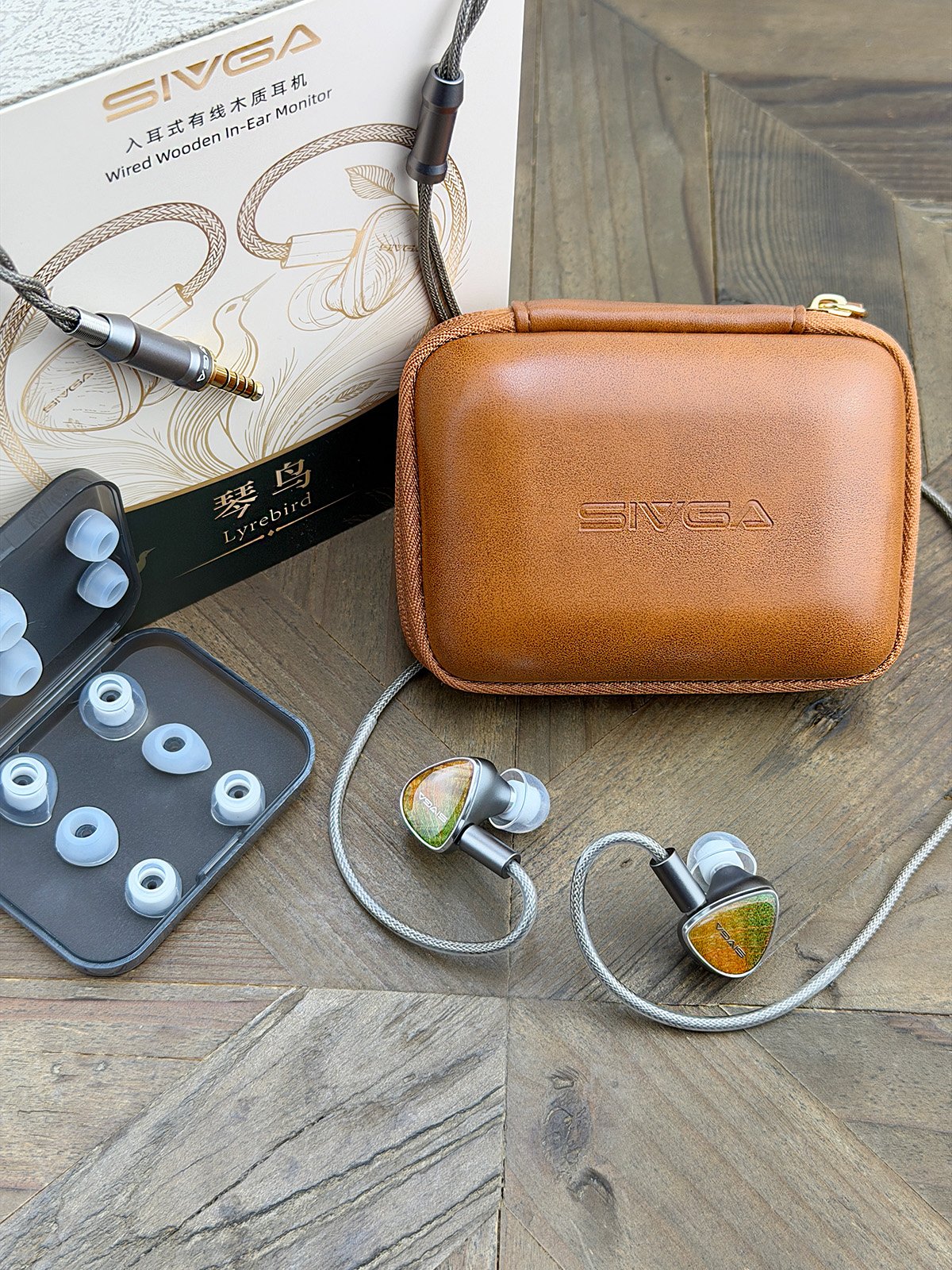
Sivga Audio was founded in 2016 by Rongchun Pan and Jian Zhou and is based in Dongguan, China. The company produces a wide range of headphones and IEMs in different price ranges. Wood elements have always been an important part of Sivga’s designs and are used throughout most of its lineup. Sivga pairs these natural materials with aluminum and magnesium alloys, giving its designs a refined appearance and a real sense of quality.
In this review, we will explore the Sivga Lyrebird. It is Sivga’s first quad-driver IEM and uses four different driver technologies. This makes it an interesting addition to their current lineup.
Design
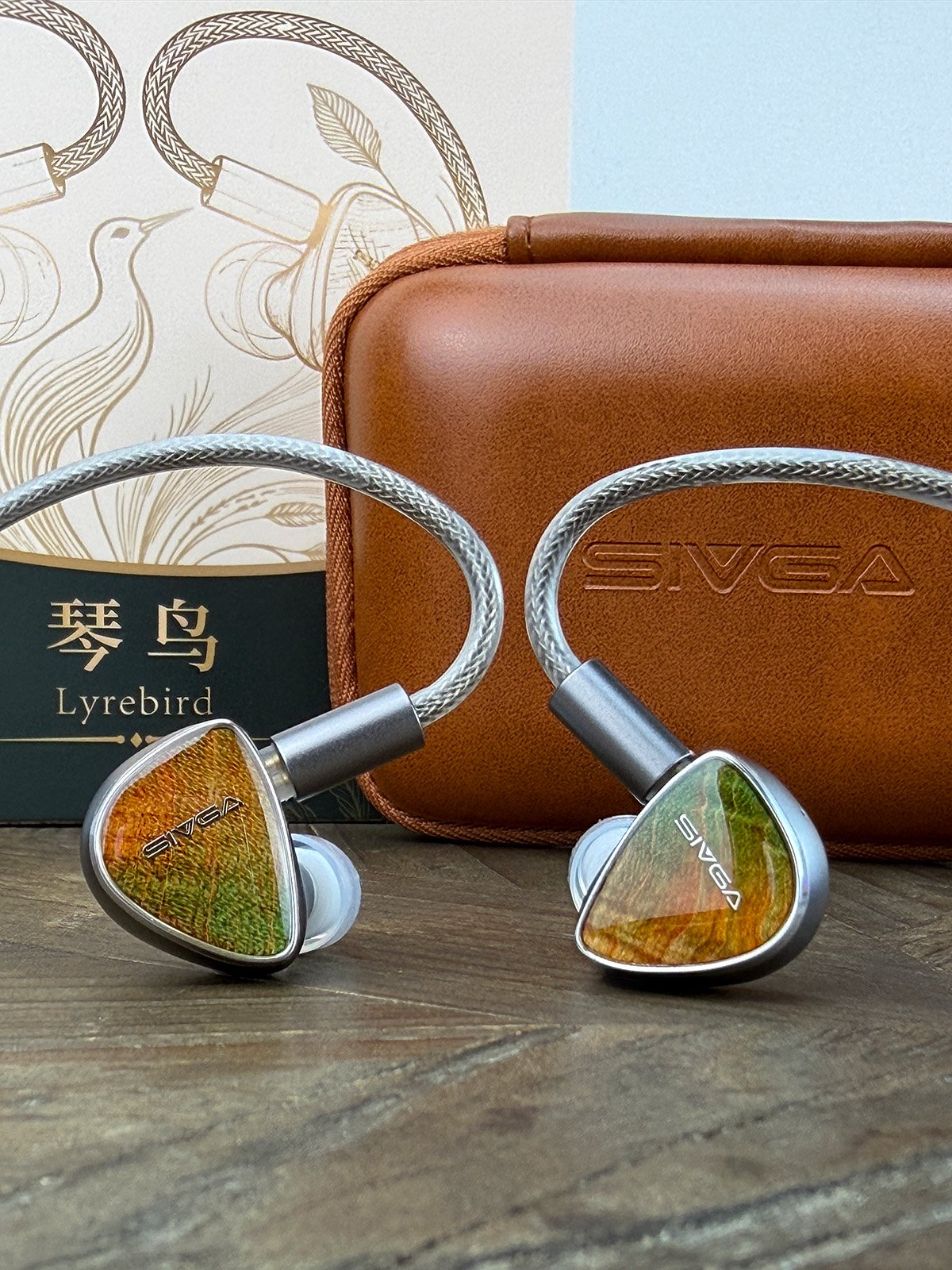
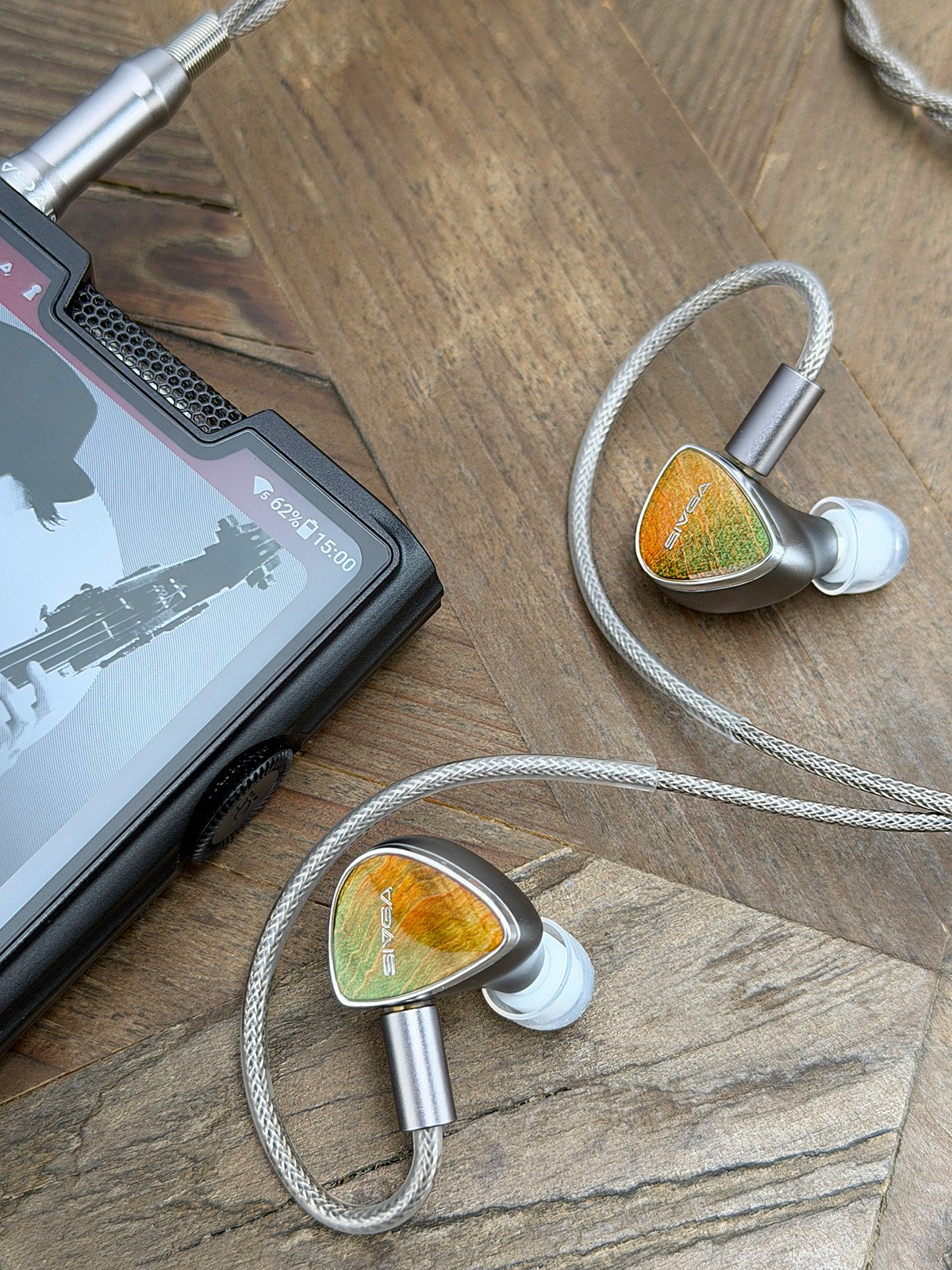
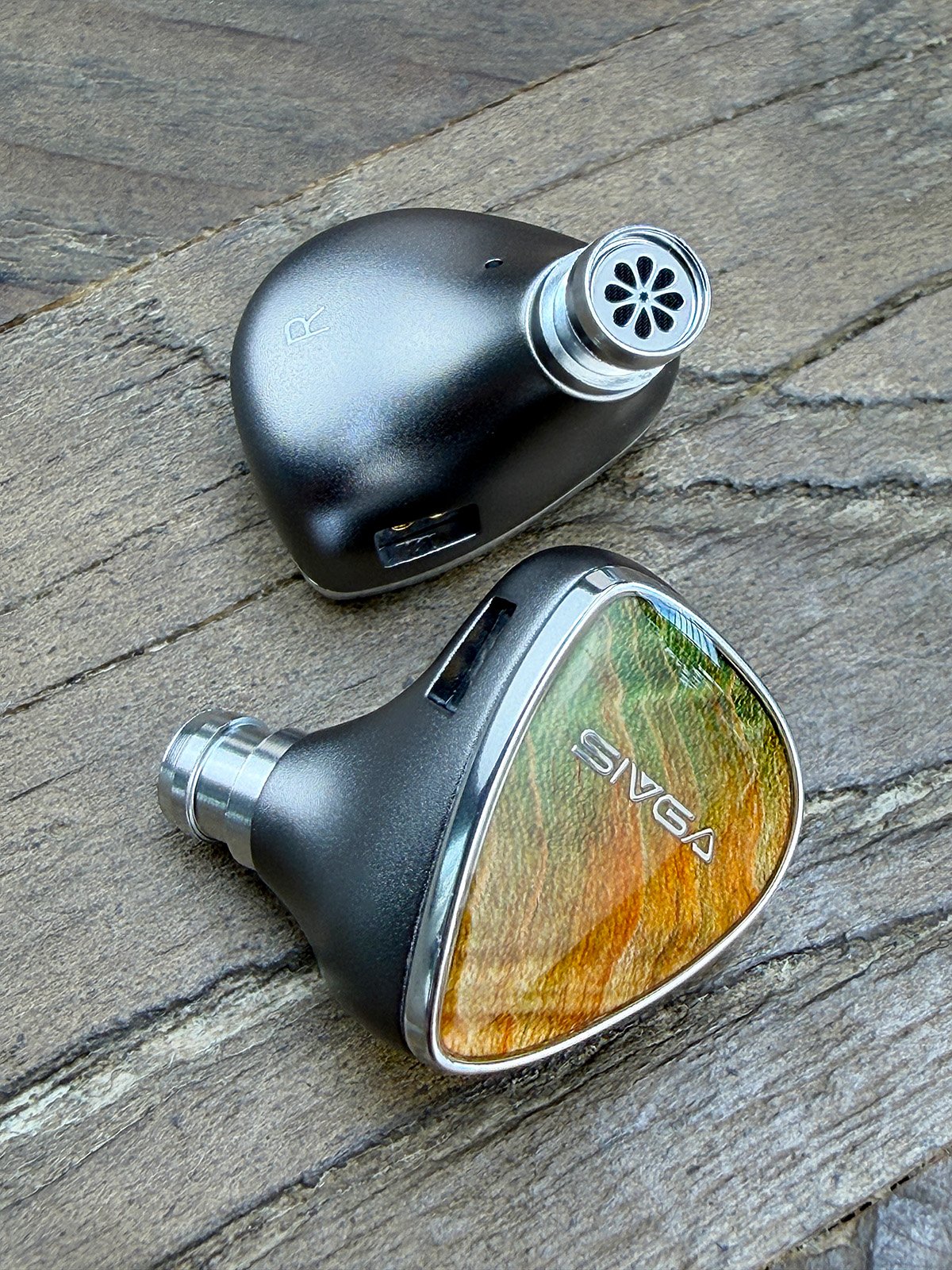
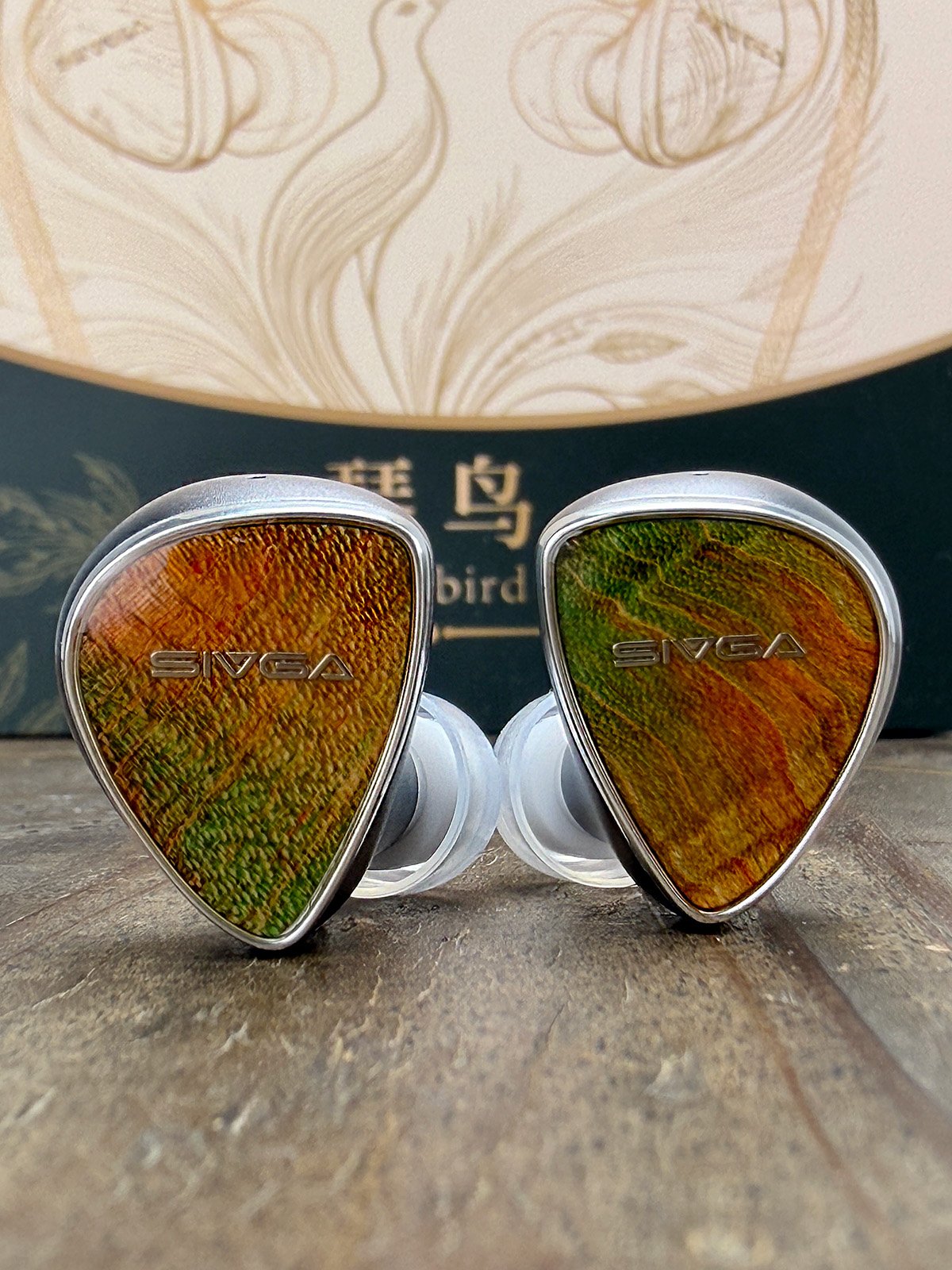
The Lyrebird uses CNC-machined aluminum alloy shells with wood faceplates. Each faceplate has its own unique color and pattern. The aluminum shells and unique wood pattern give the Lyrebird a premium look, with an excellent overall finish.
Sivga has managed to fit all four drivers into a compact shell that weighs only 5.9 grams per earpiece. The nozzles measure 5.9 mm in diameter and use a protective filter to prevent debris from entering the shell. A pressure-relief system is also built into the housing. The Lyrebird uses slightly recessed 0.78 mm 2-pin connectors.
In the box
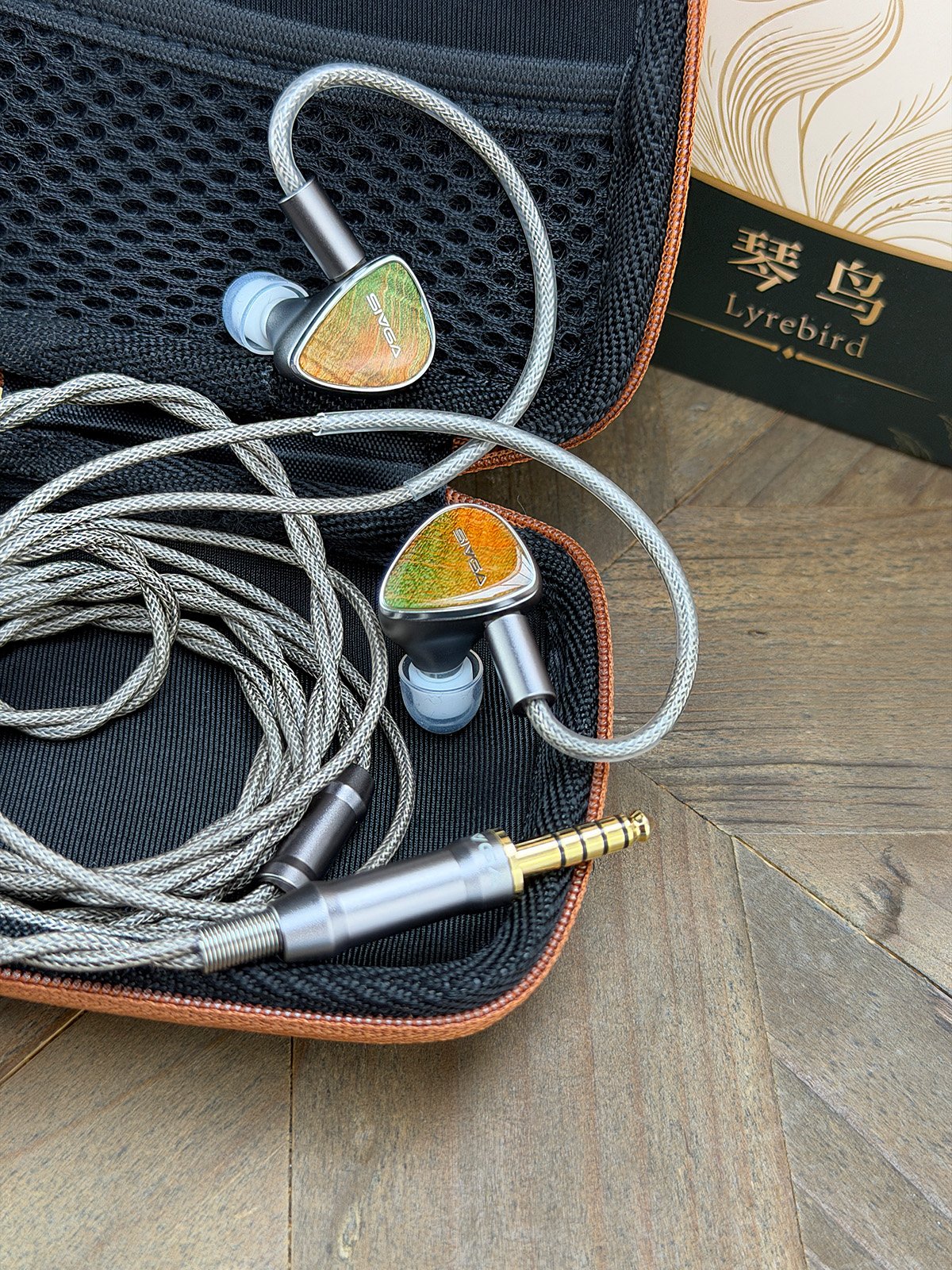
Sivga has given the packaging a natural appearance that complements the Lyrebird’s wood accents. Inside you will find the IEMs, a leather carrying case, the supplied cable and seven pairs of silicone ear tips.
The ear tips are divided into two types: three pairs of liquid silicone tips and four pairs of regular silicone tips, both with a wide-bore design. One pair comes pre-installed on the Lyrebird, while the remaining six pairs are kept in a small storage box.
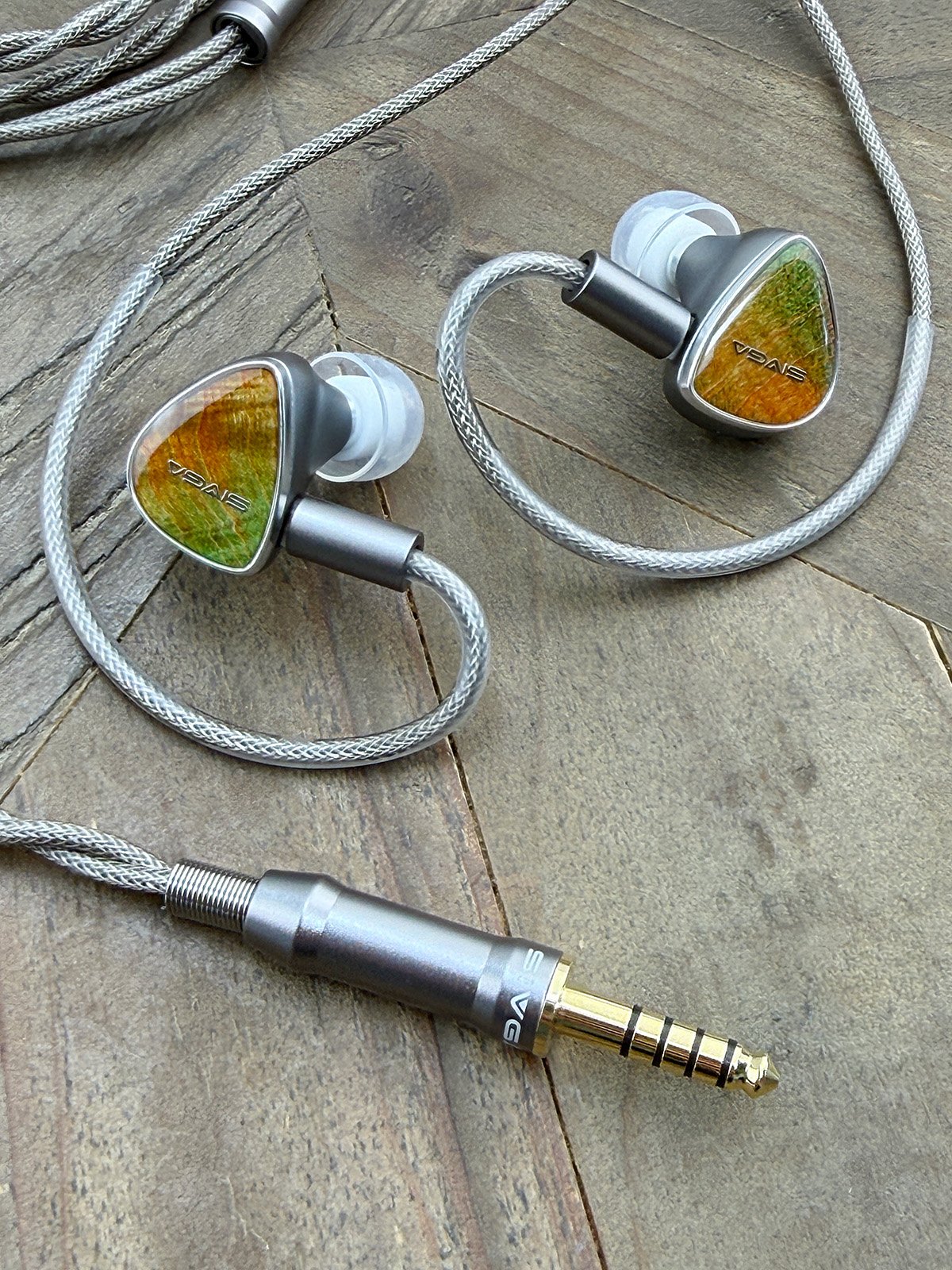
A high-quality 1.2-meter hybrid cable is supplied with the Lyrebird. It uses gold-plated 0.78 mm 2-pin connectors and terminates in a fixed 4.4 mm balanced plug. A modular plug with both 3.5 mm and 4.4 mm options would have added some extra flexibility.
Ear tips
Sivga includes seven pairs of ear tips with the Lyrebird: three pairs of soft liquid silicone tips and four pairs of silicone tips. Both are comfortable and provide a good seal. There is a small difference in sound between the two. With the softer liquid silicone tips, the bass sounds slightly smoother and more relaxed. The difference is subtle, but it can be just enough to better suit your personal preference.
Case
The included leather case is the same high-quality case we know from the Nightingale Pro. It has a soft interior and offers enough space for the IEMs, cable, spare ear tips and even a compact dongle DAC.
Technical specifications
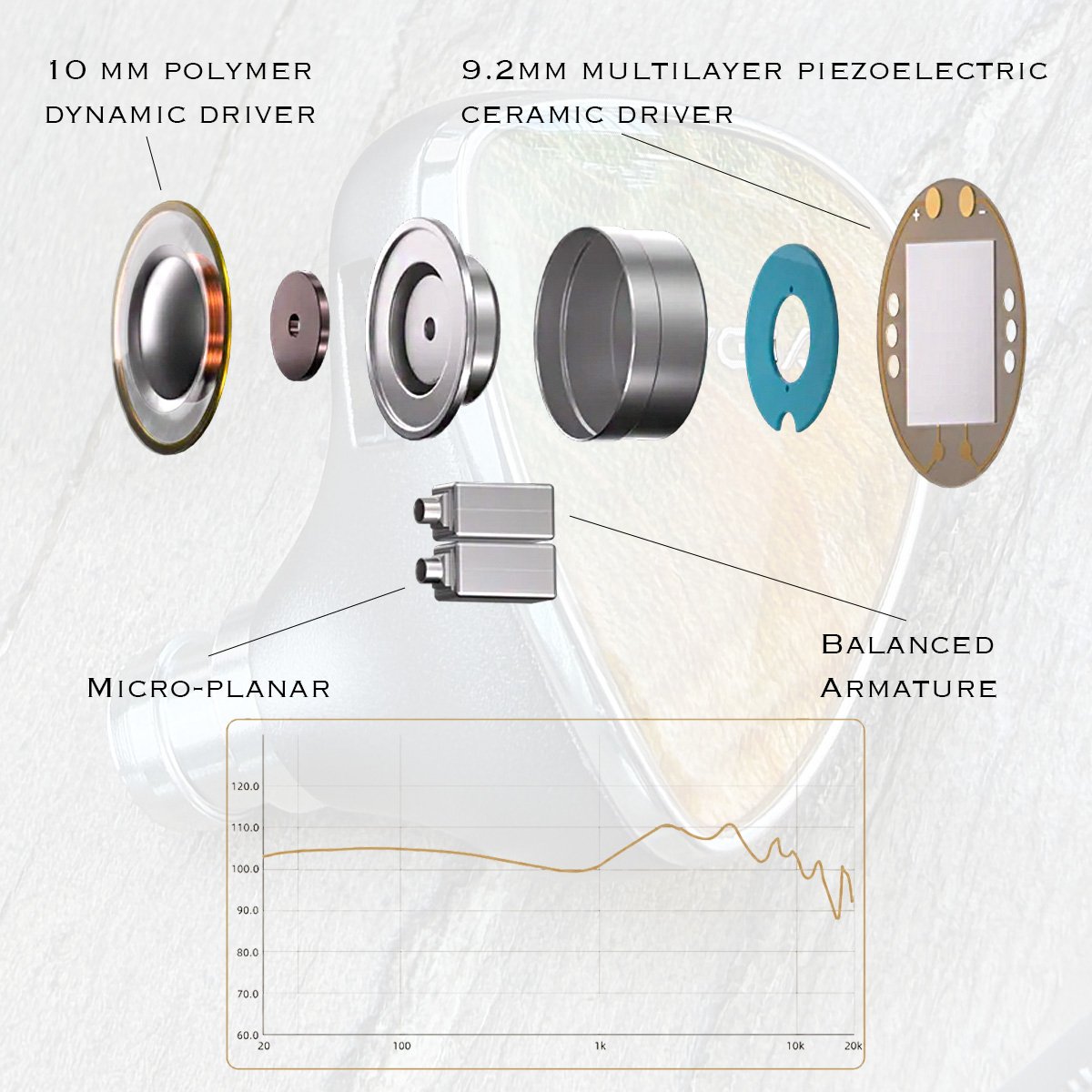
The Lyrebird uses four different driver technologies. A 10 mm dynamic driver with a polymer-composite diaphragm handles the bass. A balanced armature driver takes care of the midrange. The higher frequencies are handled by two different drivers: a micro-planar driver for the treble and a 9.2 mm multilayer piezoelectric ceramic driver for the highest frequencies. A 3-way crossover divides the frequency range between the different drivers. Such a configuration is rarely seen in an IEM at this price point.
The Lyrebird has an impedance of 14 ohms and a sensitivity of 108 dB. It does not need much power to reach sufficient volume, but source matching does make a difference. Warmer sounding sources give the Lyrebird a smoother character, while more neutral sources bring out more treble detail and separation. This gives you some room to tune the Lyrebird towards your own preference and get the best out of its sound.
Cable
The supplied 1.2-meter hybrid cable uses 30-core Furukawa OFC, 10-core silver-plated copper and 10-core enameled gold-plated silver-copper conductors. These are exceptionally high-quality materials for a cable supplied with an IEM in this price range. The cable is flexible, with high-quality aluminum connectors and splitter. A metal spring at the base of the fixed 4.4 mm balanced plug provides strain relief.
Specs
- Driver: Quad-driver hybrid
- Configuration: 10 mm DD + BA + micro-planar + 9.2 mm piezoelectric ceramic
- Impedance: 14 Ω ±15% @ 1 kHz
- Sensitivity: 108 ±3 dB @ 1 kHz
- Frequency response: 20 Hz – 20 kHz
- THD: ≤1% @ 1 kHz
- Connector: 0.78 mm 2-pin
- Housing: CNC aviation aluminum alloy
- Faceplate: Stabilized wood
Cable
- 30-core Furukawa OFC
- 10-core silver-plated copper
- 10-core enameled gold-plated silver-copper
- Length: 120 cm
- Connector: 0.78 mm 2-pin
- Plug: Fixed 4.4 mm balanced
Test equipment:
- Shanling UA6 II
- iBasso DX270
- JDS Labs Element IV
Sound Quality
The Lyrebird has a clean, open and energetic presentation, with excellent technical performance. The four different driver technologies blend together naturally, giving the Lyrebird a consistent and coherent sound.
The tuning puts clarity and definition ahead of warmth. Bass is controlled and relatively neutral in quantity, while the midrange sounds clean and well separated. The upper mids and treble have more energy, giving vocals and instruments a clear presence and adding a good amount of air to the presentation.
Resolution and separation are particularly impressive. Even with more complex recordings, individual instruments stay separated and smaller details come through clearly. The Lyrebird has a fast and precise character without sounding analytical, although source matching can have a noticeable influence on the overall balance. A slightly smoother or fuller sounding source works well. This is one of those IEMs that can easily show the benefits of a better source.
Treble
Treble is one of the more interesting aspects of the Lyrebird. The higher frequencies are handled by both a micro-planar driver and a 9.2 mm piezoelectric ceramic driver. There is a good amount of treble energy and extension, giving the Lyrebird an open and detailed character. The treble also contributes significantly to the excellent separation and sense of space.
The micro-planar and piezoelectric drivers complement each other well, giving the treble both detail and extension. The transition between them is smooth, with good definition and excellent extension at the top. The treble is clear, fast and highly resolving, with some extra energy in the upper mids and lower treble.
Midrange
The midrange is clean and detailed, with good separation. The controlled bass keeps the lower mids clean, allowing instruments and vocals to remain open and well defined. Vocals have good clarity and are positioned slightly closer to the listener without becoming too dominant. Male vocals have good body, while female vocals are presented with a little more energy. The rise around 2–3 kHz gives voices and instruments extra definition and contributes to the Lyrebird’s lively character.
Acoustic instruments are reproduced with good texture and definition. Piano, strings and guitars benefit from the Lyrebird’s ability to separate individual notes so well. The midrange really shows how well the different drivers work together. The transition from bass into the mids feels natural and consistent.
Bass
The 10 mm dynamic driver delivers a controlled and well-balanced low end, with speed, texture and definition taking priority over sheer bass quantity. This works particularly well with real instruments, where bass sounds natural.
Sub-bass reaches deep and gives low notes a solid foundation. The mid-bass adds natural weight and punch to drums and bass instruments. Both are nicely balanced, giving the low end a natural and convincing character.
Bass notes have a quick attack and decay. There is no bleeding into the midrange. Bass guitars have good texture and definition, while kick drums sound clean and punchy. The controlled low end contributes to the open and spacious presentation. The quality and layering of the bass are impressive.
Soundstage & Imaging
The Lyrebird has a spacious soundstage with good width and depth. Instruments have good space around them and complex recordings sound organised. Imaging is precise, making it easy to pinpoint where each instrument is positioned. Separation is very good, even when several instruments are playing close together.
Layering is good, with a clear sense of depth between the different parts of a recording. Width is more pronounced than depth, but the stage never feels flat.
Synergy
The Lyrebird is relatively easy to drive, but its clear and energetic upper frequencies make source matching more noticeable.
With the Shanling UA6 II, the presentation is very clean and detailed, with excellent separation and air. The combination emphasizes the Lyrebird’s resolution and separation. At the same time, the UA6 II adds some extra presence to the upper frequencies. This makes the presentation more energetic, particularly with brighter recordings where the treble comes through a little more clearly.
The iBasso DX270 is a particularly good match. Its fuller and more organic presentation adds some body to the Lyrebird without taking away its clarity. Bass gains a little more weight, while vocals and instruments sound smoother and more natural. The treble remains detailed and well extended, but the overall presentation is more relaxed than with the UA6 II.
The JDS Labs Element IV also pairs very well with the Lyrebird. Its clean and transparent character is combined with an exceptional sense of calm. This gives the Lyrebird clarity without making it sound too energetic. Bass sounds tight and controlled, while the excellent low noise floor helps with separation and smaller details. The Element IV keeps the treble smooth and controlled, giving the Lyrebird a very natural presentation.
Of course, the Lyrebird does not require a source at the level of the DX270 or Element IV to perform well. The Sivga Audio Lyrebird scales very well with better sources. With the right match, the Lyrebird performs at a very high level.