Review Luxsin X8
Luxsin is a sub-brand of the Zidoo Group. Another brand within the same group, Eversolo, has already built a strong reputation with their streamers and amplifiers, setting a new standard in this price range. Building on that success, Luxsin was created with a mission: to pursue the high-end audio market with products that prioritize sound quality above all else.
With the introduction of their first model, the Luxsin X9, the brand made a clear statement. Luxsin now introduces the Luxsin X8, which follows the same design philosophy. It also brings a new and unique feature: the ability to configure the device with the help of AI. Despite these innovations, the price is set at a very reasonable level, making the Luxsin brand accessible to an even wider audience.
Luxsin clearly shows its ambition to compete with established brands. In this review we will explore their latest addition to their line-up, the X8.
The Luxsin X8
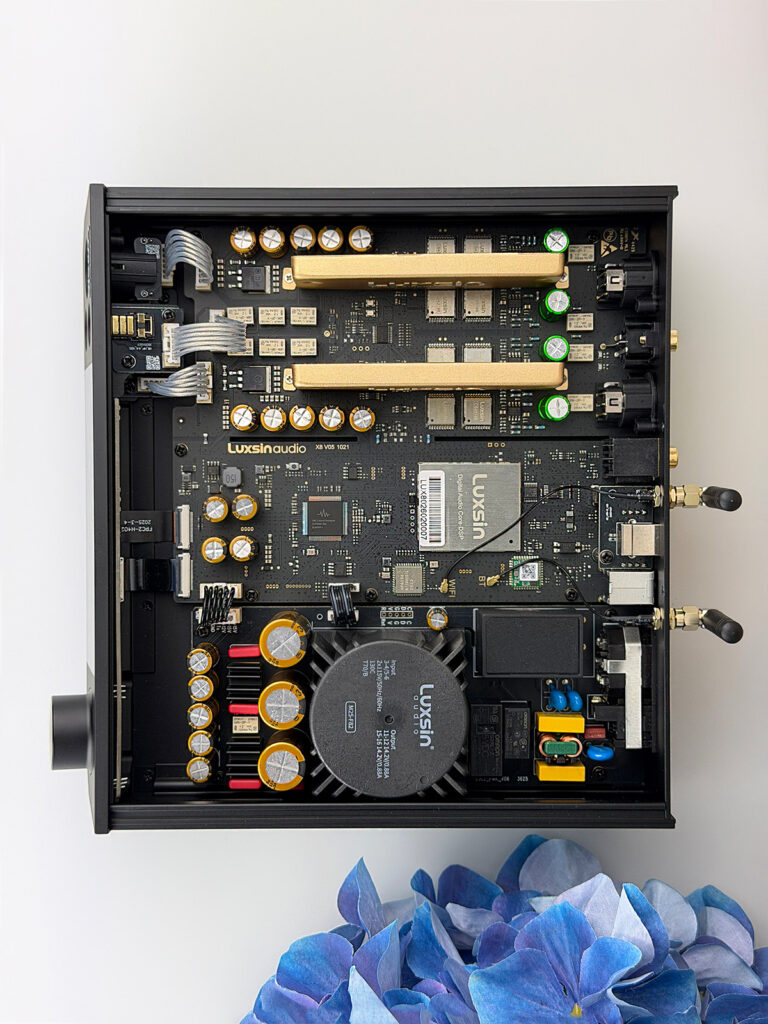
Luxsin Audio brand has quickly made a name for itself in the Head-Fi community. They made a strong statement with their debut model, the X9, which has recently also gained AI support through a software update. The X8 is more affordable, yet not less high-end. The X8 uses eight Cirrus Logic CS43198’s, each protected by a custom shield that isolates it from digital interference and dissipates heat to reduce noise and jitter. Luxsin has also integrated the world’s first AI-assisted parametric EQ. This integration makes advanced tuning possible without requiring in-depth technical knowledge.
At first glance, the name suggests it sits below the X9 in Luxsin’s lineup, which is an understandable assumption. In reality the two models are built with different priorities in mind and are aimed at slightly different users.
The X9 focuses more on hardware functionality. It offers a wider range of connectivity options. Features such as HDMI ARC, analog RCA input and dual subwoofer outputs make it easy to integrate the unit into a setup with active speakers or a larger system.
The X8 follows a different philosophy. Rather than expanding the hardware side, Luxsin places the emphasis on software and signal processing. The unit is built around a powerful DSP and introduces advanced sound tuning options. This allows users to shape the sound in a more flexible way and to adapt the presentation to different headphones or personal preferences.
The X9 leans toward system integration and connectivity, while the X8 focuses more on intelligent sound processing and user interaction. The X8 expands Luxsin’s lineup in a different perspective.
Build quality
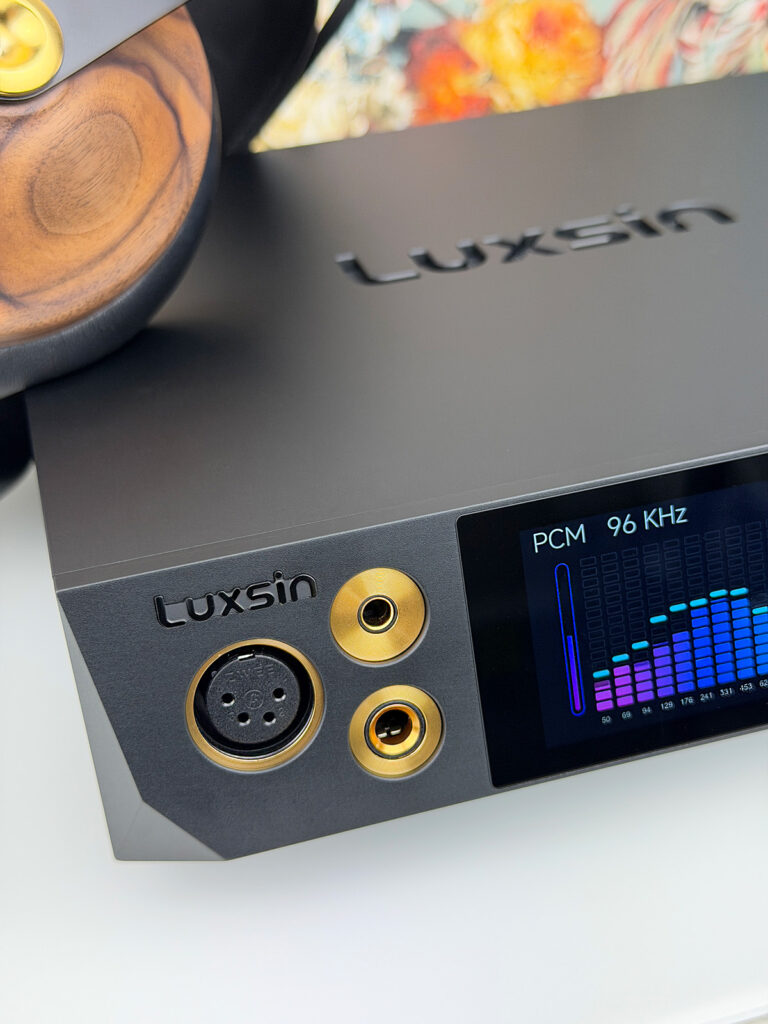
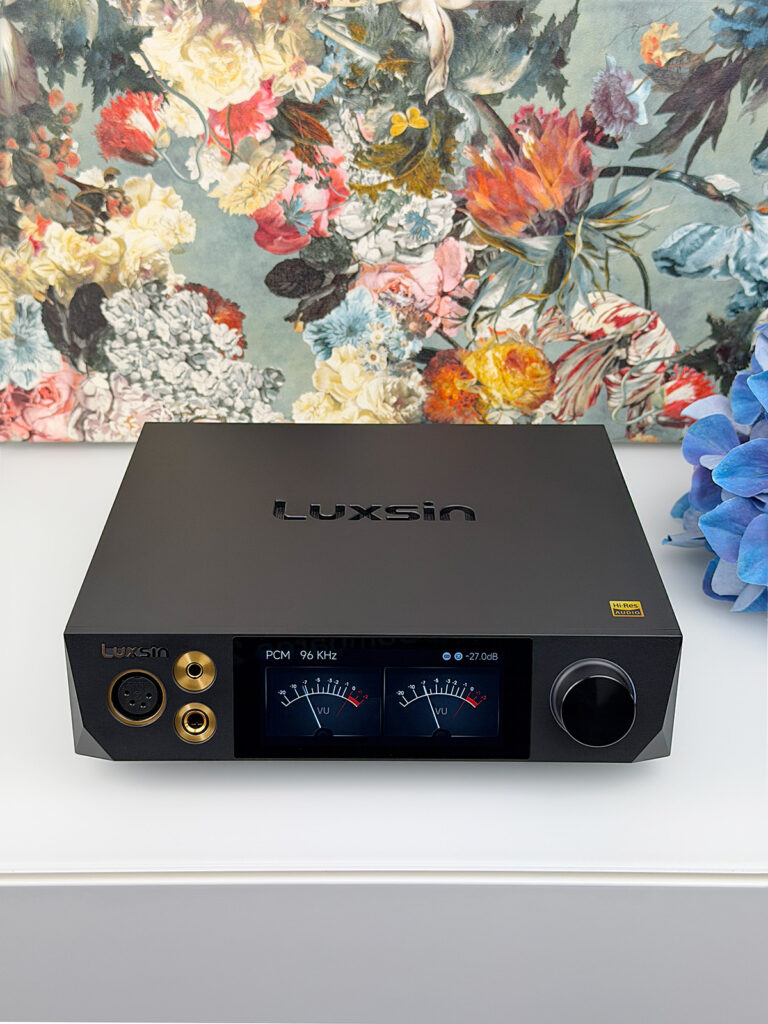
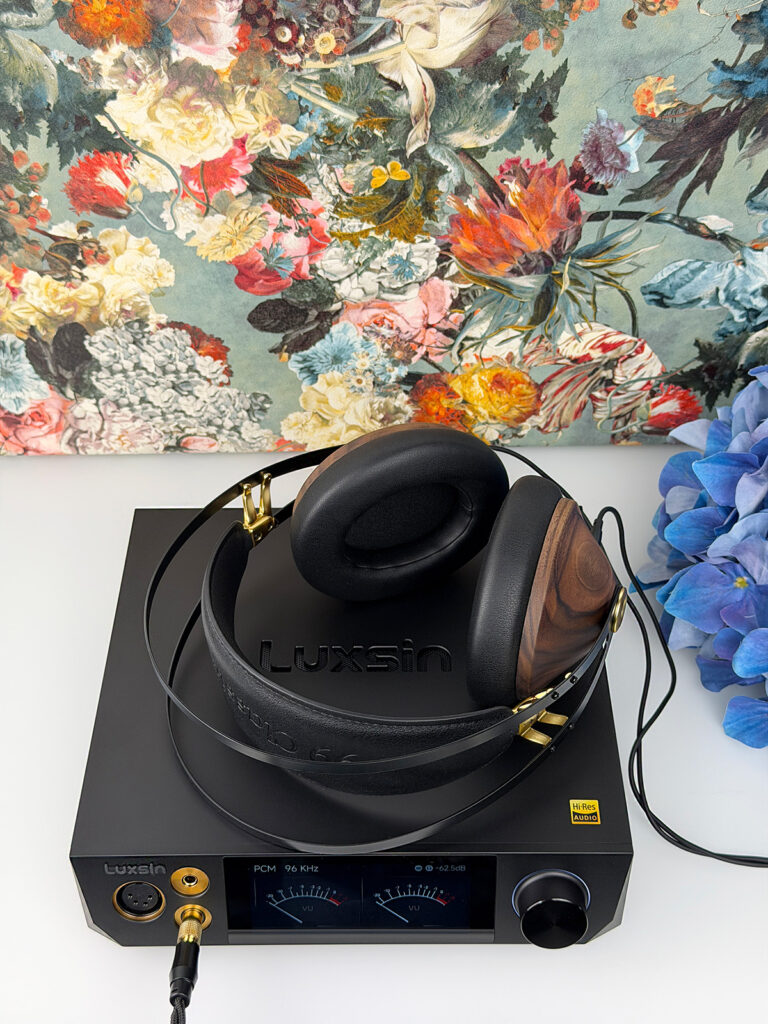
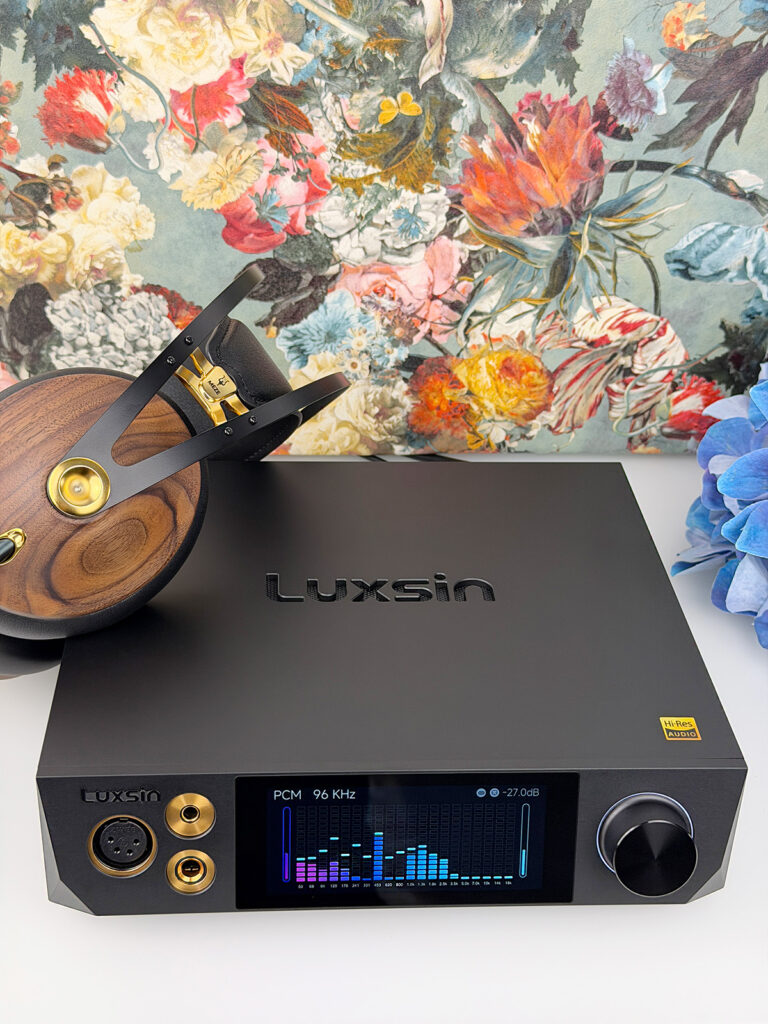
The first thing you notice when taking the X8 out of the box is its weight. At around 2.75 kg, it feels surprisingly heavy for such a compact device. It directly gives a clear sense of solidity and quality. The CNC-machined chassis is solid and clean, with a black matte finish that looks very sleek. The cut-out Luxsin logo on the top plate gives the X8 a very eye-catching appearance.
The color touchscreen is slightly angled, improves visibility. The volume knob turns with a solid, precise feel. While the X8 does not use an R2R volume control, it features a well-implemented electronic volume stage that delivers precise and stable level adjustment.
A remote control can be ordered for an additional (small) fee. However, most will likely prefer remote control via their excellent app (iOS/Android) or web interface.
Architecture
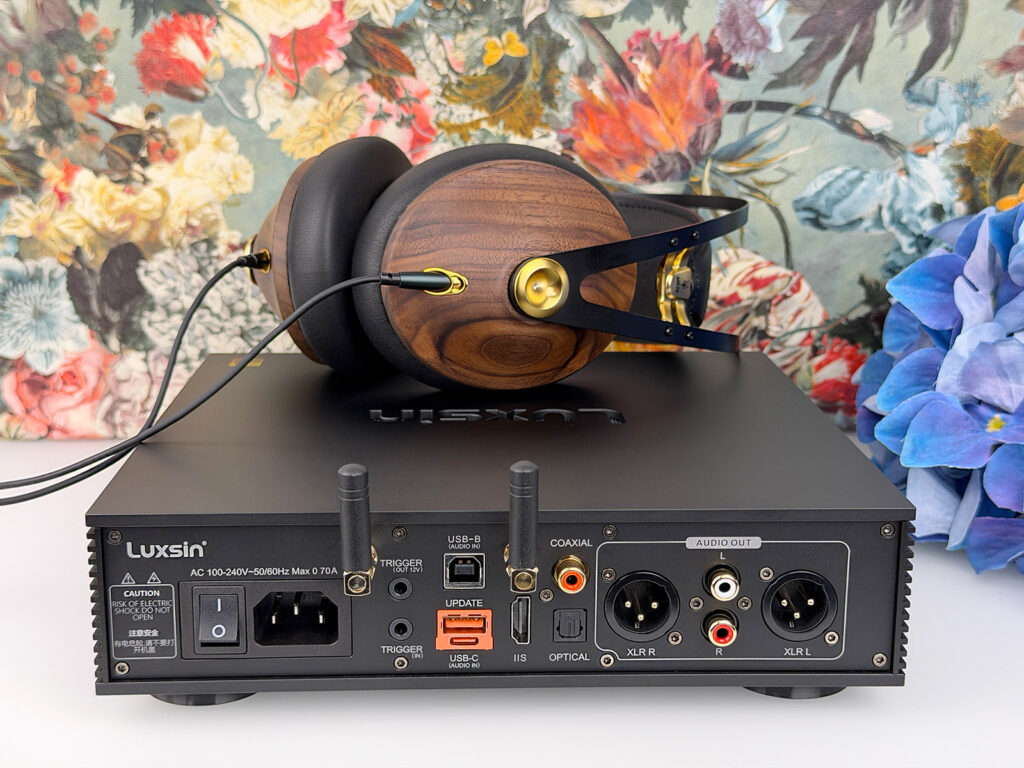
The Luxsin X8 uses a sophisticated dual-mono DAC architecture built around eight Cirrus Logic CS43198. A design that helps lower distortion and noise while improving dynamic range and channel separation. By separating the left and right channels completely in both layout and signal path, Luxsin achieved a clean and more precise stereo image.
The headphone amplification stage combines OPA1612 op amps with high-current TPA6120A2. This configuration allows the X8 to deliver up to 4800mV of balanced output power. This providing headroom for a wide variety of headphones or IEMs. The Luxsin X8 uses an automatic impedance detection just like the X9, allowing the unit to select an appropriate gain level depending on the connected headphone.
At the heart of the Luxsin X8 sits a powerful Cadence Tensilica HiFi-5 DSP. This platform provides strong processing power for real time audio tasks such as equalization, crossfeed and other DSP functions without compromising signal integrity. The architecture allows Luxsin to implement advanced digital processing while maintaining low noise performance and transparency.
Specs
- DAC: Shielded Cirrus Logic CS43198 × 8
- Digital Processing: Proprietary Digital Audio Core with dual-core HiFi-5 DSP and ARM architecture
- USB Interface: Supports PCM up to 32-bit / 768 kHz and native DSD512
- Coaxial / Optical Support: Up to 24-bit / 192 kHz
- Amplifier Stage: OPA1612 + TPA6120A2
- Output Power: Balanced up to 4.8 W per channel
- Output Power: Single-ended up to 2.9 W per channel
- EQ Features: AI-assisted parametric EQ with headphone database covering more than 2,500 models
- Wireless: Wi-Fi 2.4 GHz / 5 GHz
- Bluetooth: Bluetooth 5.1
- Display: 4-inch full-color touchscreen (480*960)
- Construction & Power:
-
CNC-machined aluminum chassis with ~15° incline, diamond-cut edges
-
Ultra-low noise linear power supply with <40 µV ripple
-
- Dimensions: 236mm (L) × 236.8mm (W) × 64mm (H)
- Weight: ~2.75 kg
- Color: Black
- Package Contents: X8 Unit, power cable, USB-B cable, user manual
Connectivity & I/O
- Digital Inputs: USB-B, USB-C, IIs, optical (Toslink), coaxial, Bluetooth
- Headphone Outputs (front panel):
-
Single-ended 6.35 mm jack
-
Balanced 4.4 mm jack
-
Balanced 4-pin XLR
-
-
Outputs: Balanced XLR and unbalanced RCA
-
Other Features: 12 V trigger in/out, USB-A (firmware), Bluetooth antenna, Wi-Fi antenna
The 4-inch touchscreen is intuitive, allowing access to input and output selection, digital filters, headphone gain, VU meters and other features. Swiping right opens the settings menu, while swiping left-to-right unlocks the FX menu. The Luxsin controller app, available for iOS and Android, provides full remote access to all functions.
The X8 offers several different home screen layouts, many of which will feel familiar to users of the X9. There are multiple visual styles and themes, allowing you to personalize how the interface looks during playback.
Under the device information page, you find the IP address that allows you to access the web interface from your computer. Through the web player you can control the unit and adjust all settings, including AI.
Test equipment
- Headphones:
- Meze audio Classics 99 2nd
- Sendy Audio Egret
- IEM’s
- Streamer
AI-Assisted Parametric EQ
An amazing feature is the AI-assisted parametric EQ, the first of its kind in a consumer DAC/amp. It draws from an database of over 2500 headphone compensation profiles (HP-EQ system) to suggest musically adjustments. You can accept the AI proposal as-is, tweak it manually or bypass it completely.
The implementation is surprisingly practical and effective. It feels like having a knowledgeable tuning assistant. Normally this would mean wrestling with sliders for hours, so this feature is a very welcome feature. The moment you start using it, it becomes quite fun.
How does it work?
You start by selecting the headphone or IEM you are using. The system already includes a large and continuously growing database of headphone and iem models. Once you have chosen your headphone, you select a target curve as your starting point.
The assistant works much like a chatbot. You simply describe the sound you are aming for. For example: “add more bass punch”, “make vocals sound warmer” or “reduce treble glare”. The system then instantly generates and applies a precise PEQ curve profile.
What makes this feature impressive, is the level of explanation it provides. The AI describes the new tuning, the goal of the adjustment and the strategy used to reach that target. It also explains each change it makes and what effect you can expect to hear.
Once you are satisfied, you can simply apply the recommended parameters.
Overall, it is a surprisingly intuitive system and also a great learning tool for understanding how EQ changes affect the sound.
Sound quality
The X8 has a smooth presentation with a slight touch of warmth and avoids sounding overly analytical or clinical. Bass is tight, textured and well extended. Mids are full-bodied with convincing weight. Vocals have presence and acoustic instruments sound rich and lifelike. Treble sounds open and refined without edginess or sibilance. The Luxsin X8 deliveres a warm, inviting and fatigue-free listening experience.
Treble
The treble of the Luxsin X8 is generally described as detailed and well extended, yet smooth and controlled. It offers good air and clarity without becoming sharp or fatiguing. Fine micro details and subtle textures in recordings are revealed, while still maintaining a relaxed and natural presentation. This balance allows the X8 to sound revealing without pushing the treble too aggressively.
Midrange
The midrange sounds full and natural with a slight touch of warmth. Vocals have good presence and body, making both male and female voices sound convincing and well defined. The overall presentation is smooth and relaxed, while still offering enough clarity to reveal subtle details in the recording.
Bass
Bass performance is tight and well controlled. The low end reaches deep when the recording calls for it, but it never sounds bloated or exaggerated. The X8 delivers bass with good definition and texture. Bass lines carry enough weight while remaining controlled.
Soundstage & Imaging
The Luxsin X8 presents a wide and open soundstage with good separation between instruments. Imaging is precise, making it easy to place individual elements within the mix. Vocals and instruments are clearly positioned, even in more complex recordings. The parallel DAC architecture and the very low noise floor, seem to help with this presentation, giving the X8 a spacious and well organized soundstage.
Headphones & IEM Synergy with the Luxsin X8
Meze Audio 99 classics 2nd
The Meze 99 Classics are known for their warm and musical character with a solid low end and smooth treble. Paired with the Luxsin X8 this combination works very well. The slightly warm presentation of the X8 complements the natural tone of the Meze without making it overly thick. Bass remains full but controlled, while the midrange gains a bit more clarity and separation. The X8 also helps open up the stage slightly, giving the Meze a bit more air and space than usual.
Sendy Audio Egret
The Sendy Audio Egret has a more open and spacious presentation by nature. With the Luxsin X8 it benefits from the clean power and the controlled bass response. The pairing delivers a balanced and smooth sound where the Egret’s natural openness is preserved. The X8 keeps the presentation relaxed while still offering good detail and separation.
Campfire Audio Andromeda 10
The Andromeda 10 is a highly sensitive IEM that can quickly reveal noise or harshness in a source. The Luxsin X8 performs impressively well in this regard, thanks to its low noise floor and smooth top end. The result is a very clean and controlled presentation with excellent detail retrieval. The spacious character of the X8 pairs nicely with the Andromeda, further enhancing its already impressive sense of width and imaging.
Kiwi Ears Orchestra II
The Kiwi Ears Orchestra II has a more neutral and technically focused tuning. When paired with the Luxsin X8, the result is a balanced and controlled sound. The X8 adds a subtle touch of warmth which helps prevent the presentation from becoming too analytical. At the same time, the Orchestra II benefits from the precise imaging and wide stage of the X8, resulting in a clear and well organized soundstage.
Listening Impressions
For the listening tests I selected a small set of familiar tracks that cover a wide range of musical qualities. They revealed how the X8 handled detail, soundstage placement, rhythm and the texture of instruments and voices. The Luxsin X8 was set to bypass mode.

Melody Gardot – Lover Undercover
Gardot’s voice sat slightly forward in the mix and sounded smooth and textured without becoming overly warm. The X8 kept the midrange clean and articulate, allowing subtle vocal inflections and breath details come through clearly.
The accompanying piano floated slightly behind the vocal line with excellent separation, while the brushes were delicately rendered. The soundstage felt wider than expected for a desktop DAC and amplifier in this segment, giving the track a relaxed late night jazz club atmosphere.
What stood out most was the natural tonality. The X8 did not add artificial warmth or edge. Instead it delivered a balanced presentation where Gardot’s voice felt lifelike and emotionally engaging.

Mario Bauzá – El Manisero
With Mario Bauzá, the Luxsin X8 demonstrated strong layering and stage. The brass section entered with lively energy while remaining controlled and well separated.
Trumpets had a satisfying bite, yet the treble stayed smooth enough to avoid harshness. The congas and hand percussion, had excellent rhythmic definition. Each instrument occupied its own space.
The X8 handled the rhythmic drive beautifully. Bass lines sounded tight and articulate. The overall presentation was vibrant and energetic.

Buena Vista Social Club – Candela
This recording has a raw and live character and the X8 preserved that feeling very well.
Vocals emerged with warmth and body while the acoustic guitars had a tactile quality. The subtle resonance of the strings and the wooden character of the instruments were clearly audible. Imaging was particularly convincing here. The musicians spread naturally across the entire stage.
Percussion sounded lively and bass foundation remained solid without becoming dominant.

Joe Bonamassa – High Water Everywhere
This live recordings benefited from the Luxsin X8’s sense of space and detail. The ambience of the crowd and the reverberation of the hall were reproduced convincingly, which created a strong feeling of being present at the venue.
Bonamassa’s guitar tone sounded rich and expressive. The X8 captured both the bite of the electric guitar and the warmth of the amplifier, allowing the instrument to sound powerful without becoming aggressive. The drum kit had satisfying punch while cymbals showed a natural shimmer and decay.
What impressed most was the way the X8 handled dynamics. As the performance built in intensity, clarity and separation remained intact. This allowed each instrument to stay distinct while preserving the energy of the live performance.
Conclusion
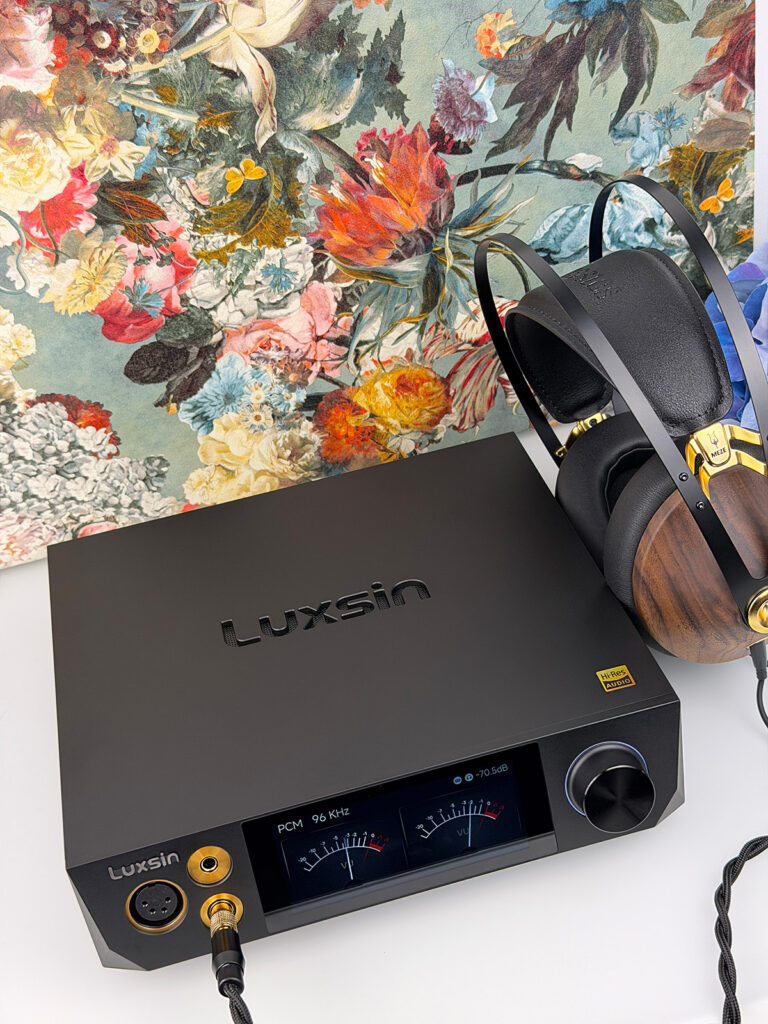
With the X8, Luxsin adds another impressive product to its lineup. It combines a strong technical performance with a smooth and slightly warm sound signature. The result is a presentation that works well with a wide range of headphones and IEMs. The device offers plenty of power in reserve while remaining impressively quiet.
The very low noise floor makes the X8 an excellent amplifier for sensitive IEMs. Devices designed to handle both IEMs and headphones often struggle to provide enough power for more demanding models, but the X8 strikes a strong balance here.
The AI system in the X8 is genuinely something special. A quick command like “more forward mids” or “extra sub-bass weight” produces a highly accurate PEQ suggestion that rarely feels random. What used to be a tedious process now becomes fast and easy. You still have full manual control, if you prefer, but the AI makes tuning approachable for everyone.
While purists may still prefer a simpler signal path without DSP, it is hard to ignore how well implemented the AI system is implemented. You still have the option to bypass the processing entirely.
Luxsin has successfully combined convenience, flexibility and strong sound quality in a single, solid and well built device. Few devices in this price range combine this level of flexibility, usability and sound quality in such a well thought out package.
All things considered, the Luxsin X8 is a remarkable, great sounding DAC and headphone amplifier that is hard to ignore at this price point. It delivers a performance and feature set that sets it apart from the competition.
Pros
- Smooth and detailed sound signature
- Very low noise floor, excellent for sensitive IEMs
- Powerful headphone output
- AI assisted EQ and extensive DSP options!
- Large and easy to use touchscreen interface
- Good soundstage and precise imaging
- Very versatile with many headphone profiles available
- Small footprint in size compared to the X9
Cons
- DSP features may not appeal to purists
- Learning curve for the more advanced DSP functions
- Without DSP less neutral sounding than the X9
- No line-in RCA