JDS Labs was founded in 2007 and is based in Illinois, USA. The company builds practical, well-engineered products. It does not aim for a luxury positioning, but focuses on performance, reliability and engineering-driven design. Audible transparency remains a key priority.
They first made a name with their CMOY headphone amplifier, built in an Altoids mints tin. From there, JDS Labs gradually expanded into DACs and headphone amplifiers. Products like the Atom and Element series reflect that philosophy: straightforward designs, honest specifications and a strong value for money. Their reputation is built on a pragmatic approach: pricing products fairly, delivering exactly what is promised and avoiding unnecessary specifications.
In line with that approach, the Synapse provides full galvanic USB isolation. JDS Labs asked me to explore the Synapse and evaluate how much of a difference it can make in an audio chain.

The JDS Labs Synapse is one of those products that only makes sense once you actually need it. It sits between the source and your DAC and removes unwanted noise from the USB signal. In practice, it addresses the problem that many setups quietly suffer from.
USB audio was never designed with true isolation in mind. A DAC doesn’t just receive music, it is also connected to the electrical environment of the source. This means that everything from the power supply to something as trivial as switching a light on or off in your house can make its way into your audio chain.
The Synapse is designed to sever that connection. It introduces galvanic isolation between the source and DAC, effectively breaking the electrical path that allows noise to travel along the USB ground. The result is the same data, but without the contamination.
The effect of galvanic isolations is not subtle if your system suffers from these issues. Background noise disappears. Pops and electrical interference that were previously tied to system activity are no longer audible. The Synapse does not reshape the sound or soften the presentation. It does not compress dynamics or alter tonality. It simply removes a problem.
If you are dealing with USB noise, this small device can become surprisingly essential.
The Synapse is not about adding something to your sound. It is about removing what should not be there in the first place. Some people chase this with better DACs, better amps, better cables. Sometimes, the solution is simple: just remove noise.
How It works
At the heart of the JDS Labs Synapse is the ISOUSB211 from Texas Instruments, the technology that makes it all possible. Think of it as two sides communicating through a sealed wall: information passes through, but electrical noise does not.
Texas Instruments ISOUSB211
The ISOUSB211 is not just a filter. It is a fully galvanically isolated USB repeater. This means it takes the incoming USB signal, breaks the direct electrical connection between source and destination and then rebuilds that signal on the other side. The data remains intact, but the electrical noise that travels along the ground does not make it across.
This is an important distinction. Many devices try to clean up USB by tweaking the signal or reducing noise after the fact. The ISOUSB211 takes a different approach: it prevents the noise from entering the system in the first place by physically separating both sides of the connection.
It supports full USB 2.0 bandwidth, up to 480 Mbps. So there is no compromise in data throughput or compatibility. The signal passes through unchanged in terms of content, timing and resolution.
The ISOUSB211 also includes built-in equalization to compensate for losses in the USB path, ensuring the signal remains stable and compliant even at high speeds. It does more than isolate, it makes sure the signal arrives clean and properly shaped.
The ISOUSB211 block noise currents from entering the ground of your DAC. It interrupts that pathway completely. This is exactly why the Synapse can eliminate hum, interference and random electrical artefacts without altering the actual sound.
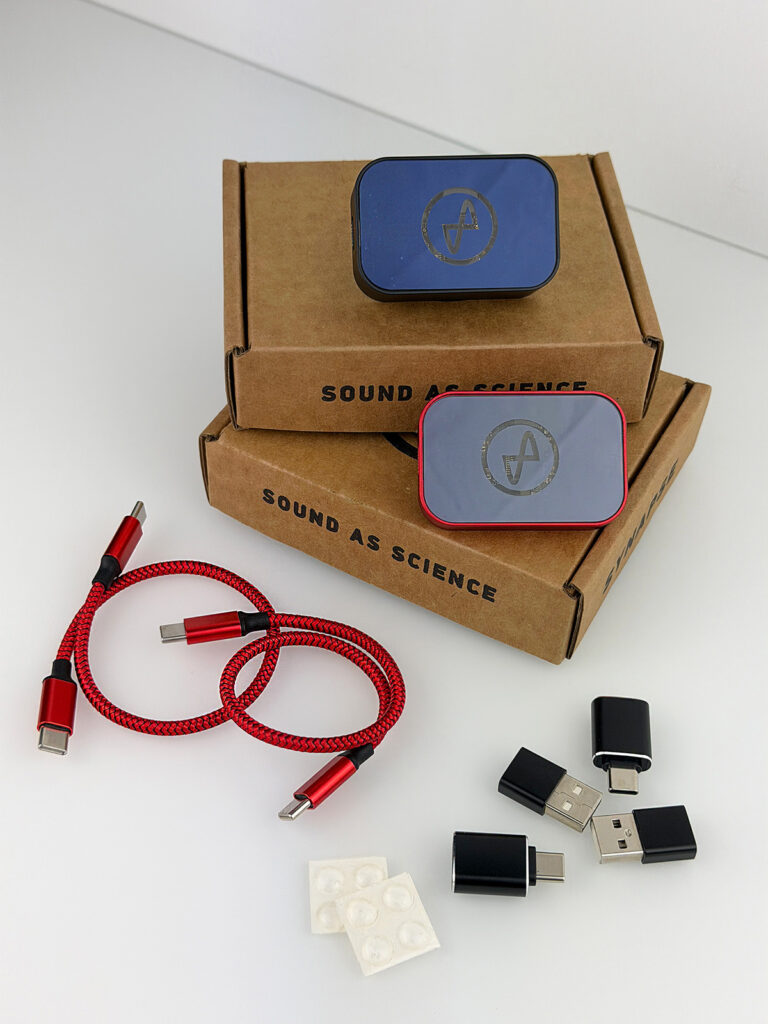
What is in the box:
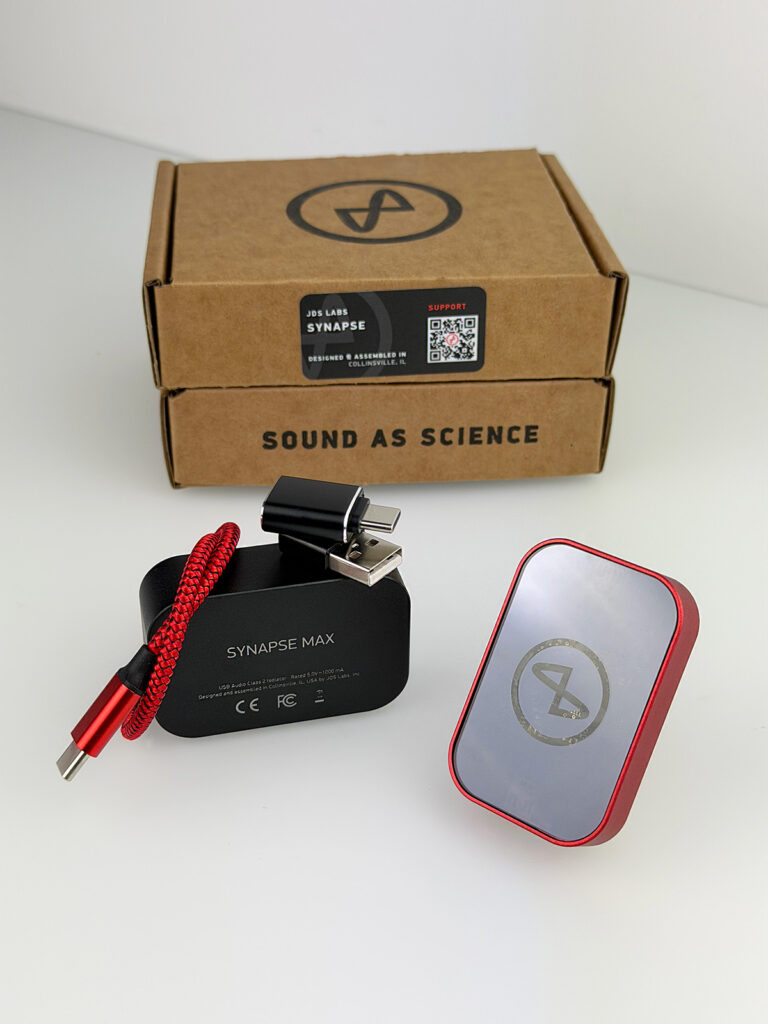
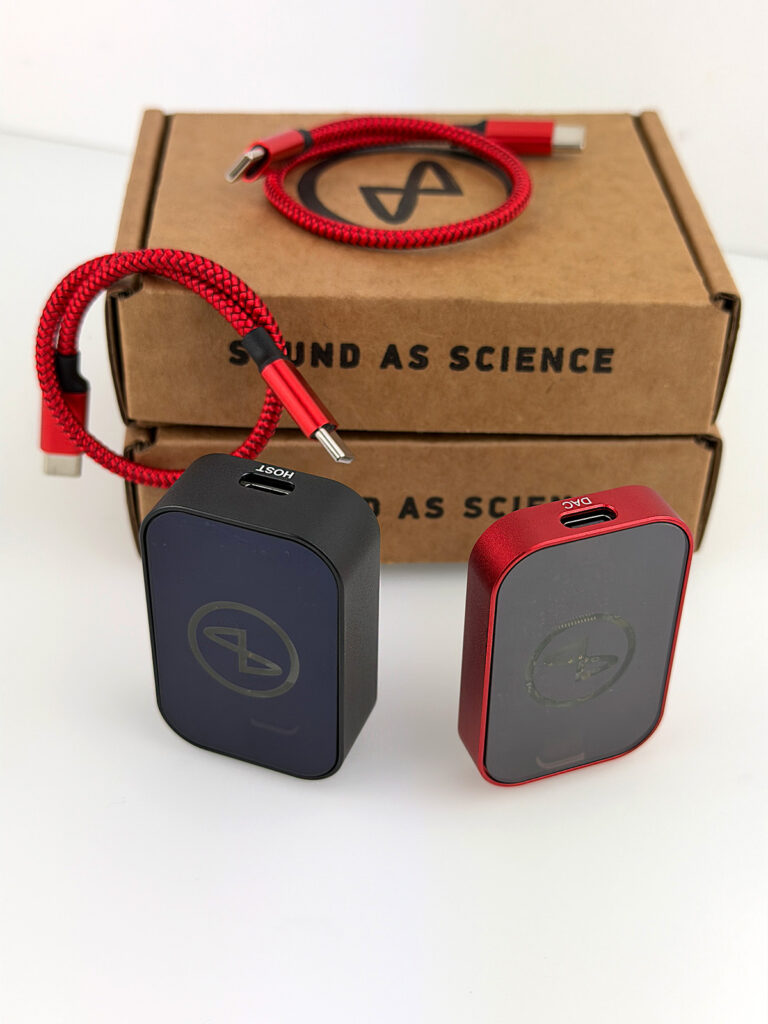
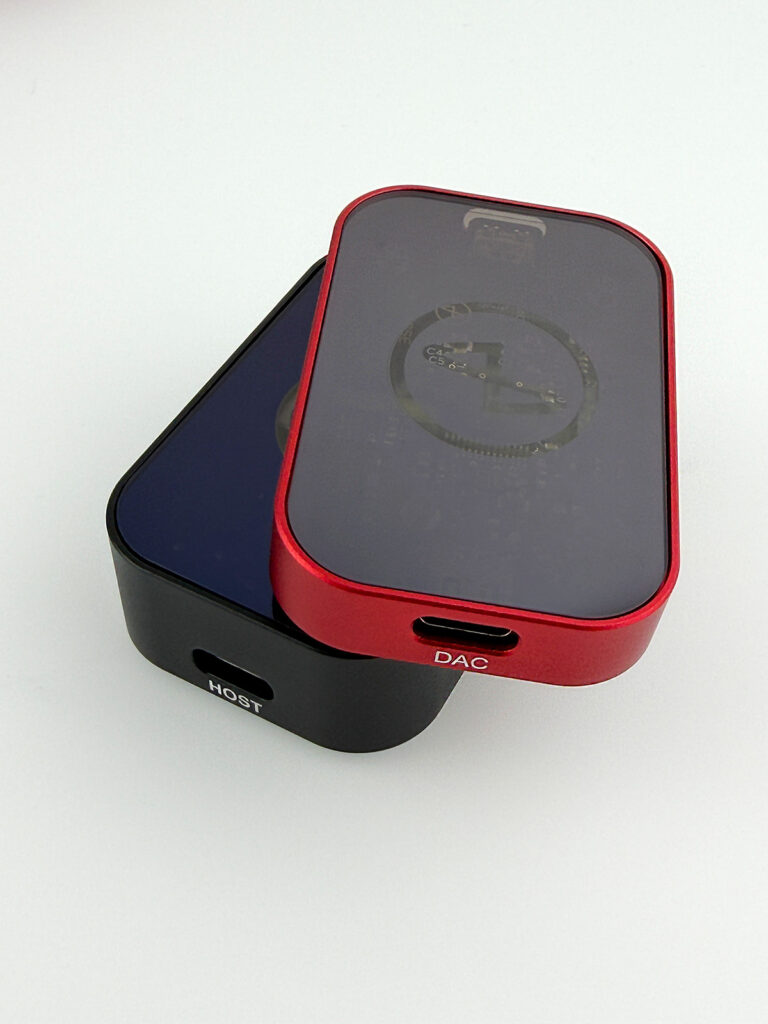
The Synapse is compact, lightweight and easy to fit anywhere in your audio chain. It features USB-C in and USB-C out. No drivers or setup are required, simply place it between your source and DAC and let it do its work.
There are two versions: the Synapse and the Synapse Max (=slightly thicker in size). The Max delivers increased power output, which can be useful for portable DAC’s that require more power than the standard Synapse can provide.
For most use cases, the regular Synapse is more than sufficient.
Accessories included:
Test equipment:
Test tracks:
- Melody Gardot – Don’t talk
- Una Noche Con Rubén Blades – Ban Ban Quere
- Celebrating John Williams – Hedwig’s Theme
- Wynton Marsalis (Magic Hour) – Big Fat Hen
- Dirk Maassen – Here and Now

JDS Labs Synapse dropped into the chain
This review focuses on the core function of the JDS Labs Synapse, galvanic isolation. Paired with the Chord Mojo 2 (Phone-connected), Burson Stellar Conductor (Macbook pro M4-connected), Luxsin X8 (Macbook M4-connected) and Campfire Audio Relay DAC (Phone-connected). The goal is to see how effectively it isolates the signal from noise and interference and whether that results in a cleaner signal.
Chord Mojo2
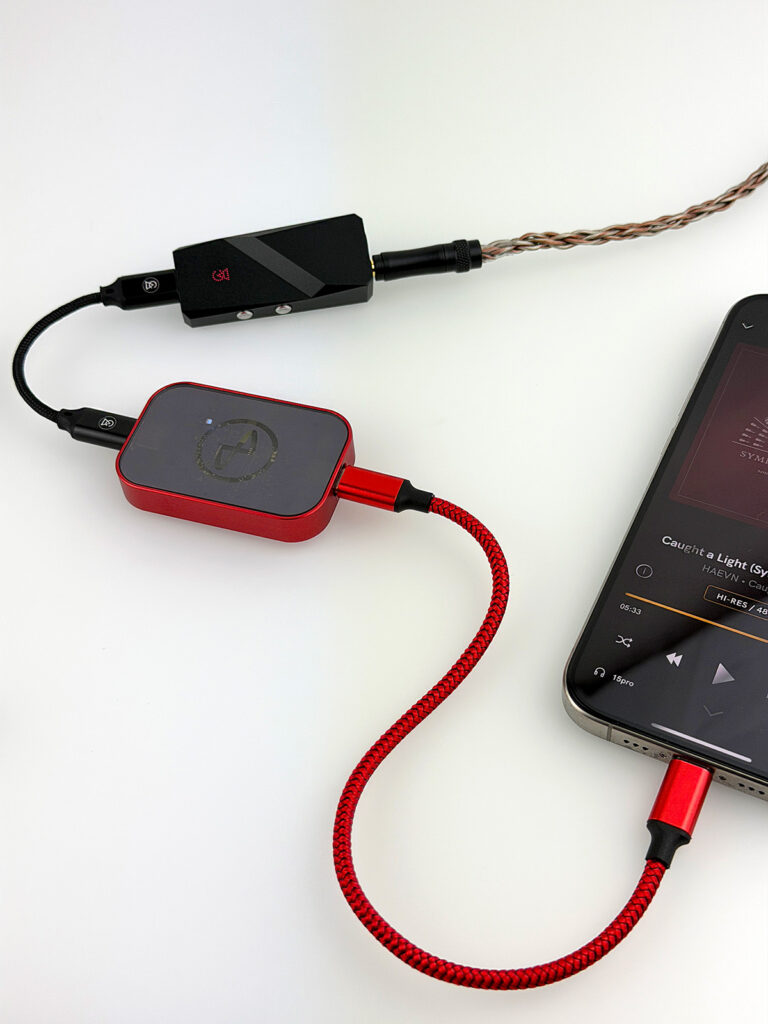
I tested the JDS Labs Synapse in a setup that is actually quite common. A smartphone feeding the Chord Mojo 2 over USB. On paper, this should already be a clean and capable chain. In practice, it is not always as quiet as you might think, especially using a phone as the source.
As soon as I placed the Synapse in between the phone and the Mojo 2, the first thing that stood out was the absence of phone noise in the background. The background dropped into a darker, more stable space. Not artificially black, but calm and more controlled. It came extremely close to the Poly-Mojo 2: that so many people love.
It had an immediate effect on how details came through. Small nuances in vocals became easier to follow and reverb tails stretched out even more naturally, without being masked. Instruments had a bit more separation, not because they were pushed apart, but because the space around them was cleaner.
What impressed me most was that the tonality remained unchanged. The Mojo 2 retained its character; if anything, it sounded even more true to itself. Simply without the subtle interference that was always there when driven directly from a phone or notebook.
I also observed its behavior during normal phone use. Switching apps and running background processes. Without the Synapse, occasional tiny artefacts appeared (barely noticeable), but there. With the Synapse in place, these inconsistencies disappeared completely. The sound remained stable regardless of what the phone was doing.
It is one of those improvements that becomes obvious after a few minutes and hard to unhear once you go back to a setup without it.
Campfire Audio Relay DAC
I tested the JDS Labs Synapse in a setup that will be familiar to many. A smartphone feeding a small portable DAC like the Campfire Audio Relay.
With the Synapse in between, the background becomes noticeably calmer. More stable and grounded. More micro details in the low-end. It lifted the overall sound quality up a few notches.
The character of the Relay DAC remained fully intact. Its energetic, slightly forward nature stayed the same, it came across as more controlled and refined. Once you hear the Relay DAC with a clean USB signal, it becomes clear how much performance was already there, just waiting to come through properly.
The Luxsin X8
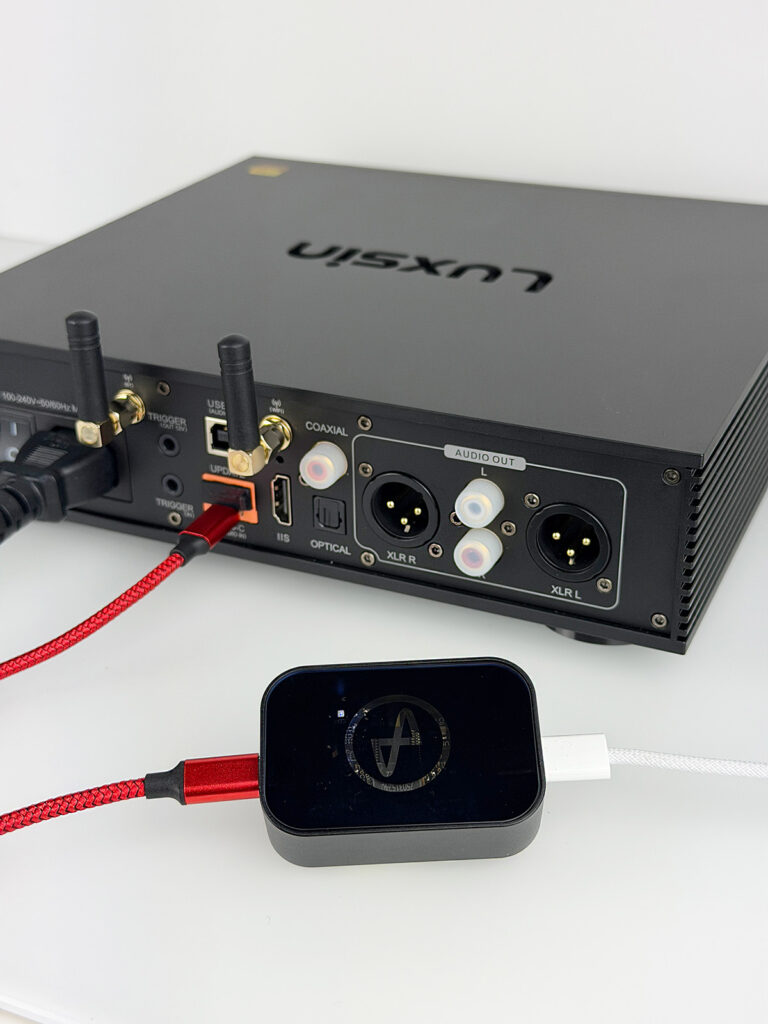
The Luxsin X8, (which already puts a strong focus on low noise and internal isolation) with its linear power supply, is clearly designed to keep interference to a minimum.
Without the Synapse in place, the X8 already delivered a very clean and stable presentation. The background is quiet, with a low noise floor. There is no obvious interference or harshness. Adding the Synapse into the chain did not result in the same immediate shift as with the more sensitive setups. That said, there was still a small refinement noticable. The X8 already handles noise internally through careful design and power separation. In this setup, the Synapse felt less essential, but still worth mentioning.
Burson Audio Stellar Conductor
I also tested the JDS Labs Synapse in a full Class A desktop setup, using the new Burson Audio Stellar Conductor.
Placing the Synapse in between the source and the Burson didn’t create an immediate, dramatic shift. Instead, the change was subtle and refined. The background became more stable, with a sense of calmness that settled into the presentation.
What I especially noticed was the improvement in microdetail. The Stellar is already very capable, but with the Synapse in place, small nuances became easier to pick out. Subtle textures in strings, the trailing edges of notes, the air around vocals all became more noticeable. What changed was the underlying refinement of the sound.
It’s the kind of improvement you appreciate more over time. Not a night-and-day transformation, but a gradual realization that everything sounds just a bit more effortless and a bit more resolved.
Ultimately, that is the key takeaway. With a high-end desktop unit like the Burson Conductor, the Synapse removes the last bit of unwanted influence from the source, allowing the DAC to perform with just a little more precision and ease.
Conclusion
The Synapse delivers exactly what it promises, the results are genuinely impressive. The background becomes noticeably cleaner, the signal more stable and the overall presentation gains a sense of calm and control that simply wasn’t there before.
Its strength lies in how directly the Synapse addresses the problem without adding complexity. It does not color the sound or act as a tuning device. Instead, it removes unwanted noise with precision, allowing your DAC and amplifier to perform at their full potential.
The difference is not dramatic, it rarely is at this level of hifi, but it becomes immediately noticeable when the Synapse is removed from the chain.
With the Synapse, JDS Labs once again demonstrates its approach: compact, well-built and fairly priced products that make a real difference. It’s a no-nonsense solution that simply works and can have a meaningful impact in most setups.
For anyone dealing with USB-related noise, the JDS Labs Synapse is easy to recommend. It elevates your system in a way that is immediately noticeable.
Pros
- Effectively eliminates ground loop noise and USB interference
- Transparent performance with no impact on sound signature
- Plug and play with no setup required
- Compact and easy to integrate into any system
- Excellent value for money
Cons
- Can run slightly warm during use
- Bright LED may be distracting in dark environments
- The clear window can get scratched over time
- Adds another device and cable in the chain
- Less noticable in already clean systems