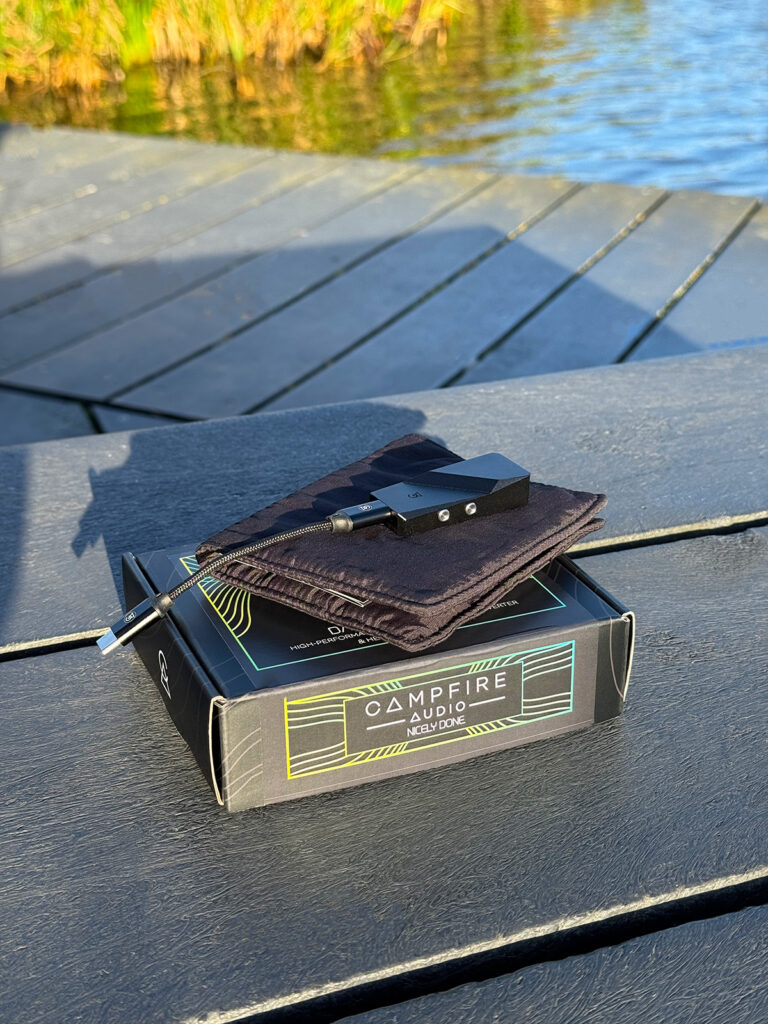
Campfire Audio, established in 2015 in Portland, Oregon by Ken Ball, the founder behind ALO Audio. Campfire audio made its name with in-ear monitors, building trust among enthusiasts in a remarkably short time.
While IEMs remain their core, Campfire has shown they are not limited to a single category. A clear example is the Relay DAC; a compact portable USB DAC built around an AKM 4493 SEQ. Like their earphones, the Relay is designed and assembled in-house with the same attention to acoustic refinement and build precision.
The Relay is more than a dongle DAC, it reflects the same philosophy that defines Campfire’s IEM lineup, thoughtful tuning, solid engineering and a no-compromise approach in a small form factor. It proves that Campfire’s expertise translates just as well into source gear as it does into transducers.
In this review, we take a closer look at the Relay DAC. A very nicely designed portable unit.

Design
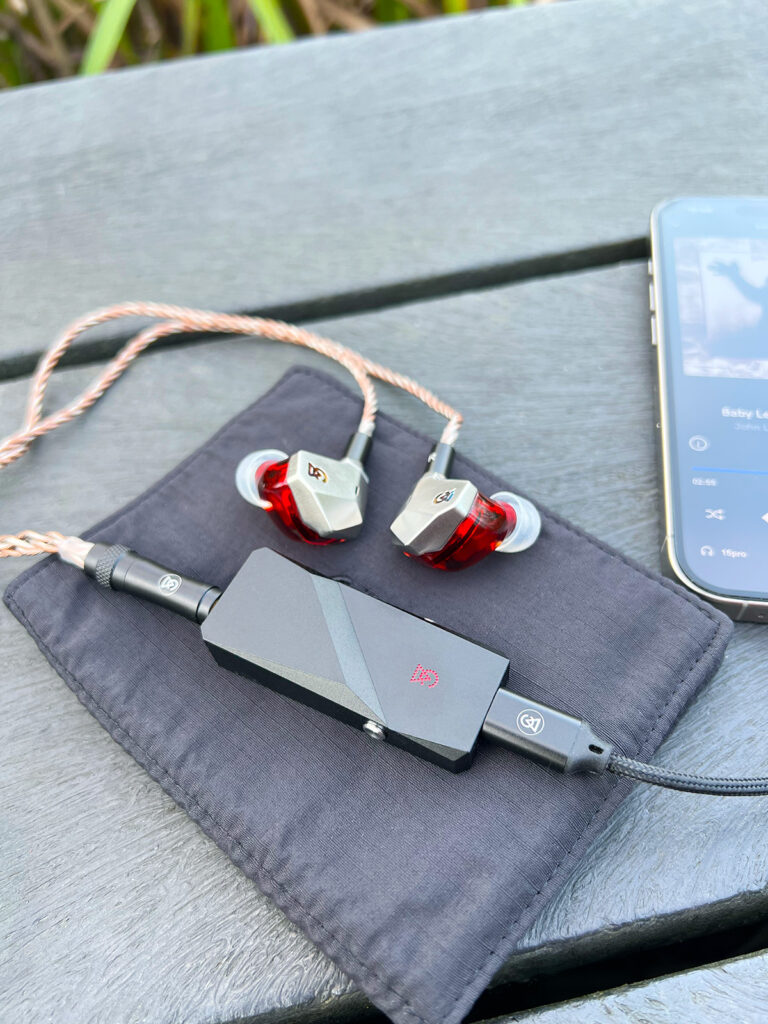
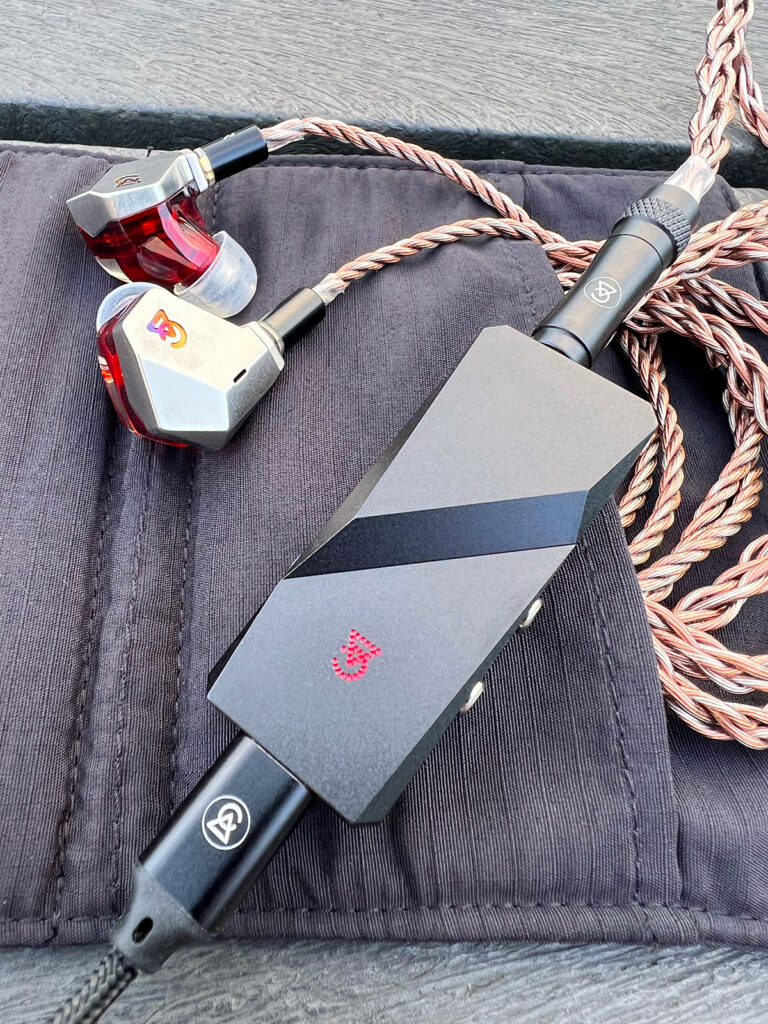
The Relay feels solid. The anodized aluminum body is compact and light, with a clean machining and a tidy layout. There is USB-C on one end, a 3.5 mm single ended and a 4.4 mm balanced one. The physical volume has a very decent 60 steps that makes small adjustments easy. It has a high and low gain, six selectable digital filters and media controls.
The unit is very pocket-friendly, connects to phones, tablets and computers without any setup or complication. Campfire Audio tested multiple DAC platforms before settling on the AKM 4493SEQ as the best match for the relay’s design goals. That choice clearly makes sense. This is not just another dongle DAC, but one that performs well above what I would normally expect in this category. For a portable piece which just happens to fit in your pocket, it is well thought out and well finished.
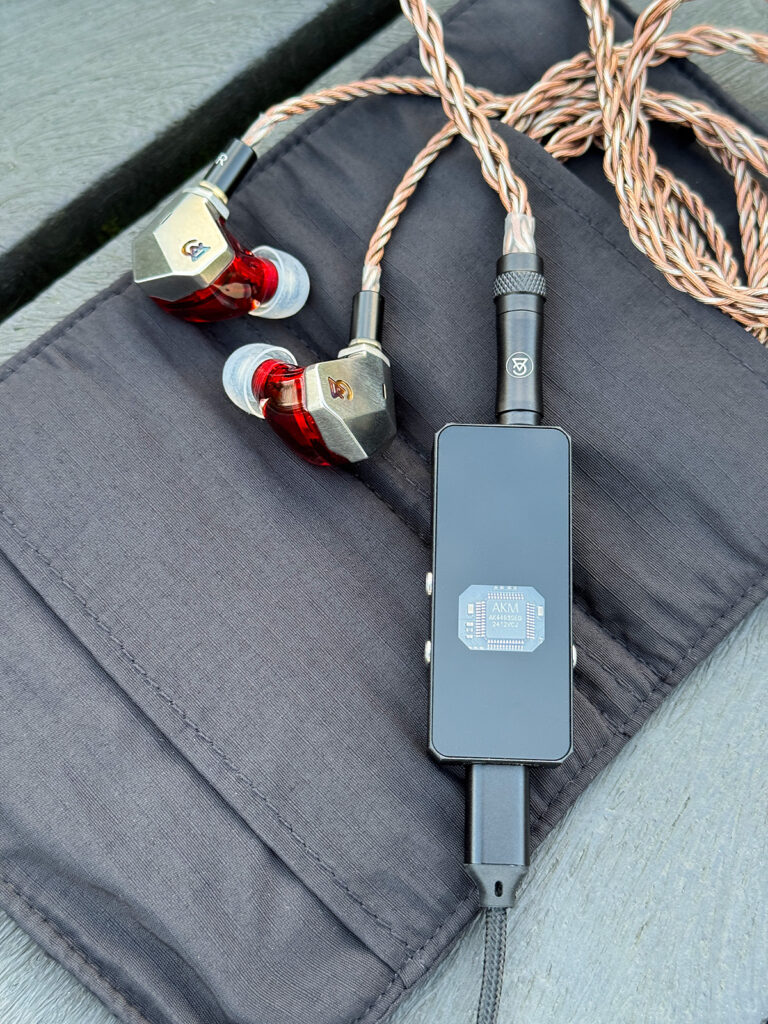
The Campfire Audio logo that lids up when connected and the small window at the back of the unit revealing the AKM 4493SEQ inside, are subtle details that adds a nice touch to the design.
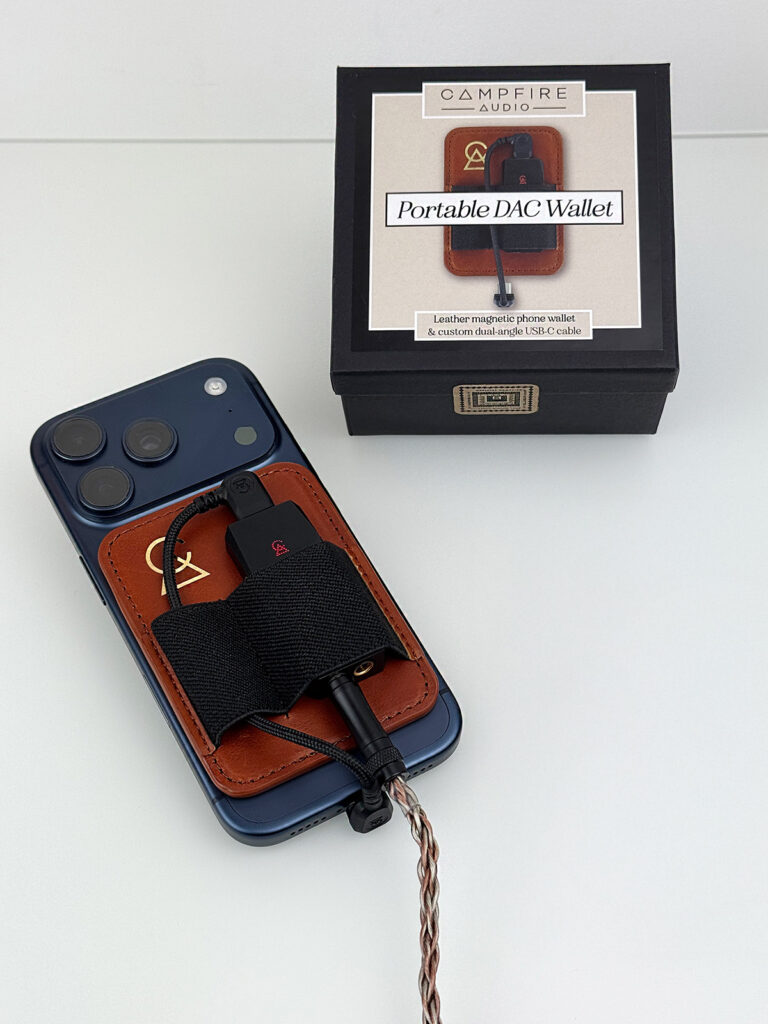
Campfire Audio recently also released a smart MagSafe accessory for the Relay Dac: The Mag Wallet, which can be used to attach the Relay to your phone. It actually would have been a nice gesture if this had been offered as a optional bundle. You can order that nice accessoire here: The Mag Wallet
Design
The Relay feels solid. The anodized aluminum body is compact and light, with a clean machining and a tidy layout. There is USB-C on one end, a 3.5 mm single ended and a 4.4 mm balanced one. The physical volume has a very decent 60 steps that makes small adjustments easy. It has a high and low gain, six selectable digital filters and media controls.
The unit is very pocket-friendly, connects to phones, tablets and computers without any setup or complication. Campfire Audio tested multiple DAC platforms before settling on the AKM 4493SEQ as the best match for the relay’s design goals. That choice clearly makes sense. This is not just another dongle DAC, but one that performs well above what I would normally expect in this category. For a portable piece which just happens to fit in your pocket, it is well thought out and well finished.
The Campfire Audio logo that lids up when connected and the small window at the back of the unit revealing the AKM 4493SEQ inside, are subtle details that adds a nice touch to the design.
Campfire Audio recently also released a smart MagSafe accessory for the Relay Dac: The Mag Wallet, which can be used to attach the Relay to your phone. It actually would have been a nice gesture if this had been offered as a optional bundle. You can order that nice accessoire here: The Mag Wallet
Specs
- DAC chip AKM SEQ4493
- Outputs
- 3.5 mm single-ended headphone output
- 4.4 mm balanced headphone output
- Gain mode: Low Gain / High Gain
- Output levels
- Low Gain: ~1.35 Vrms (SE) / ~2.7 Vrms (Balanced)
- High Gain: ~2.0 Vrms (SE) / ~4.0 Vrms (Balanced)
- Supported formats
- PCM up to 32-bit / 768 kHz
- DSD up to DSD256
- Digital filters: 6 selectable filter modes
- Volume control: 60-step integrated digital volume
- Connectivity: USB-C input (USB 2.0)
- Compatible with Windows, macOS, Android, iOS
- CNC-machined aluminium housing
- Size 57 × 23 × 10 mm
Sound Quality
The Relay presents a clean and lively presentation with a touch of analog ease. Detail retrieval is strong. Transients are quick but rounded enough to avoid glare. Tonal balance sits on the neutral side with a bit of the velvet warmth from the AKM house sound. Dynamics have a lively snap at normal listening levels and the quiet background makes low-level details easy to follow. The overall presentation is precise and engaging without drifting into clinical territory. If you appreciate clarity with musical intent instead of sterile analysis, the Relay delivers exactly that.
Treble
The top end is clean and well-extended. Cymbals carry a defined shape with a controlled, natural decay. There is enough shimmer to bring a sense of air and openness without ever crossing into sharpness. Resolution is handled with finesse, small nuances like brush strokes and trailing harmonics remain audible without being exaggerated. The selectable filter modes let you steer the character slightly. A slow roll-off introduces a softer outline and more relaxed edges, while a sharp roll-off adds a little extra bite and analytical focus when needed.
Midrange
The midrange is open, articulate and naturally voiced. Vocals sit slightly forward, giving them a sense of presence without pushing into the stage or masking surrounding instruments. Guitars and pianos carry a convincing body. Separation is handled well, even in busy mixes. On acoustic recordings, subtle room cues and performance nuances come through without effort.
Bass
Bass is controlled rather than boosted. Extension is solid on the balanced output, with satisfying weight when the track calls for it. It favors definition and timing over sheer quantity, which helps fast electronic and modern jazz feel tight and rhythmic. Output power is very decent for a dongle and also high gain keeps dynamics intact.
Soundstage
The Relay delivers a realistic, well-organized stage that favors precision over spectacle. Width extends just beyond the head without exaggeration, while instruments hold clearly defined lateral positions. Depth layering like in vocals, instruments and ambient cues fall naturally behind one another, making busy mixes easy to parse. The center image locks in firmly, giving a stable focal point. Overall, the presentation is coherent, fatigue-free and true to the recording rather than artificially stretched.
Pairing
Campfire Audio The Grand Luna
The Relay gives the Grand Luna decent grip and definition without stripping away its natural richness. Bass tightens, the midrange gains a clearer edge and the stage feels organized while keeping the Luna’s smooth, spacious character intact. A very natural synergy.
Campfire Audio The Alien Brain
With the Alien Brain the Relay highlights what this IEM already does well: layering, micro-detail and midrange presence. Vocals and strings step forward with more focus. The low noise floor makes quiet background information easier to hear. This pairing feels controlled and highly engaging.
Letshuoer Mystic 8
The Relay keeps the Mystic 8 clean, neutral and well-controlled. It highlights its clarity and separation without adding warmth or weight. A great match if you want an honest, reference-leaning presentation with zero haze. The warm tuning of the Relay dac complements the Mystic 8.
Letshuoer Cadenza 12 ’25
On the Cadenza 12 the Relay delivers a quiet, stable and highly resolving chain that shows its flagship qualities. Bass stays tight, mids remain natural and treble stays refined. This pairing feels composed and high-end without sounding clinical.
Sendy Audio Aiva 2
The Relay gives the Aiva 2 enough current and a low noise floor to keep its planar speed and wide stage intact. The result is a spacious, open and well-controlled listen that remains fatigue-free and well structured.
Listening impressions
I chose this selection of tracks to examine micro-detail, imaging, rhythm and texture. Each one highlighting a different aspect of the Relay dac. All listening of these tracks were done with the Campfire Audio Alien Brain.

Agnes Obel – The Curse
Listening to The curse by Agnes Obel on the Relay, the first thing that stood out was how clean and steady the background was. Her voice locked into the center without any haze and the piano had a natural body with a clear unforced decay. The strings and subtle textures behind her did not collapse into each other, they stayed separated. On this kind of recording, tiny changes in tone and space are what create the mood, the Relay let these details come through without adding its own weight or color.

Christian McBride – Consider me Gone (feat Sting)
The first impression is how cleanly the bass was outlined without becoming thick or soft. The Relay kept McBride’s lines tight and articulate, so every pluck had shape and texture instead of just weight. Sting’s vocal sat forward with a natural tone and clear separation from the instruments. Brass accents and room ambience remained easy to follow without crowding the mix. The track gained drive and definition without losing its relaxed flow. The Relay delivered control and clarity while keeping the musical feel intact.
HAYDN ‚Paris’ Symphonies 82 – 87 Philharmonia Hungarica, second track / Allegretto
The orchestra unfold with a calm and ordered stage. The strings had a light, clean texture without turning thin. The woodwinds sat clearly in their own space. The Relay makes it easy to follow the inner voices, you could hear lines moving behind the melody instead of them blending into a single mass. Dynamic swelled rise with control rather than glare, giving the movement a graceful pace and shape. The presentation stayed refined and stable, allowing the music to breathe without any added sharpness or weight.

Muddy Waters – Folk Singer
The intimacy of the recording came through immediately, the slight warm signature of the Relay Dac adding to the music. Muddy’s voice sat close and textured, with the Relay exposing the fine grit and breath in his delivery without exaggeration. The acoustic guitar was crisp and well-defined, you could hear the string bite and the body resonance as separate elements. The quiet room around the performers stayed dark and steady, which made every small movement and micro-detail more apparent. The track kept its raw, unpolished character, but the Relay presented it with clarity and control rather than rounding off the edges.
Conclusion
Campfire Audio set out to build a portable DAC that delivers more than convenience. With the Relay they have succeeded. It does not try to impress with gimmicks or forced coloration. It offers a clean, confident and dynamic sound that works across a wide range of IEMs and genres. The build is reassuring, the controls are practical and both outputs offer enough grip and refinement to make it perform far above what you expect from a portable dongle. It remains a device made for on-the-go use, but within that role it really performs.
What stands out most is the balance. The Relay is resolving without turning into an analytical presentation. It sounds lively without sounding hyped and neutral without dryness. It gives premium IEMs the platform they need to show their character. It does so with a noise floor and separation that remain stable even in portable use.
For listeners who value a device on the go that behaves like a serious component rather than a compromise, the Campfire Audio’s Relay dac is an easy recommendation.
Pros:
- Solid aluminum build in a compact form factor
- Balanced and resolving sound with a hint of analog warmth
- Clean treble, open mids, tight bass timing
- Good dynamics and low noise floor for a dongle
- 3.5 mm and 4.4 mm outputs, high/low gain, six digital filters
- Simple, reliable operation across major platforms
Cons:
- Soundstage favors precision over extra width
- Bass quantity is neutral by default, not tuned for bass boost
- Feature set is focused rather than packed with extras
- Shiniest surfaces can show fingerprints over time