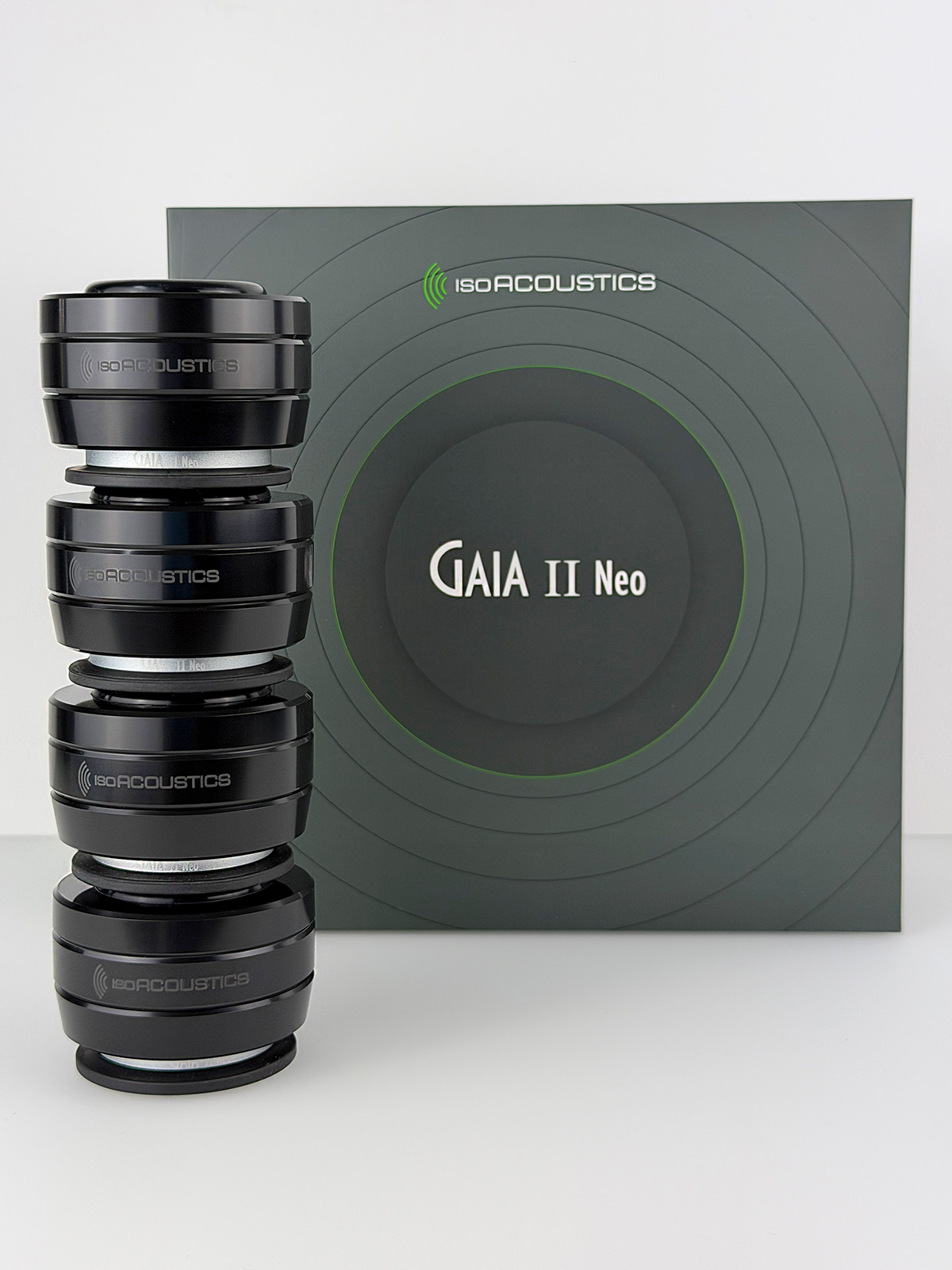
We all know that audiophiles compare loudspeakers, amplifiers, DACs and source components in search of a better sound. Yet one upgrade is often overlooked: speaker isolation. IsoAcoustics has spent years challenging the long-held belief that spikes are the best way to support a loudspeaker.
Rather than coupling the loudspeaker to the floor, its patented isolation system is designed to control the transfer of mechanical energy and reduce unwanted interactions between the loudspeaker and the supporting surface.
The story behind this technology began long before IsoAcoustics was founded. Dave Morrison spent more than twenty years at the Canadian Broadcasting Corporation (CBC), contributing to the design and construction of professional broadcast studios across Canada. The experience gained during that time eventually led to the isolation concepts that define IsoAcoustics today.
Last year we reviewed the IsoAcoustics GAIA. They completely changed our perspective on speaker isolation. The improvements were immediately noticeable. Bass became tighter and more layered, imaging improved and the overall presentation sounded more focused and controlled. It is one of those products whose effect becomes apparent almost immediately. Those results are the product of years of development and refinement. You can read last year’s review here: Review Gaia II
With the original GAIA setting such a high standard, the challenge is obvious; “Can the new GAIA Neo deliver meaningful improvements over an already impressive design?”

Introduction
At first glance, the GAIA Neo is instantly recognizable as an IsoAcoustics product, while introducing a new refined and contemporary design. IsoAcoustics has stayed true to the original concept: mechanically decoupling the loudspeaker from the floor to reduce unwanted energy transfer between the two. While the underlying principle remains unchanged, several thoughtful refinements have been introduced.
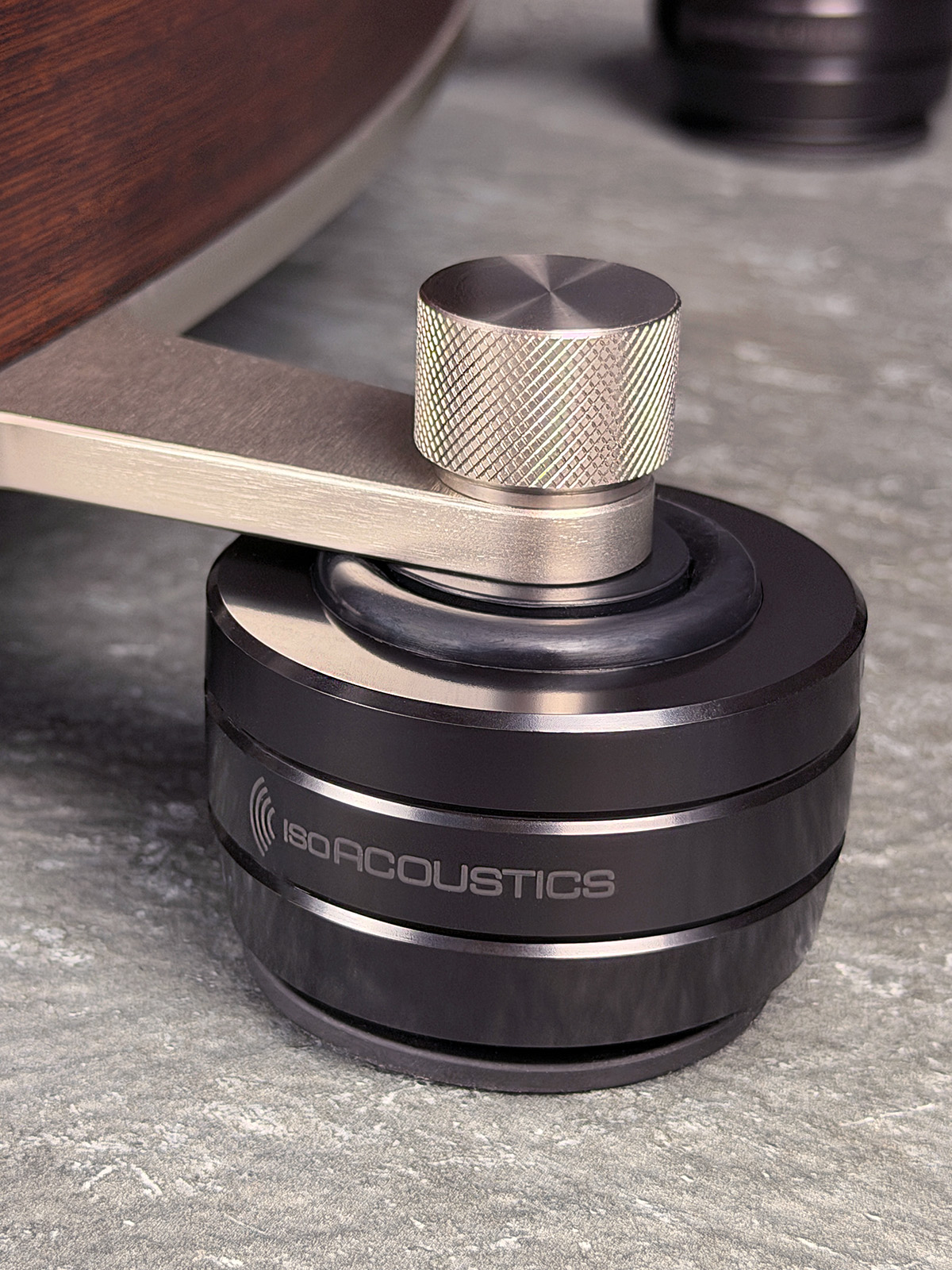
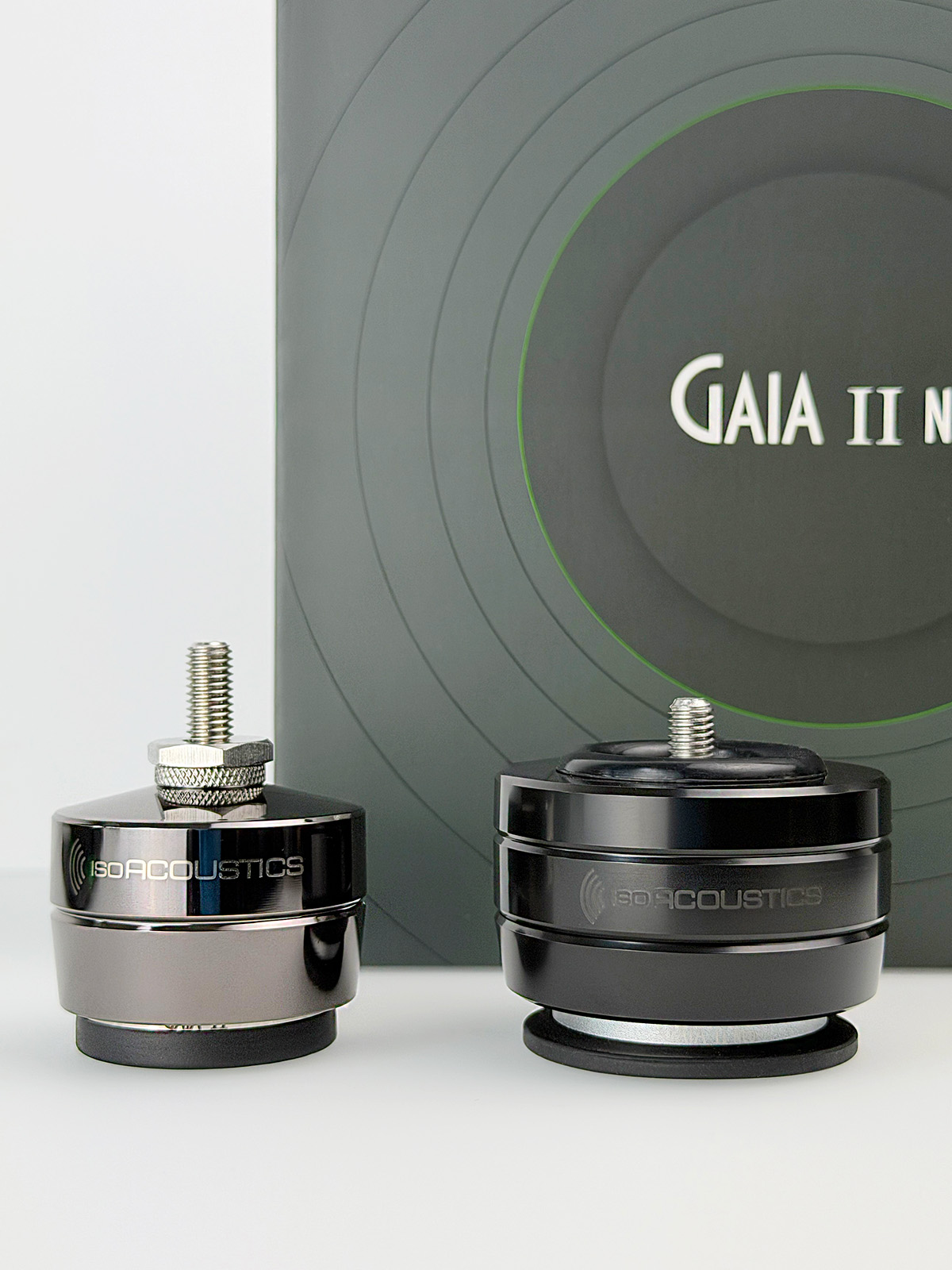
The first noticeable improvement is the installation process. The original GAIA used a locking nut system that worked perfectly well but could sometimes be a little fiddly to adjust. The Neo replaces this with a more elegant rubber O-ring design, resulting in a cleaner appearance while making installation noticeably more straightforward.
The second refinement is hidden inside the housing. IsoAcoustics redesigned the internal isolation structure. While the company does not disclose every detail, the revised design further improves the way unwanted vibrations are controlled and dissipated.
Finally, IsoAcoustics has also made everyday setup a little easier. The Neo allows for simpler height adjustment and leveling, making fine tuning less of a chore. Anyone who has ever installed isolation feet under a pair of heavy loudspeakers without the assistance of a gym membership will appreciate the improvement.
Why Isolation Matters
Every loudspeaker generates mechanical energy. As the drivers move, vibrations travel through the cabinet and into the supporting surface. At the same time, vibrations present in the floor can find their way back into the loudspeaker. This two-way interaction can reduce clarity, particularly in the lower frequencies and subtly affect stereo imaging.
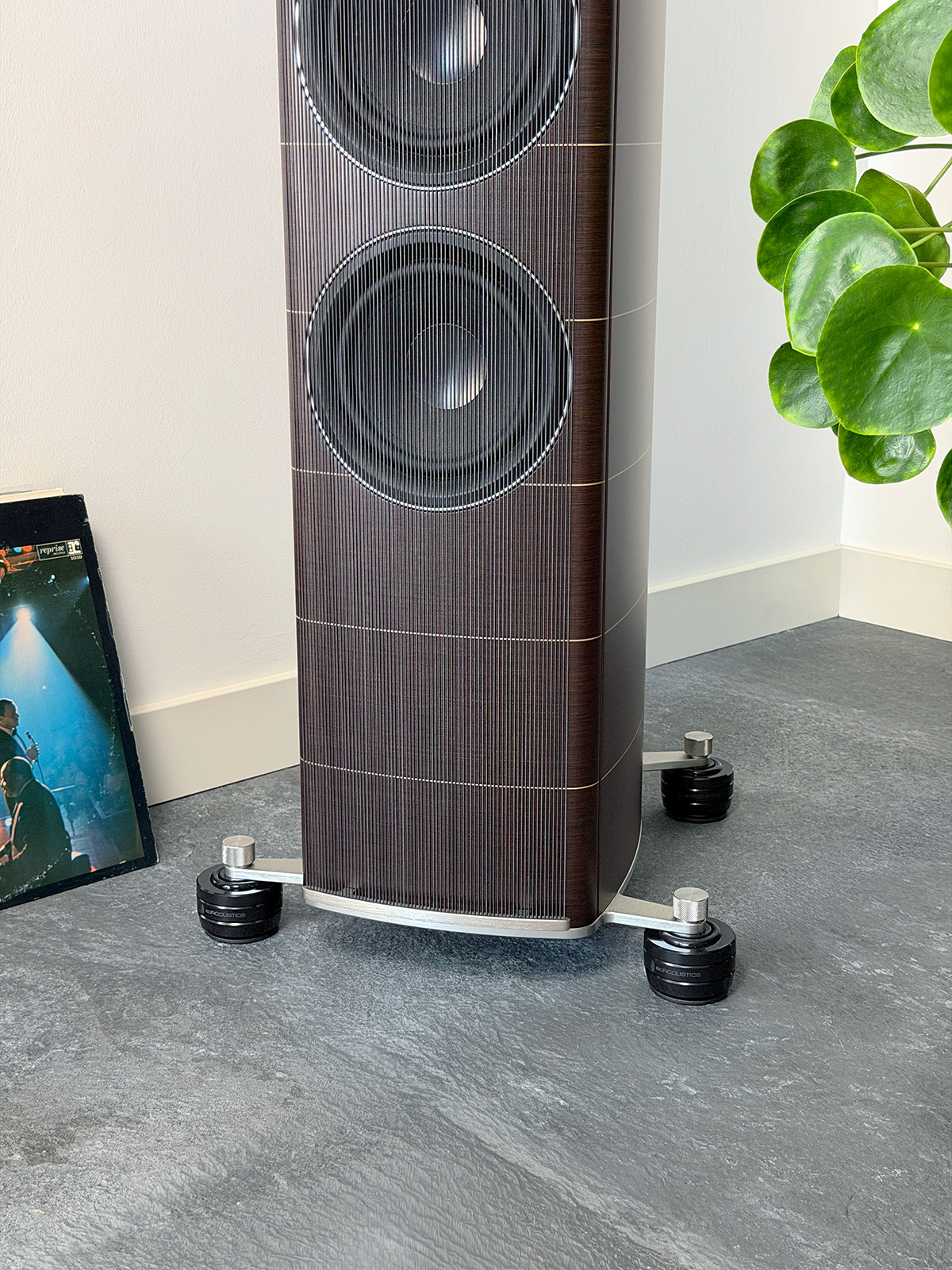
Rather than rigidly coupling the loudspeaker to the floor, the GAIA Neo introduces a controlled isolation layer between the two. Unlike traditional spikes, which create a direct mechanical connection, the Neo is engineered to manage how vibrational energy is transferred. Its design allows controlled vertical movement to absorb and dissipate unwanted vibrations while maintaining excellent lateral stability.
The objective is not to change the character of the loudspeaker. Instead, it allows the speaker to perform with less mechanical interference. In practice, this translates into tighter and more textured bass, improved focus, greater image stability and a cleaner overall presentation, all without altering the loudspeaker’s natural tonal balance.
Build Quality & Design
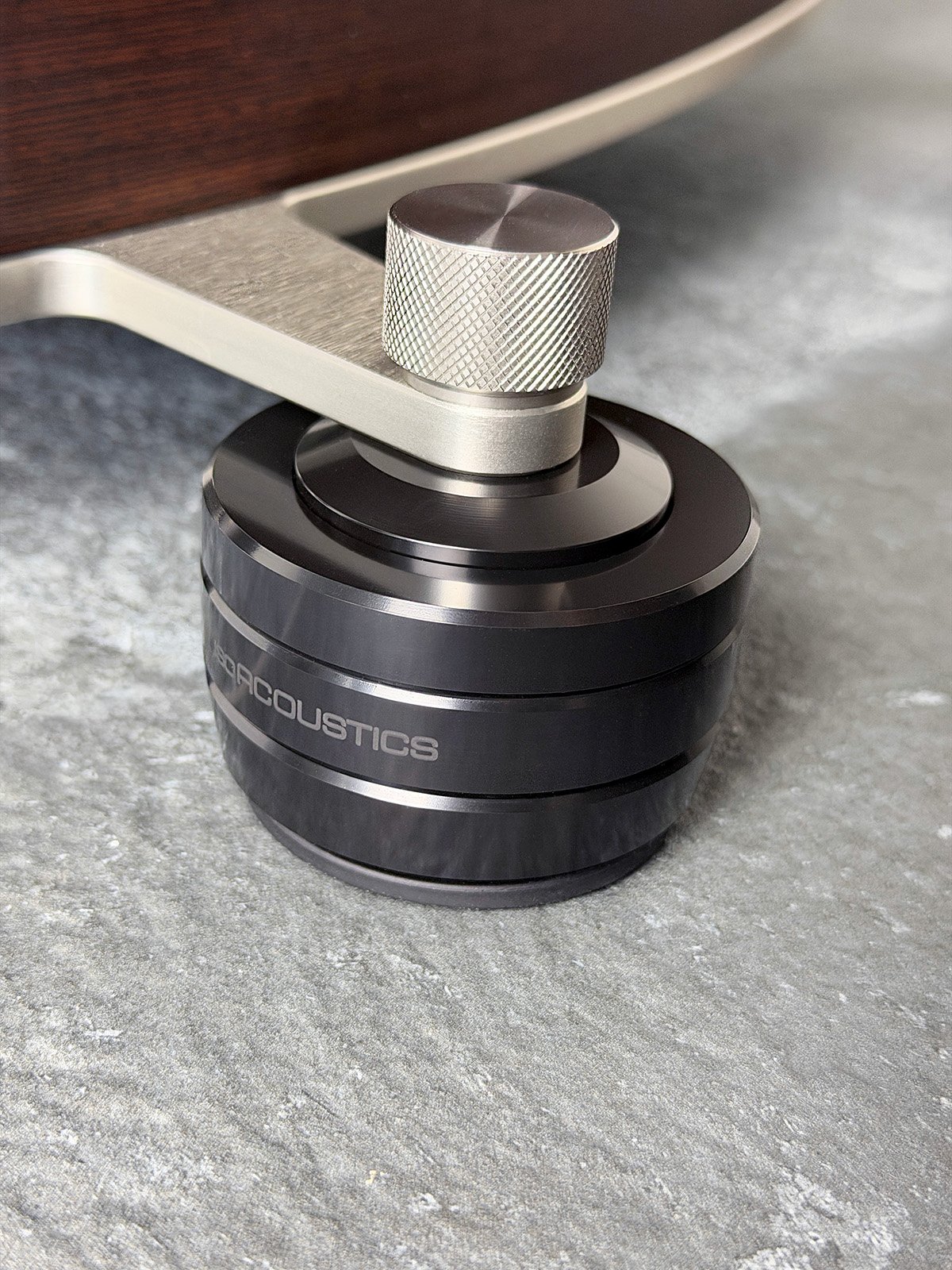
Like the original model, the GAIA Neo immediately gives you that premium feel. The machining quality is excellent. Every surface feels carefully finished and the tolerances are extremely precise. The matte black finish looks elegant and classy.
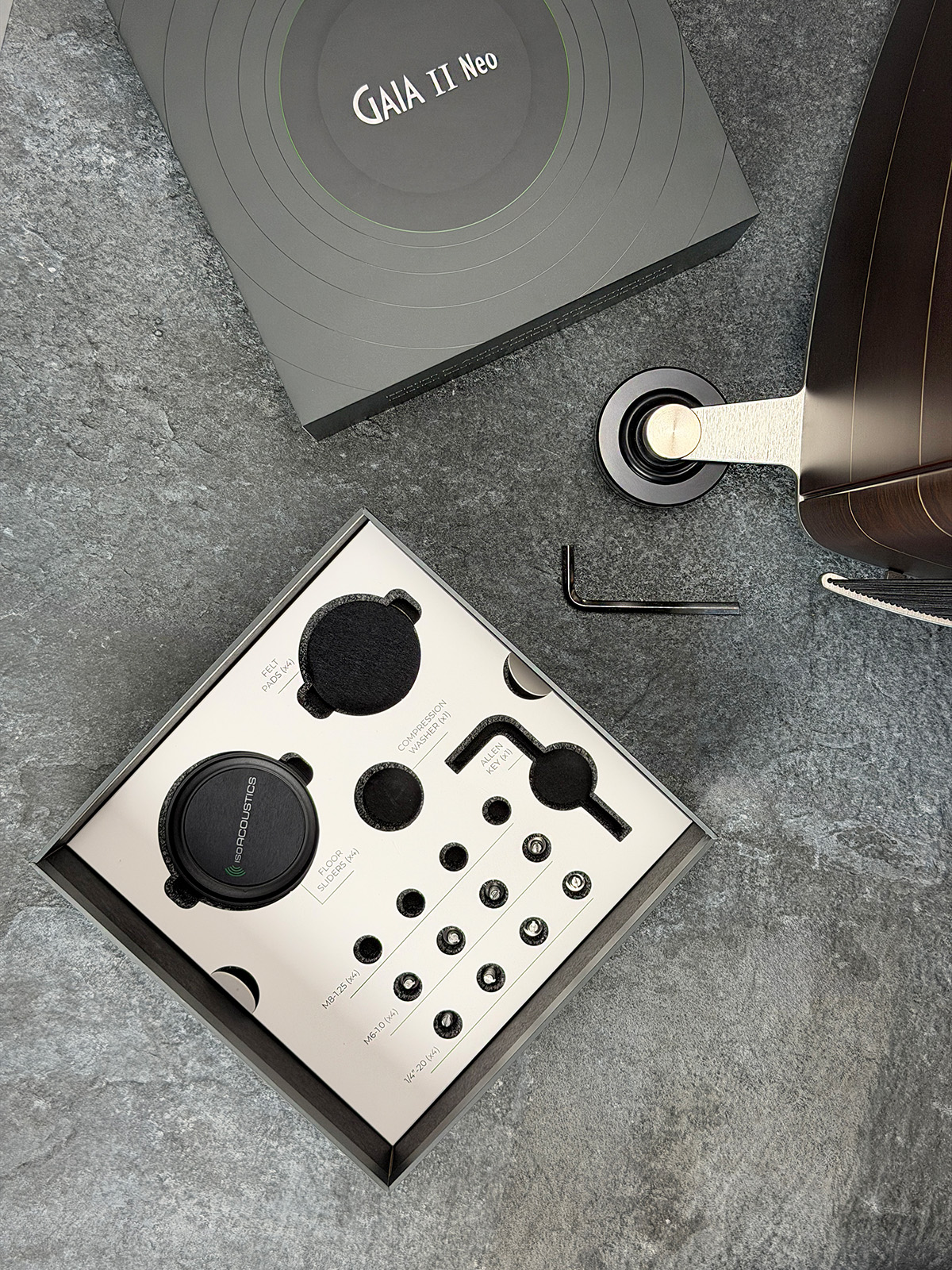
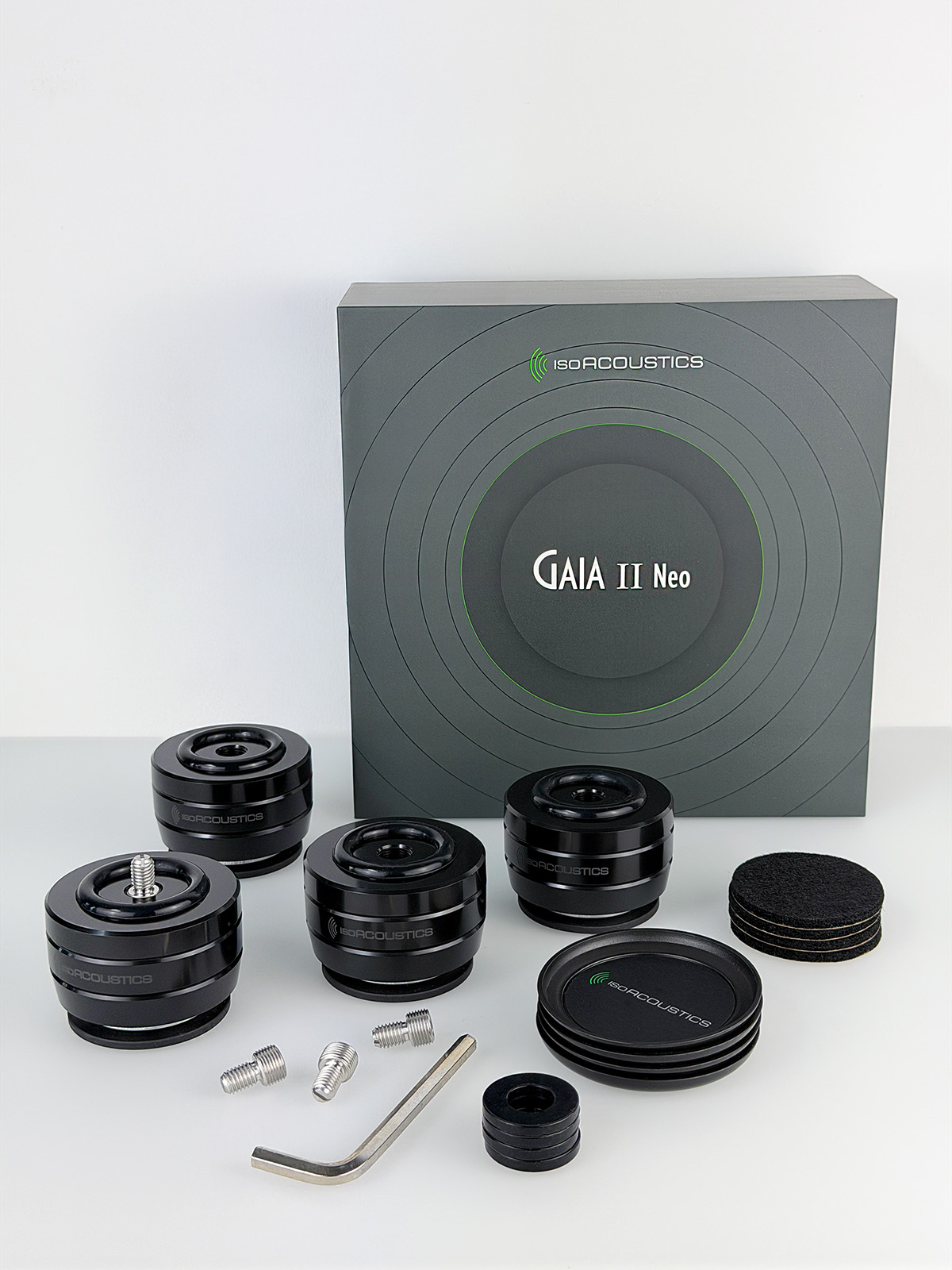
The Neo design is slightly more modern than the original GAIA. Small changes in its shape make it look more refined. They are available in matte black and dark chrome. Both finishes suit the updated design well and give the GAIA Neo an even more premium appearance than its predecessor. The Gaia Neo blends seamlessly with the overall design of a loudspeaker and never feels out of place. The supplied thread adapters are excellent, allowing compatibility with a large number of loudspeaker brands. As before with the Gaia, orientation still matters. The IsoAcoustics logo should face forward or backward according to the instructions to ensure optimal performance.
Weight Class
Like the original GAIA, the GAIA Neo is available in three sizes, each designed for a specific loudspeaker weight range.
GAIA NEO
GAIA I Neo: max weight or less 100 kg /220 lbs
GAIA II Neo: max weight or less 55 kg / 121 lbs
GAIA III Neo: max weight or less 32 kg / 70 lbs
Gaia Neo Cap
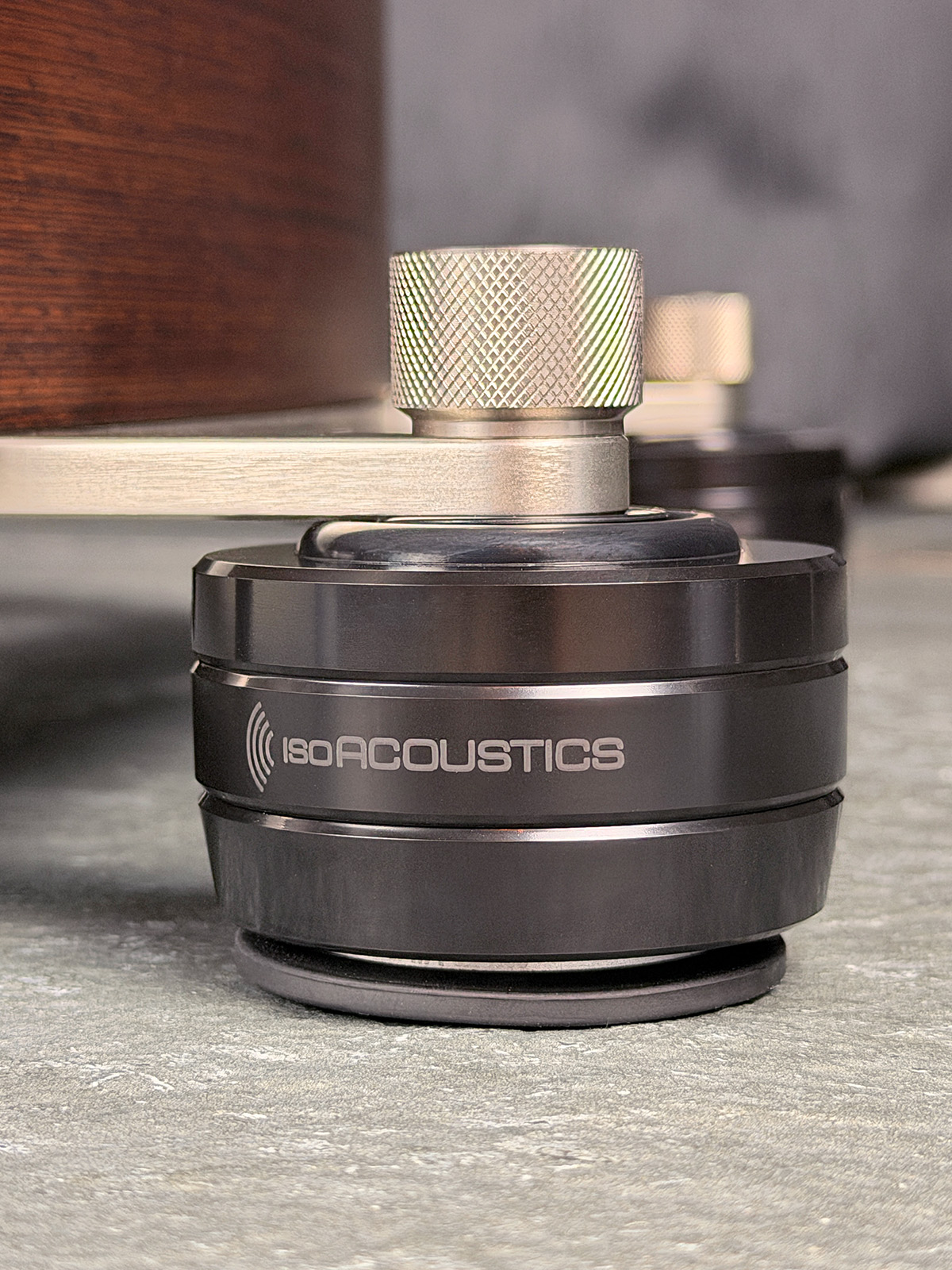
IsoAcoustics has also addressed a practical consequence of the GAIA Neo’s larger housing. Compared to the previous generation, the Neo has a wider diameter, which means it may extend slightly beyond the footprint of loudspeakers with relatively narrow outriggers or feet. This has no impact on performance, stability or isolation, but some users may prefer a more integrated appearance.
To address this, IsoAcoustics developed the (optional) GAIA Neo Cap. It creates a larger mounting surface between the loudspeaker foot and the isolator, allowing the Neo to sit more naturally beneath speakers with narrower feet. It is a clever well thought-out solution that improves the visual integration of the larger Neo models without affecting their performance.
Installation
This is one area where the GAIA Neo offers a clear advantage over the original GAIA. Installing the previous model was never difficult, but aligning the locking nuts could sometimes take a little patience, particularly with heavier loudspeakers. The new rubber O-ring mounting system largely eliminates that extra step, making the entire process more straightforward.
Height adjustment and leveling are also easier, making it simpler to achieve a stable and perfectly aligned installation. The difference is not dramatic, but it is immediately noticeable when installing the Neo alongside the original GAIA. Everything feels a little more refined and better thought out.
IsoAcoustics also includes a set of installation sliders. Once the isolation feet have been fitted, moving a heavy floorstanding loudspeaker into its final position can be quite a challenge. The sliders allow the speaker to glide across the floor without repeatedly lifting or repositioning it. It is a small addition, but one that quickly proves its value during installation.
Together, the revised mounting system and the supplied sliders make installing the GAIA Neo a noticeably more pleasant experience than before.
GAIA Neo Caps
IsoAcoustics has recently introduced Neo Caps, a purely visual addition for installations where the speaker’s outriggers are narrower than the GAIA Neo feet. In these situations, the GAIA Neo can extend beyond the edges of the outrigger, which may not provide the cleanest visual match.
The Neo Caps neatly cover this exposed area, creating a more seamless transition between the GAIA Neo and the speaker’s outrigger. They have no effect on the performance or functionality of the GAIA Neo, which also works exactly as intended without them.
The Neo Caps are simply an aesthetic upgrade, but as the photo shows below, they can make a difference, giving the installation a cleaner and more integrated appearance.
Overall Listening Impressions
Taken as a whole, the GAIA Neo never changes the character of a loudspeaker. Instead, it removes a small layer of mechanical interference, allowing the system to perform a little closer to its full potential.
Across a wide range of recordings, the presentation consistently sounded cleaner and more composed than without. Bass gains texture and layering without becoming more prominent, vocals become slightly more focused and instruments are easier to place within the soundstage. The treble also sounds a touch smoother. This helps recordings feel more relaxed while preserving their detail and openness. What became apparent was how the GAIA Neo brought the entire presentation together into a more coherent and natural whole.
One of the challenges when reviewing products like the GAIA Neo is putting the improvements into words. They do not change the character of a loudspeaker or create an artificial “wow” effect. Instead, they refine what is already there in subtle but meaningful ways.
IsoAcoustics are not selling a theory, but a product that delivers consistently audible results. If you have never experienced a properly engineered speaker isolation like the Gaia or Gaia Neo, you owe it to yourself to hear what it can do in your own system.
Test equipment:
- Accuphase E-800S
- Streamer: Eversolo T10
- DAC: Chord TT2 + Chord MScaler
- Sonus Faber Olympica Nova III
- IsoAcoustics Gaia Neo II
To evaluate the GAIA Neo, I turned to a collection of recordings that I having spent countless hours with, I have a good understanding of how they sound on my system, making it easier to assess any differences introduced by a component change.

Fink – Wheels Turn Beneath My Feet
While the original GAIA already does an excellent job with this live recording, the GAIA Neo takes things a small step further. The acoustic character of Union Chapel becomes easier to perceive, with slightly greater depth and more precise image placement.
Fink’s voice gains additional focus, while subtle ambient cues within the venue become easier to distinguish. What surprised most was the improvement in the lower frequencies. Bass notes feel even tighter and more articulate, revealing additional texture and layering that was less apparent with the original GAIA. The differences are not night and day, but once heard they are difficult to ignore.
Link to Qobuz Track
Ram Dass – The Water Poem
Through the GAIA Neo, the spoken voice appears more clearly separated from the surrounding ambience. Low-level details emerge more effortlessly, while the subtle acoustic cues surrounding the narration become easier to follow. Compared to the original GAIA, the presentation feels slightly cleaner and more focused, creating a stronger sense of presence. These differences become even more apparent at higher listening levels..
Link to Qobuz Track
Ibrahim Maalouf – S3NS
This track highlights some of the improvements the GAIA Neo brings over the original GAIA. The bass sounded a little tighter and more layered, making it easier to follow the rhythm section throughout the track. The complex percussion also felt slightly better separated, creating a more organized presentation.
What stood out was Maalouf’s trumpet. It seemed to occupy a more clearly defined position within the soundstage, while subtle details in his playing became easier to pick up. The smoother treble presentation of the Neo also suited the trumpet well, preserving its energy and sparkle without drawing unnecessary attention to itself.
Link to Qobuz Track
ZAZ – Sains et Saufs
ZAZ’s unmistakable voice makes this track an excellent reference for the midrange. With the GAIA Neo in place, her vocals sound a little more focused and better separated from the accompanying instruments. Compared to the original GAIA, there is slightly more space around her voice, making it easier to follow the subtle details in her performance.
The soundstage also feels a little deeper, giving the instruments more room around them. This is not a huge difference, but it is noticeable when switching back and forth between the The Gaia and Gaia Neo. The overall presentation sounds a touch cleaner and more refined.
Link to Qobuz Track
Peter Gabriel – Here It Is
Peter Gabriel’s voice is beautifully recorded. Compared to the original GAIA, his vocals sound a little more focused, while the instruments around him are easier to place within the soundstage. The recording also gains a little more depth, making the performance feel slightly more spacious.
Low frequencies sounded tighter and carried more texture, with noticeably better layering than before. Individual bass notes were easier to follow and integrated more naturally with the rest of the track. The improvement is subtle, but consistently audible when comparing both versions.
Link to Qobuz Track
Cigarettes After Sex – Falling In Love
The presentation feels more spacious and three-dimensional compared to the original GAIA. Vocals are placed more distinctly within the soundstage, while the surrounding instruments occupy their own clearly defined space around them.
The result is not necessarily a wider soundstage, but a deeper and more layered one. Background instruments appear slightly further behind the performers, creating a stronger sense of depth and realism. Combined with the improved vocal focus, the entire performance feels more immersive.
Link to Qobuz Track
Christian McBride – Consider Me Gone
Christian McBride’s double bass immediately reveals one of the GAIA Neo’s strongest improvements. Compared to the original GAIA, the double bass sounded tighter and carried more texture. Individual notes were easier to follow and there was a greater sense of layering in the lower frequencies. This was especially noticeable during the more complex passages, where the bass line remained easier to track.
The difference is not night and day, but it was one of the more obvious improvements I heard listening to this track. The original GAIA already does an excellent job, while the Neo brings a little extra control and definition to the presentation.
Link to Qobuz Track
Jeff Goldblum – Just Cares For Me
Hayley Reinhart’s expressive voice gained a touch more focus and clarity with the GAIA Neo in place, making subtle inflections and phrasing easier to appreciate. Compared to the original GAIA, her voice appeared slightly more separated from the accompanying instruments, creating a stronger sense of depth and realism.
The piano benefited as well, sounding a touch cleaner and more precisely placed within the soundstage. The by Neo’s caused slightly smoother treble suited both the piano and Hayley’s voice, while the improved image stability gave the performance a little more depth. As with the other tracks, the changes are subtle, but they remained consistently audible throughout the comparisons.
Link to Qobuz Track
Left: IsoAcoustics Gaia II / Right: IsoAcoustics Gaia Neo II
GAIA vs GAIA Neo
This is ultimately the comparison many readers will care about. If you already own the original GAIA, should you upgrade?
The answer depends on your expectations. The Neo is not a completely different product, nor was it designed to be. Instead of reinventing what made the original GAIA so successful, IsoAcoustics has focused on refining an already excellent design.
After spending considerable time comparing both models, the differences proved to be consistent. The Neo consistently delivered tighter and more textured bass, with improved layering in the lower frequencies. Vocals gained a little more focus, instruments became easier to place within the soundstage and recordings sounded slightly deeper. The treble presentation was also a touch smoother.
None of these differences are dramatic, nor should they be. The original GAIA remains one of the most effective speaker isolation solutions available today. What the Neo offers is more refinement across the board. The improvements were subtle, but they remained consistent throughout the listening session and every comparison.
Beyond the sonic improvements, the redesigned housing, simplified installation and practical accessories make the Neo feel like a carefully considered evolution of its predecessor. Think evolution rather than revolution. The original GAIA remains an excellent product, while the Neo simply builds on its strengths and adds more finesse and refinement.
Conclusion
When we reviewed the original GAIA, the results were impressive. The soundstage opened up, bass became tighter and imaging gained a level of focus we hadn’t experienced before. Naturally, we wondered how much further IsoAcoustics could realistically take this concept. The answer is refinement.
Compared to the original GAIA, the Neo delivers a smoother treble, greater vocal focus and bass with more texture and layering. Recordings also gain more depth and image stability. None of these improvements are dramatic on their own, but together they create a presentation that sounds even more natural and effortless.
That is exactly where the strength of the GAIA Neo lies. It does not reinvent an already successful product, but carefully improves it in all the right places. The redesigned housing, easier installation, practical accessories and the subtle but consistently audible sonic refinements make it a thoroughly considered evolution of the original.
The original GAIA remains one of the finest speaker isolation systems available today. The GAIA Neo demonstrates that even an outstanding design can still be refined. If you are looking for the very best IsoAcoustics has to offer, the GAIA Neo is an easy recommendation.
Pros:
- Smoother, more refined treble
- Improved vocal focus and midrange clarity
- More textured and layered bass
- Better image stability and instrument separation
- More natural overall presentation
- Easier installation and speaker leveling
- Premium build quality and elegant design
- Wide compatibility with interchangeable thread adapters
- Refines an already outstanding design
Cons:
- Benefits are most noticeable in revealing systems
- Installation with very heavy loudspeakers may still require assistance
- GAIA Neo Cap is an optional extra
- Premium priced