Campfire Audio was established in 2015 in Portland, Oregon by Ken Ball. The company is best known for its well-designed in-ear monitors and managed to build strong trust among audio enthusiasts.
Campfire also explores different product types and combinations, the Axion is a good example of this approach. It combines a compact USB-DAC cable with an IEM, created as a practical all-in-one portable solution. Like the rest of their lineup, the Axion is designed and assembled in-house with clear attention to both sound and build quality.
With the launch of the Axion last year, Campfire continued the philosophy that defines its IEM range: careful tuning, solid engineering and a strong focus on everyday usability.
In this review, we will explore the Axion, a compact and stylish designed IEM.
Design and packaging
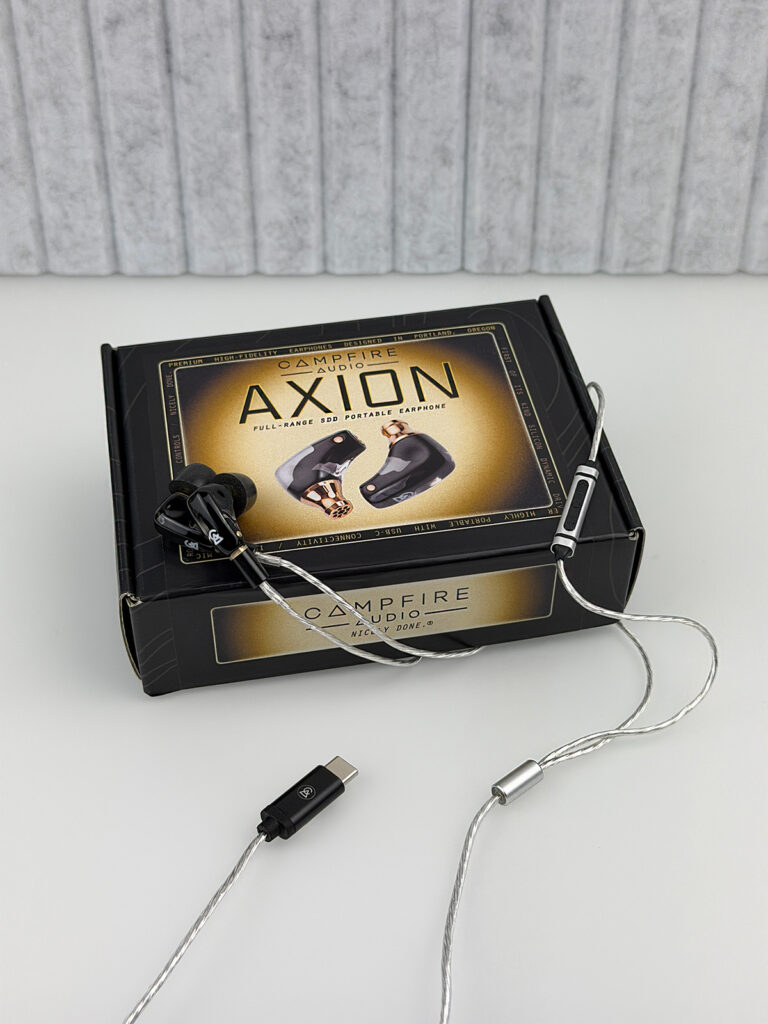
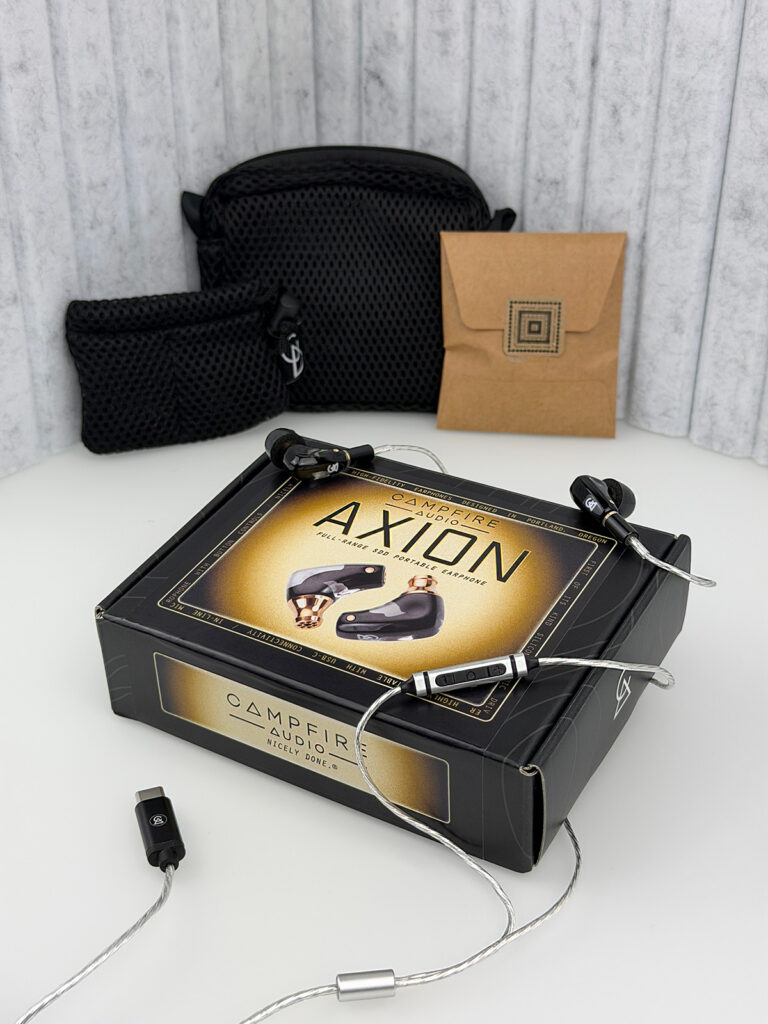
The Campfire Audio Axion arrives in a classy black box. Inside you’ll find the Axion IEM’s, a lightweight black mesh zipper pouch, a selection of ear tips, a cleaning tool and a ‘cute’ Campfire Audio pin. Campfire Audio has included these mesh pouches for a long time, they remain a practical and welcome accessory for keeping the iem’s protected during daily use.
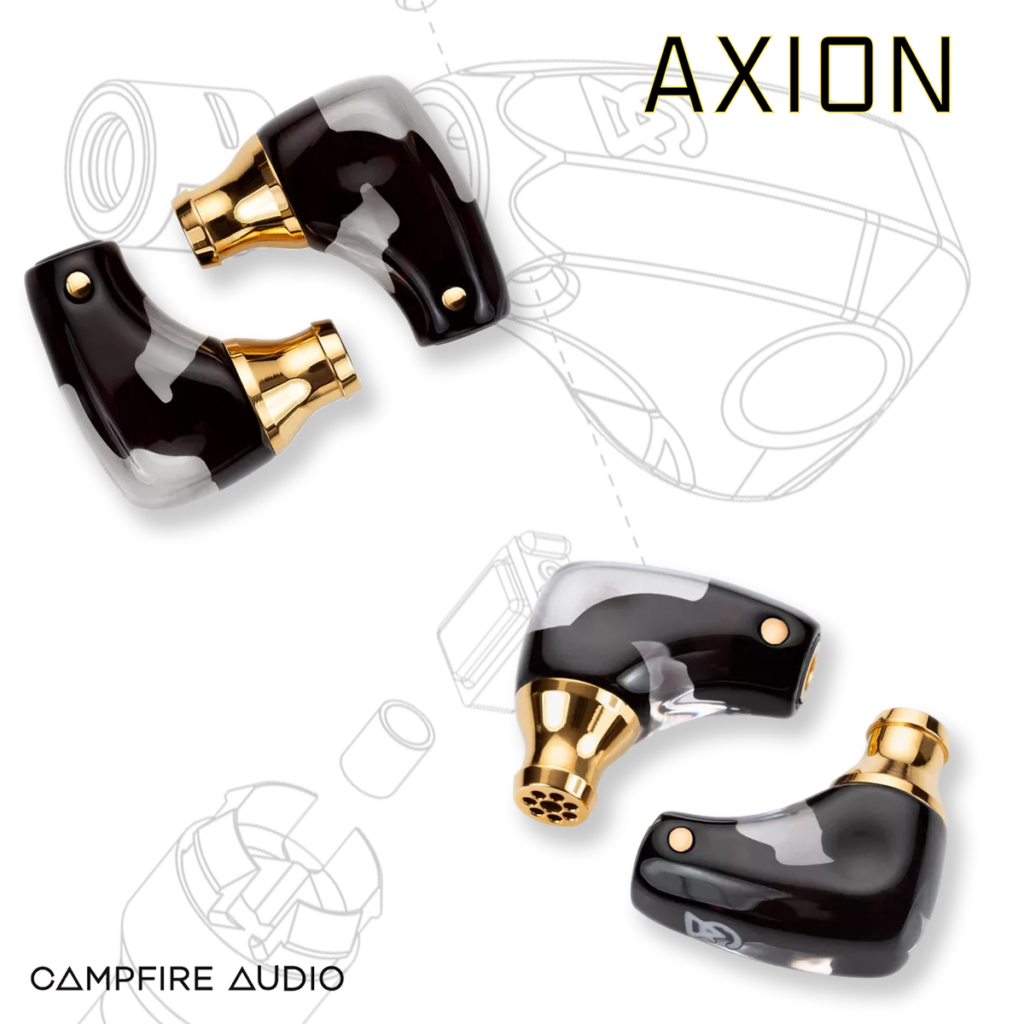
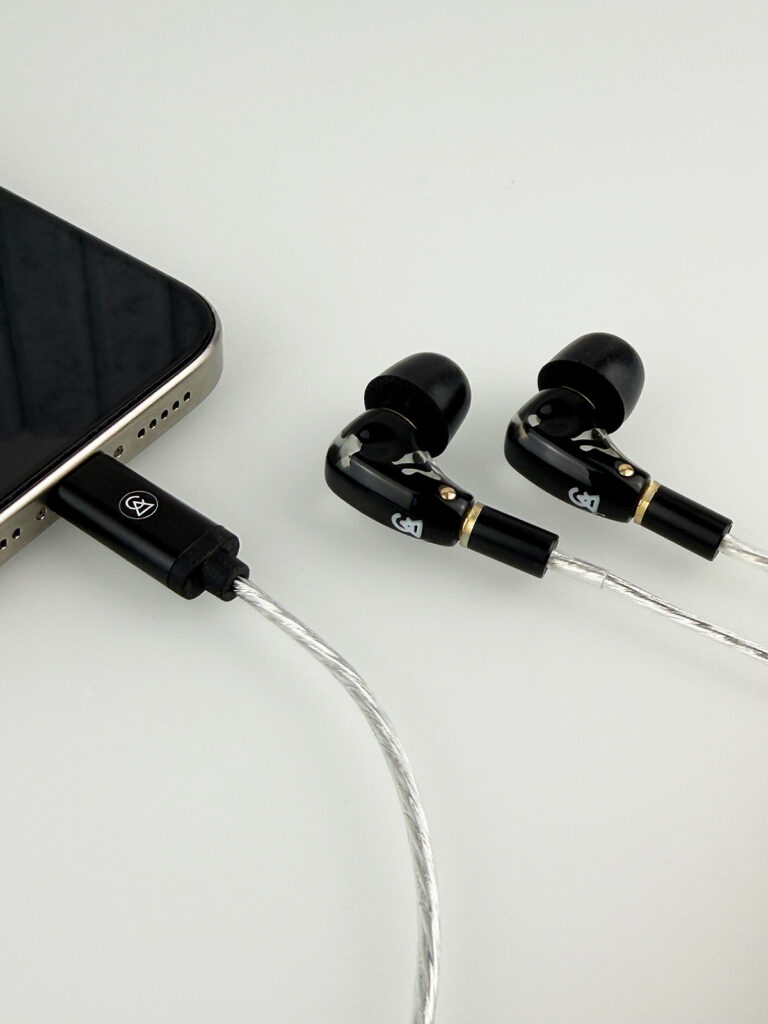
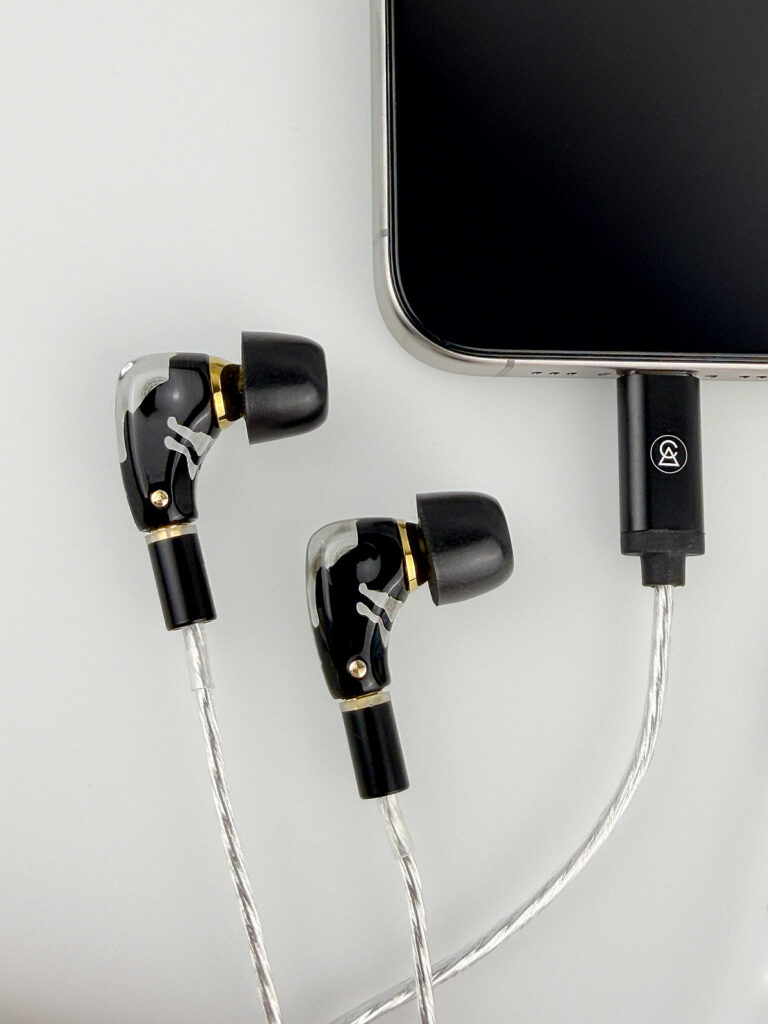
The shells have a slim, bullet style shape that sits lightly in the ear. Instead of the typical behind-ear fit that many IEMs use, the Axion is designed to worn straight down like a classic earphone. The housing is transparent with subtle black accents. The brass gold colored nozzle adds a premium touch.
Thanks to the compact and lightweight shells, the Axion is effortless to wear. Once in place you barely notice them, which makes it ideal to use for long listening sessions. The only real point of attention is selecting the right ear tips. Once you found the right fit, the Axion sits securely and stays in place without issues.
The DAC-cable
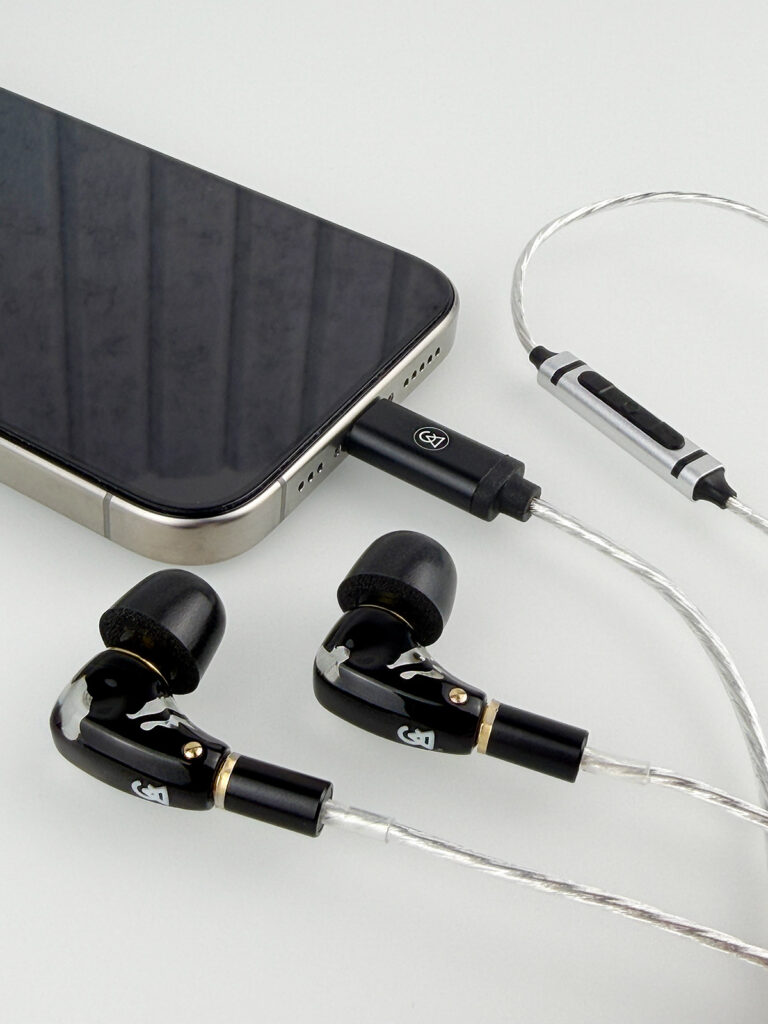
The cable design makes the Axion a very practical and versatile product. It comes with an integrated USB-C DAC that supports up to 32-bit / 384 kHz, which means it can bypass the often average internal DACs found in many smartphones and basic laptops.
The downside is that it limits compatibility with older sources or devices that do not support USB-C audio. Although the lightning connector is slowly disappearing, a modular cable with interchangeable plugs would have made the Axion more flexible. For current USB-C devices the included solution works perfectly fine.
There is also a built-in microphone with a small three-button control unit for volume and call functions. The cable itself is slim and lightweight, yet it does not give the impression that audio performance is compromised.
Axion’s driver
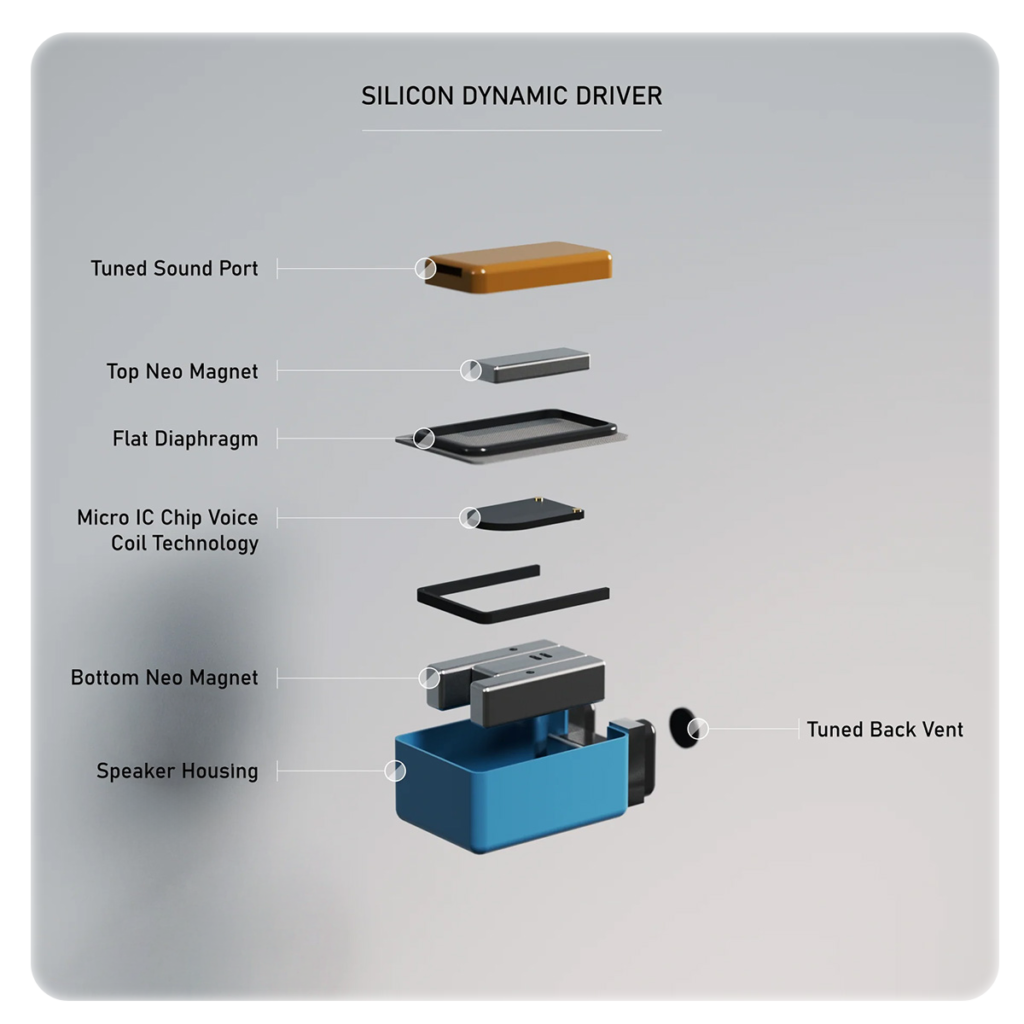
Axion’s uses a first-of-its-kind silicon dynamic driver (SDD) offering a powerful dynamic driver performance in a hyper compact form factor. This unique silicon dynamic driver is one of the most interesting aspects of this earphone.
Instead of using a traditional round dynamic driver, the Axion uses a square shaped unit that almost looks like a balanced armature from the outside, but is in fact a true full-range dynamic driver. The goal is simple. Keep the size extremely small while still delivering the natural weight and coherence that dynamic drivers are known for. Because it is a single full-range driver, the sound feels unified from bass to treble without the sense that different parts of the frequency range are coming from separate components.
The Axion is positioned at an accessible and very affordable price point. It has a refined tuning with a shape and size that is ergonomic and practical for daily use.
Specs
- Driver: full-range silicon dynamic driver (SDD)
- Frequency response: 5 Hz – 20 kHz
- Cable DAC: up to 32-bit / 384 kHz
- Impedance: 15.3 ohm @ 1 kHz
- Sensitivity: 94 dB SPL @ 1 mVrms
- Connectivity: USB-C with integrated DAC (MMCX)
- Microphone / controls, mic with 3-button remote
- Connector type: MMCX
- Ear tips: silicone (S, M, L), foam (S, M, L)
- Cable: USB-C to MMCX DAC cable
- Pouch: carry / mesh bag and IEM shell’s bag
Sound Quality
The Axion sounds balanced and remarkably easy to listen to. No frequency stands out, from bass to treble it just sounds right. It focuses on clarity and consistency. The tuning leans toward neutral with a slight touch of warm smoothness.
Nothing feels loose or overdone. It is the kind of sound that works well for everyday use, whether you are casually listening or paying closer attention to details. The Axion offers a matured listening experience in a very compact form.
The overall presentation feels open and spacious, supported by a warm and slightly elevated bass. The midrange focuses on a clean and natural timbre. The signature comes across as smooth and controlled, with no obvious peaks.
Treble
There is very little to criticize in the treble of the Axion. The high frequencies are smooth but still detailed, which makes them easy to listen to for longer periods. It is not a sharp or aggressive top end, but it also never feels dull or boring either.
Detail retrieval is solid, with notes fading out in a natural way and enough sparkle to keep the presentation lively. The upper treble has a light sense of air that gives music some openness without pushing it too far.
The treble never turns harsh or overemphasized, which helps the overall sound stay natural. The tuning keeps everything in balance.
Midrange
The midrange has a slight warmer tone than average, but stays clean and well defined. It does not push too much forward, nor does it fall back in the mix. Close enough to feel engaging without becoming dominant.
The lower mids carry a pleasant sense of body and weight. Instruments sound full and natural, giving the presentation a solid foundation. At times this region can come across a bit elevated, but it never muddies the overall sound and clarity remains intact.
The upper mids are slightly restrained. Vocals and certain instruments sometimes lack a bit of extra presence or extension, meaning they do not always project as strongly as they could. A touch more energy here would have added openness and emotion. The transition between lower and upper mids feels coherent. The overall midrange comes across as rich, smooth and realistic.
Bass
The bass on the Axion shows a good balance between quantity and control. It leans warm and carries a slightly elevated texture, yet it never feels loose or bloated. The mid-bass delivers a satisfying punch, while the sub-bass reaches deep enough to give music good weight. Even with this fuller low end, the bass remains controlled. It does not bleed heavily into the midrange, but it does add a subtle sense of warmth and richness to the overall presentation.
Listeners who enjoy a warm and slightly elevated bass with preserved detail will likely appreciate the Axion. It is not tuned for extreme bass lovers, but it offers enough depth and impact to feel complete. A decent fit is important, as a poor seal can make the low end sound flatter and less punchy than intended.
Soundstage
The soundstage is moderately wide with good separation between instruments. It does not aim for a huge or holographic presentation, but it offers a clear and organized stereo image. Positioning feels precise and stable, giving music space to breathe without sounding distant or artificial.
The Axion connected to the Relay DAC
All testing was done using the included cable, yet we were curious to see how well the Axion could scale. We therefore swapped the cable and connected the Axion directly to the Relay DAC.
The Axion already performs well balanced with its included USB-C DAC cable. Straight out of the box the sound is clean, balanced and perfect for daily listening. It does not feel like a cheap add-on, but a well tuned and practical solution that matches the character of the earphones nicely.
When switching to the Relay DAC, it becomes clear that there is still extra performance to unlock. The overall presentation feels a bit more refined and spacious, with slightly better separation between instruments and a clearer sense of layering. Bass gains a touch more definition, mids open up slightly and the treble carries just a bit more air.
When paired with the Relay DAC, The Campfire Audio Axion demonstrated it scales well.
Listening impressions
I selected this set of tracks to evaluate micro-detail, imaging, rhythm and texture.
Maceo Parker – Off the Hook (Roots & Grooves)
This track is driven by groove, brass accents and rhythmic precision. On the Axion the bass line stayed tight and clearly outlined rather than heavy. Kick drums had speed but limited depth, which kept the rhythm agile instead of weighty. The saxophone and brass section moved slightly forward in the mix, giving them strong presence and clean edges. Hi-hats and percussion remained crisp without turning sharp. It showed that the Axion favored clarity and forward presence over warmth or low-end thickness.
Myriam Alter – Where is there
This piece relies on piano tone, double bass support and the space between instruments rather than vocals. On the Axion the piano attack was very clear, with individual keystrokes easy to distinguish. The trailing resonance of notes felt lighter in body but well defined. The double bass was audible and controlled, though it did not gain additional weight in the lowest register. Cymbals and light percussion carried fine detail without harshness. The sense of separation between instruments was strong, allowing the ensemble to remain organized and open.
HAEVN – Till the morning – Symphonic Tales II
This track combines vocal focus with orchestral layering and dynamic build-up. Through the Axion the vocal line stood slightly forward, making lyrics and articulation easy to follow. Strings and background layers were clearly separated, but the overall scale remained moderate rather than expansive. Low orchestral drums had punch yet lacked deep rumble, keeping the presentation controlled. High strings and ambient effects stayed clean with no harshness. The Axion delivered clear mids with good separation, focusing more on clarity than on warmth.
Rubén Blades – Ban Ban Quere (Una Noche Con) featuring Wynton Marsalis
This recording centers on rhythmic drive, layered percussion and bright brass. On the Axion congas, shakers and timbales came through with fast attack and precise timing. The bass line was tight and rhythmic but not too thick. Trumpet lines from Marsalis were lively and forward, occasionally close to brightness depending on, yet remaining controlled. Vocals were clear. The overall impression was energetic and organized.