Sivga Audio is a headphone manufacturer based in Dongguan, China, founded by Rongchun Pan and Jian Zhou in 2016. They operate under the parent company Sivga Electronic Technology, which is also the parent brand to Sendy Audio. Sendy Audio is positioned as a sub-brand focused on creating premium headphones, emphasizing a commitment to quality and craftmanship.
Sivga Audio offers headphones that balance affordability with refined design and musicality, while also expanding its focus to high-end in-ear monitors. Most of Sivga Audio’s products are crafted using a blend of traditional materials and modern engineering. Wood is a signature element across much of their lineup, valued not only for its visual appeal but also for its contribution to their focus on natural and an engaging sound. The brand aims to deliver accessible audiophile products without compromising on craftsmanship or sound quality.
In this review, we will take a look at Sivga’s latest release: the Nightingale Pro. A planar magnetic IEM aimed at the mid to high-end segment.
Build quality and what is in the box:
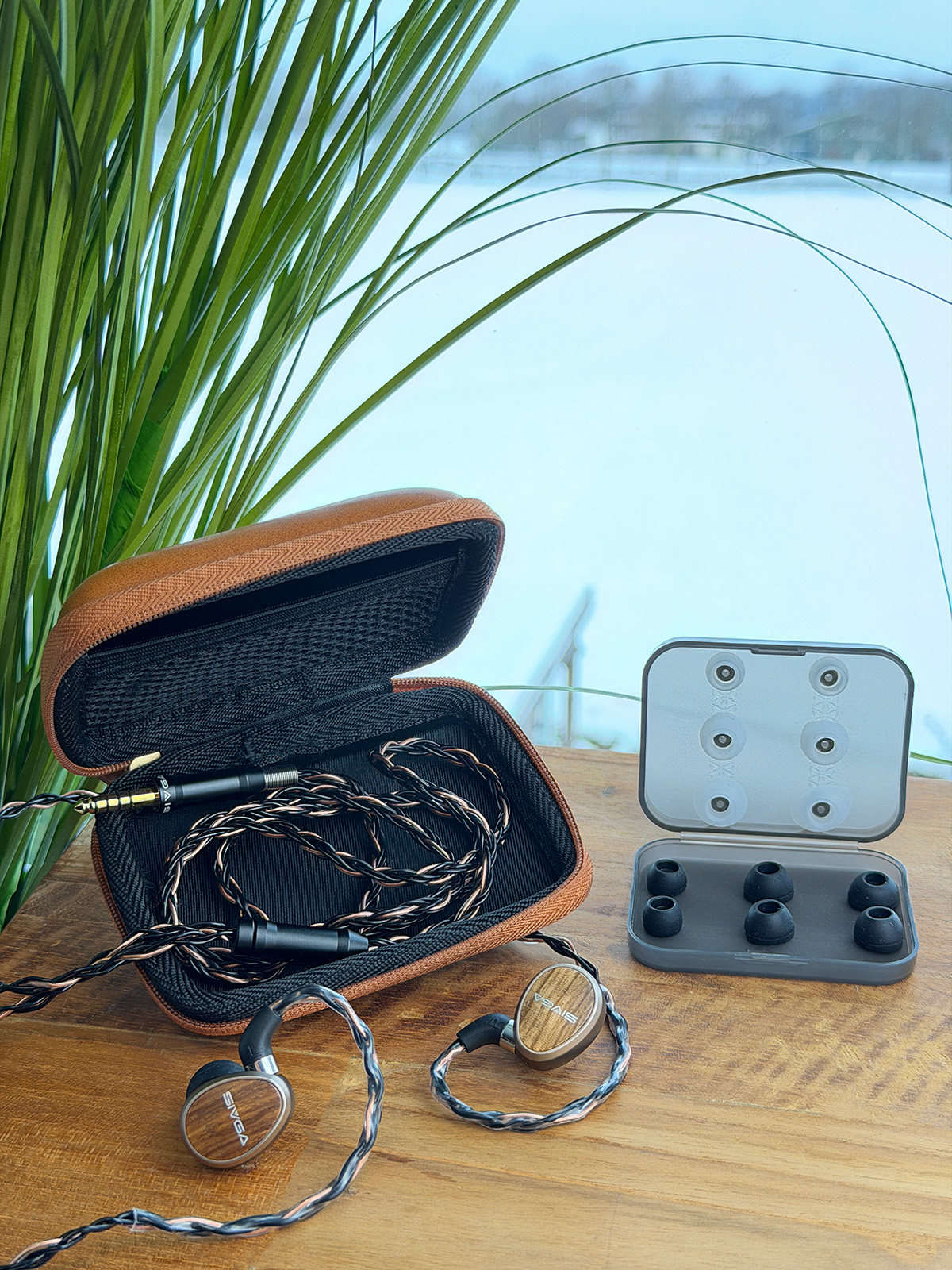
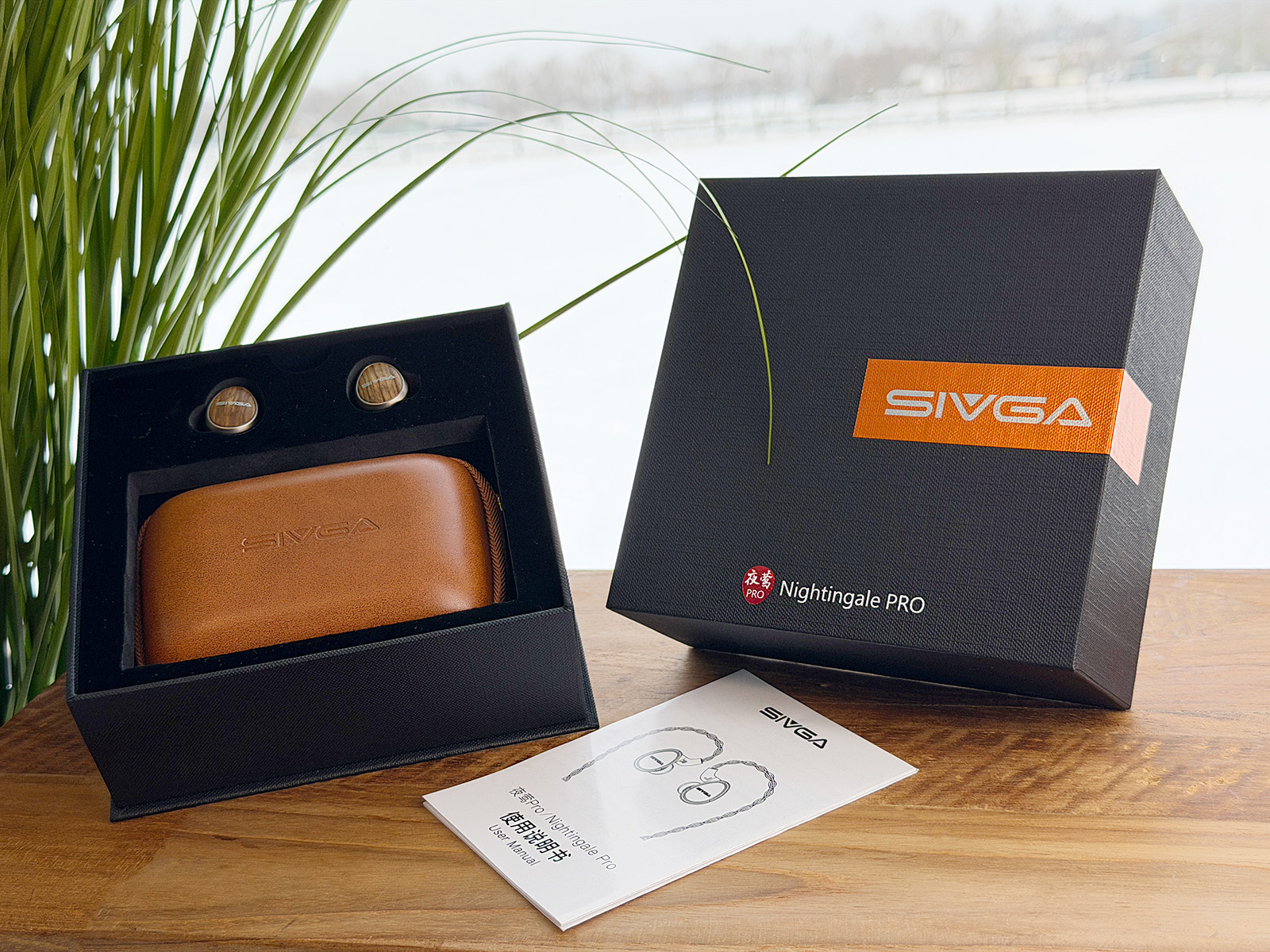
The Sivga Nightingale Pro arrives in a compact premium looking box. The presentation is nice and every item is neatly secured in custom foam cut-outs, with the carrying case placed alongside it. The included case contains the supplied cable and ear tips. Everything is well organized, functional and aligned with Sivga’s focus on build quality rather than presentation theatrics.
Design
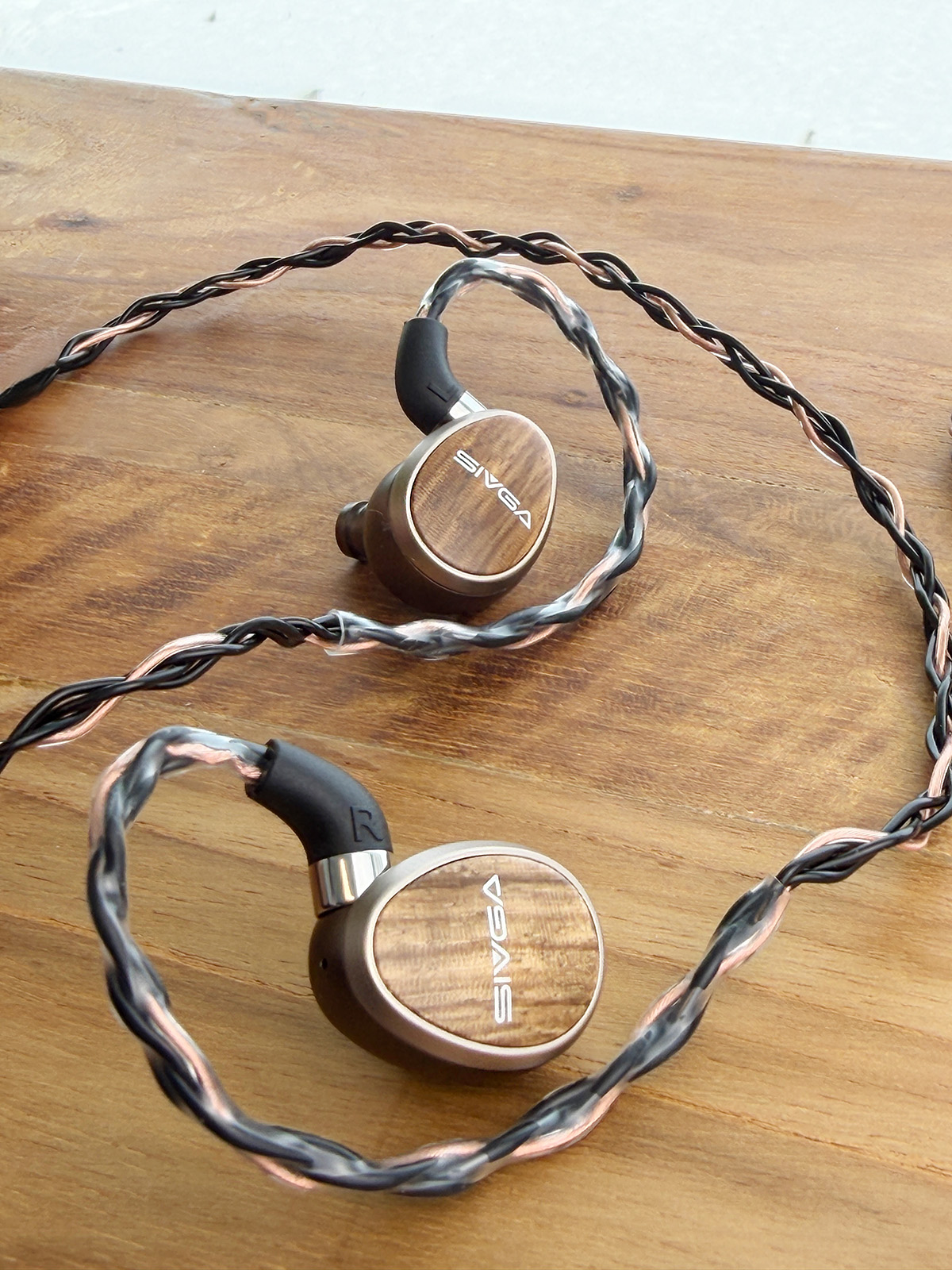
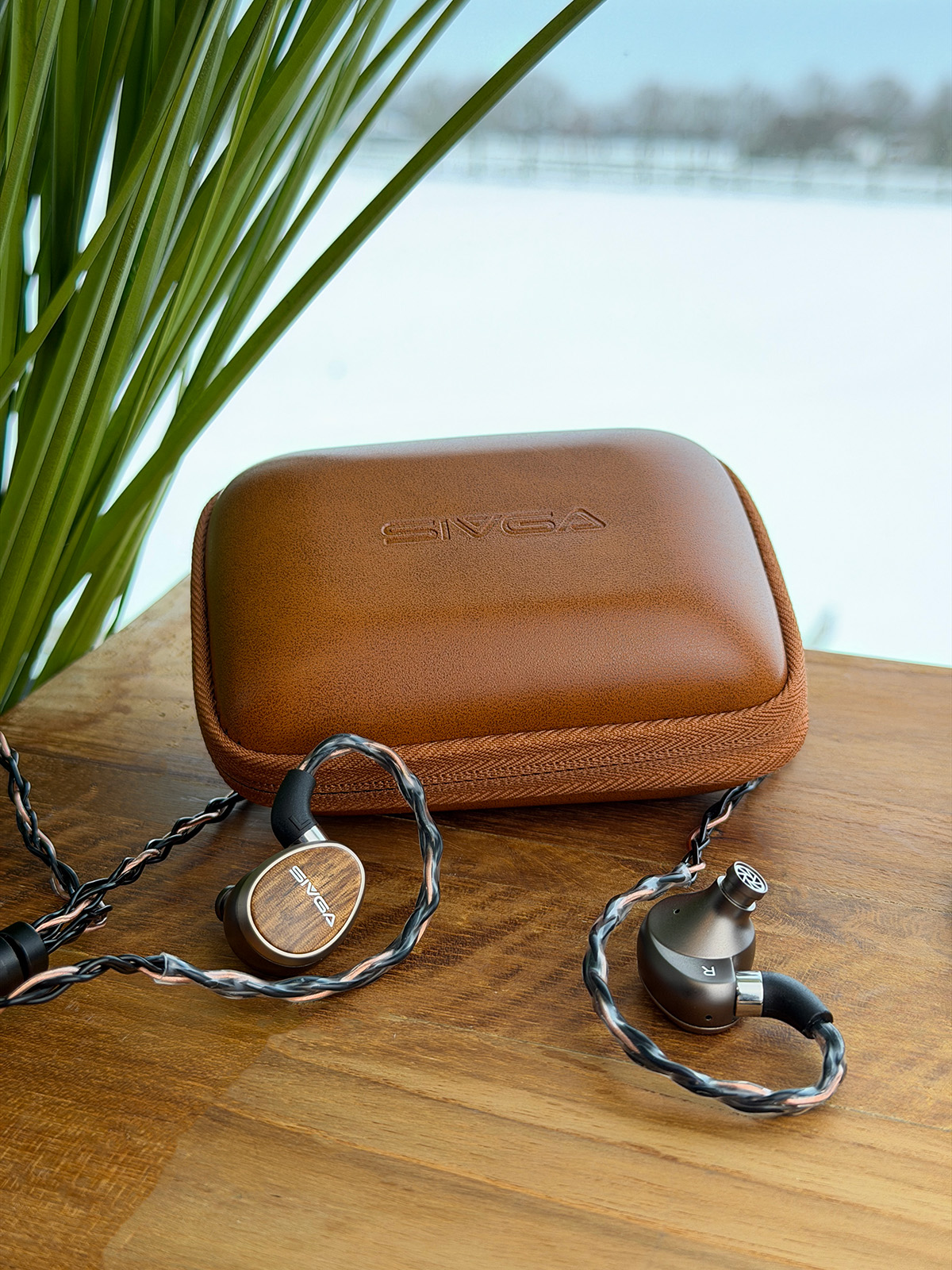
The Sivga Nightingale Pro shells are made of an nice aluminum-magnesium alloy. This makes them both lightweight and rigid. Venting is handled through two small openings: one near the nozzle and a second closer to the 2-pin connector.
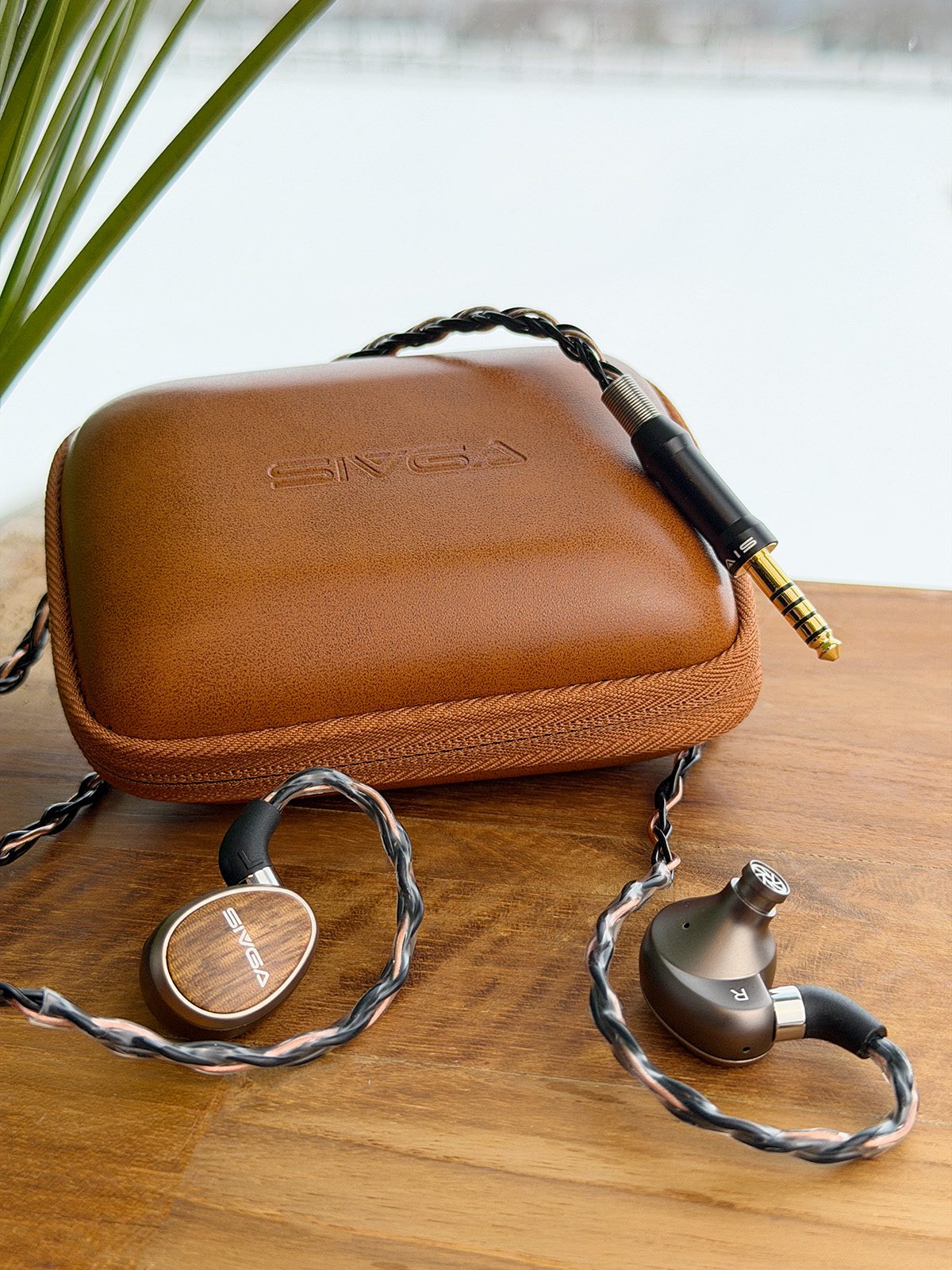
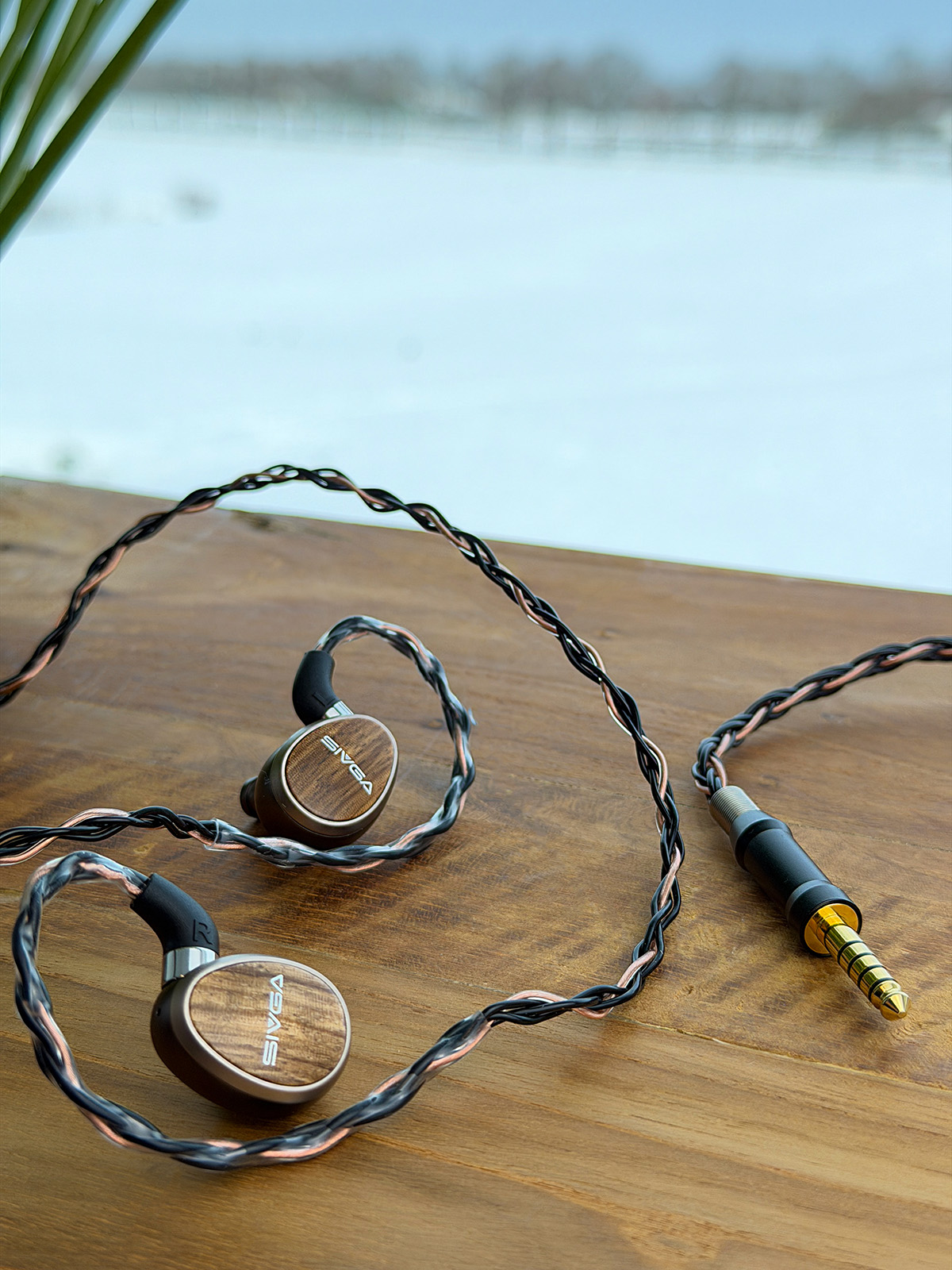
The zebrawood faceplates differ slightly in tone from the original Nightingale, but the overall design is similar. The lighter, natural shade of the zebrawood gives the earphones a fresh appearance. Paired with the supplied black and copper-accented cable, the overall presentation looks very premium.
Internals
The Nightingale Pro is build around a new ‘in house’ designed 14.5 mm planar magnetic driver. The diaphragm is made out of an ultra-thin composite film measuring 0.008 mm, paired with a 0.006 mm aluminum ribbon conductor. Instead of using a third-party solution, Sivga developed this driver in-house. The benefit is a tighter control over both performance and tuning. With a 16-ohm impedance and 107 dB sensitivity, the Nightingale Pro is easy to drive and performs well even from low-power sources. It scales well with a clean and powerful amplification though.
Ear tips
Sivga includes six pairs of ear tips in two different types. The first are black silicone tips. These have a wide bore and a very soft flange, resulting in a shallow fit. The tips although comfortable, made it quite difficult to achieve a proper seal. The second set are three pairs of white silicone tips, they have a more rigid stem. They offer a better seal than the black set. We would advice to do some eartip rolling if a proper seal is difficult to achieve with the included eartips. The included tips may well work perfectly depending on your ear anatomy.
Case
The included case is beautiful, it is made of fine leather with a soft interior to protect what you store inside. It offers enough space to carry the IEM’s, cable, spare eartips and even a compact dongle DAC will fit. The case design clearly carries the same level of care as the Nightingale pro.
Cable
The supplied cable not only complements the overall aesthetic of the IEMs but is high quality in both construction and material choice. The cable uses an eight-strand 26 AWG Litz design, combining single-crystal copper with silver-plated single-crystal copper. Termination is via 2-pin connectors, with a 4.4 mm balanced connector. This is not a cable that needs replacing, I must compliment Sivga for this kind of attention detail.
Sound Quality
The Sivga Nightingale Pro presents a neutral tonal balance, with a modest but controlled bass and a small lift in the treble. The midrange sits slightly forward in the mix. While not overly midrange focused, this gentle emphasis gives vocals and instruments stronger presence with excellent clarity and resolution.
The Nightingale Pro delivers smoothness without sacrificing precision. Getting these qualities right is challenging and many designs end up sounding either overly smooth or excessively bright. The sound signature of the Nightingale is relaxed and fluid. When required fine microdetail come through. Transient response is quick, as expected from a planar design, but never forced or aggressive.
The Nightingale is a very well excuted and capable IEM with an open and well-proportioned soundstage. The presentation is full and spacious. Resolution is a strong point, making this IEM well suited for listeners who value fine detail and low-level information. At the same time, it avoids sounding overly clinical. Separation and imaging are very good. The result is a clean presentation that remains coherent even in complex passages. The slight treble emphasis brings a gentle sense of air and clarity.
The planar driver avoids the common planar artifacts. There is no metallic sheen or graininess. While not flawless, the tuning is very thoughtful and controlled. It is one of the more convincing examples of a good executed planer IEM, especially in this price range.
The Nightingale Pro benefits from a subtly warm source, but maintains balance and control even when paired with neutral devices.
Treble
The treble is moderately elevated and plays a key role in the Nightingale Pro’s sense of openness and resolution. It provides a clean sparkle, air and extension without introducing harshness or fatigue. Upper treble extension contributes to a wide and open soundstage, while transient speed and control ensure crisp detail retrieval and strong separation. Although not aimed at treble enthusiasts, they do have a refined balance between smoothness and precision, complementing the overall neutral-natural presentation.
Bass
The bass response is moderate in quantity and focused on control rather than a huge impact. Emphasis sits mainly in the mid-bass, delivering a punchy and well-defined low end with good texture and speed. Sub-bass extension is present but restrained, offering clarity and separation rather than deep rumble or physical weight. This is a supportive bass that complements the midrange and treble without masking or adding warmth, making it more about quality than quantity. Bassheads may find it reserved, but listeners who value precision and cleanliness will appreciate its natural integration.
Midrange
The midrange is the core of the Nightingale Pro’s tuning. It is clean, slightly forward and highly resolving, with excellent clarity and separation. It remains natural and free from planar coloration, while transient control keep things articulate sharp without becoming aggressive. Both male and female vocals are well represented, with the upper mids offering liveliness and air while remaining controlled.
Soundstage & Imaging
The soundstage is open and expansive, with above-average width and a strong sense of height. The overall presentation feels full and spacious. Depth is well handled. Individual elements are clearly separated. It is not class-leading, but it is solid for a planar IEM. The stage sits slightly closer to the listener, creating a more intimate focal point within an otherwise large sound field. This combination of proximity and scale results in an engaging and immersive listening experience
Pairing
With the Shanling M8T set to mid gain, the Nightingale Pro took on a slightly organic and fluid character. The tube stage introduces a gentle sense of warmth and smoothness, adding dimensionality without softening transients excessively. Vocals gained a touch of depth and intimacy, sounding relaxed and expressive. Treble is rendered with air and finesse, staying detailed but free from sharpness.
Connected to the Chord Mojo 2, the Nightingale Pro delivered a clean, precise and highly coherent performance. The Mojo 2’s strong transient control complemented the planar driver well, keeping bass quick and responsive with just enough punch to maintain presence. The midrange came across balanced and transparent, allowing vocals to sound natural and well defined. Treble is crisp and resolving while remaining smooth and controlled. The soundstage is more focused than expansive, but imaging accuracy is excellent, resulting in a very engaging and intimate listening experience.
Paired with the Campfire Audio Relay DAC, the Nightingale Pro delivered a clean, articulate and well-controlled presentation. The Relay provides sufficient power and grip to keeping the planar driver composed, resulting in good bass definition. The midrange remained clear and transparent, with strong presence and fine detail. Treble stayed crisp and open, contributing to a sense of air without introducing sharpness or fatigue. Imaging is precise and the soundstage felt focused and spacious enough to maintain good separation, making this a well-matched and technically sound pairing for portable use.
The Nightingale Pro shows the best synergy with neutral sources carrying a subtle warmth in their tonal balance.
Listening impressions
Please let me walk you through a few music tracks to get a sense of Nightingale Pro’s strenghts and capabilities.
Concha Buika – Mi Nina lola
This track works well on the Nightingale because of its strong midrange focus. Buika’s voice sits front and center and the planar driver keeps her vocals full and warm in tone. There is no harshness anywhere. Subtle changes in dynamics and phrasing were easy to follow, while the restrained and controlled bass avoid masking the emotion in her delivery. This track sounds excellent through the Nightingale Pro.
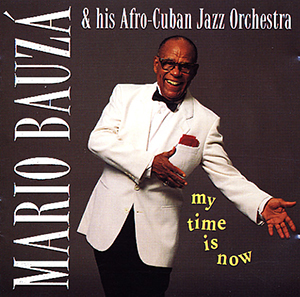
Mario Bauzá & his Afro-Cuban Jazz Orchestra – El Manisero
The Nightingale’s fast transient response highlights one of the key strengths planar drivers are known for. Percussion hits were tight and extremely well defined, brass instruments retained their natural bite without sounding aggressive. The planar driver kept this complex rhythmic layering clean and clear, making it feel as though the Nightingale Pro and this track were simply made for each other. Every nuance and detail remained intact, even during busier passages.
Jeff Hamilton Trio – Bijo
Jeff Hamilton’s track relies heavily on timing and interplay between drums, piano and bass. The Nightingale’s speed kept the drum work fast and crisp, no loss of control here. Bass notes were clear and well formed. The piano tones remained full and airy without planar glare or brightness, everything was smooth as butter. Nice!
Myriam Alter – It’s all there
The Nightingale’s smooth treble and articulate mids suited this track particularly well. Harp strings and vocals came across clean and natural, without excessive brightness. The planar presentation kept the sound coherent, allowing the track’s atmosphere and tonal balance to come through. This track can easily sound sibilant or harsh if not properly controlled. The Nightingale passed this test flawlessly.